
How to Check Aforamento in Goa — Complete Guide 2026
Aforamento Goa, also called Aframantos, is a perpetual emphyteutic lease granted by the Comunidade (village council) under the Code of Comunidades, 1961. The grantee pays an annual ground rent (foro) and may redeem absolute ownership by paying 20 years of foro plus one extra instalment. Without proof, do not buy.
What is Aforamento in Goa?
Definition
Aforamento Goa is a perpetual emphyteutic lease granted by a Comunidade (village land association) under the Code of Comunidades, 1961 (Legislative Diploma No. 2070 dated 15 April 1961). The grantee, called the Aforador, holds the dominium utile (possessory and beneficial title) while the Comunidade retains the dominium directum (ultimate ownership). Annual ground rent, called foro, is payable to the Comunidade.
Comunidades are village-level land associations that predate Portuguese rule. They own all village land collectively and grant Aforamento and Arrendamento (short-term lease) to Gaunkars (hereditary members listed in the Tombo register) and outsiders. Article 334 of the Code confirms ownership rests with the Comunidade. Aforamento is hereditary under Section 293 of the Goa Succession, Special Notaries and Inventory Proceedings Act, 2012, and may be gifted, mortgaged, or sold subject to continued foro payment by the new holder.
For buyers, the Aforamento label is a warning, not a defect. Section 1 of the Code recognises the lease as transferable. Article 6 allows redemption: after 20 years, payment of 20 years of foro instalments plus one additional instalment merges the dominium directum into the dominium utile and ends the emphyteusis. The grantee becomes full owner. Without redemption, the buyer inherits the foro obligation and the Comunidade's continuing oversight. Buyers must demand either a Comunidade NOC for the proposed transfer, or a redemption certificate proving 20× foro paid. The Bombay High Court in the Comunidade of Balli, Quepem judgment (12 January 2012) confirmed that Comunidades cannot interfere after redemption.
How to Verify Aforamento in Goa: Step-by-Step at the Comunidade / goa.gov.in
Two routes to verify Aforamento. The Comunidade office holds the original lease and foro records. The Department of Revenue at goa.gov.in supervises Comunidades and holds gazette references. Carry survey number, sub-division, Taluka, and the seller's deed bundle.
Online method (recommended)
Offline method (Sub-Registrar Office)
What Does an Aforamento Document Contain in Goa?
Each Aforamento deed records the grantor, grantee, foro, and any redemption history. Mismatch on any field is a deal-stopping defect.
| Field | What it means | What to check |
|---|---|---|
| Survey Number / Sub-division | Parcel identifier | Match against Form I, Form XIV, Sale Deed |
| Comunidade Name | Village land association holding dominium directum | Confirms the parcel is Comunidade origin |
| Grantee (Aforador) Name | Person holding dominium utile | Should be the seller or seller's predecessor in chain |
| Annual Foro Amount | Ground rent payable annually | Confirms ongoing financial obligation |
| Date of Original Grant | When the Aforamento was first issued | Determines redemption eligibility (post-20 years) |
| Foro Payment Status | Current or arrears | Arrears trigger Article 344 penalties |
| NOC for Transfer | Comunidade approval for sale to buyer | Required for transfer of un-redeemed Aforamento |
| Redemption Certificate | Proof of 20× foro plus 1 additional paid | Converts Aforamento to absolute ownership |
Common Issues With Aforamento in Goa
Each Aforamento deed records the grantor, grantee, foro, and any redemption history. Mismatch on any field is a deal-stopping defect.
Why Aforamento Matters for Land Buyers in Goa
For Goa land buyers, Aforamento is the document that decides whether the parcel is freehold, leasehold, or somewhere in between.
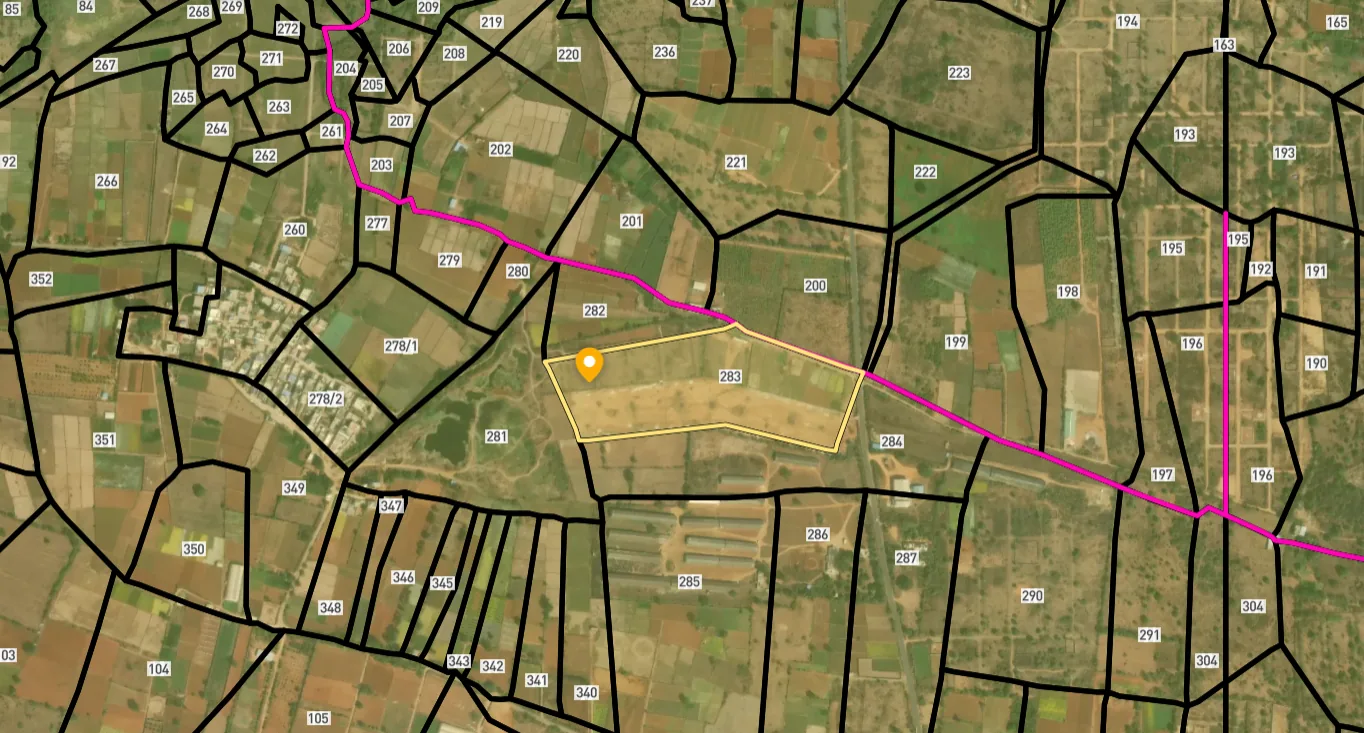
Survey Numbers View on Map Boundaries and numbers come from published state cadastral records. See all map layers.
Looking to sell your land in Goa?
Browse 88+ verified lands & plots in Goa
Frequently Asked Questions
What is Aforamento Goa?
What is the difference between Aforamento and Arrendamento in Goa?
Can a Comunidade refuse to grant a redemption certificate in Goa?
How is Aforamento redeemed in Goa?
Is Aforamento land hereditary in Goa?
What is foro in Comunidade Goa?
Can Aforamento land be sold in Goa?
Who is a Gaunkar in the Comunidade context?
Other Related Guides
Survey Sketch Goa: Cadastral Map Verification Guide 2026
The Survey Sketch Goa from DSLR confirms plot boundaries, area, and shape. Cross-check survey area against the Sale Deed before any purchase. Pull from goaonline.gov.in.
Read guide →Sanctioned Building Plan Goa: Approved Plan Guide 2026
The Sanctioned Building Plan Goa is the Panchayat or Municipal-issued construction approval. Verify the actual building matches the sanctioned plan before any property purchase.
Read guide →Prenuptial Contract Goa: Contrato Antenupcial Guide 2026
In Goa, marriage defaults to Communion of Assets. Verify the Prenuptial Contract (Contrato Antenupcial) before any property purchase. No prenup means both spouses sign.
Read guide →Gram Panchayat NOC Goa: Village Council Clearance Guide 2026
The Gram Panchayat NOC Goa is the Village Council's no-objection certificate. Required for all Panchayat-area properties before Sale Deed registration or building approvals.
Read guide →Marriage Certificate Goa: Seller Verification Guide 2026
The Marriage Certificate (Certidão de Casamento) of a Goan seller is mandatory before any property purchase. Default Communion means both spouses must sign every document.
Read guide →Health Department NOC Goa: Sanitation Clearance Guide 2026
Health Department NOC Goa is the DHS sanitation clearance for construction. Required alongside the Gram Panchayat NOC, not as a substitute. Pull from goaonline.gov.in.
Read guide →