Document Guide · Maharashtra

How to Check Gaothan and Inam Land in Maharashtra — Complete Guide 2026

A Gaothan Inam land Maharashtra check confirms whether a parcel sits inside the restricted village settlement zone or carries an old Inam grant. Gaothan land has special rules. Inam land may carry conditional ownership that needs Collector permission to transfer. This guide covers verification, traps, and the buyer's protection.

Quick Reference
Also calledGaothan Property, Inam Land, Watan Land
Issued byRevenue Department, Tahsildar, Collector
Valid forLifetime, against the deceased title
CostFree 7/12 check; Nazarana payment for class conversion when applicable
Time takenSame-day Mahabhulekh check; 30 to 90 days for Collector permission
Online portalbhulekh.mahabhumi.gov.in
1

What is Gaothan and Inam Land in Maharashtra?

Definition

Gaothan is the official residential settlement zone of a village under Section 122 of the Maharashtra Land Revenue Code 1966, fixed by the Collector with State Government approval. Inam land is a category of historical grant lands governed by the Maharashtra Personal Inams Abolition Act 1953 and other Inam Abolition Act provisions, regranted to occupants on conditional tenure.

Gaothan covers houses, temples, and traditional village core. Land within Gaothan limits is exempt from agricultural revenue under Section 123 MLR Code. Around it, the 200-metre Gaothan extension belt allows agricultural holders to apply under Section 44 of the Code for non-agricultural conversion. Outside the Gaothan and the 200-metre belt, ordinary agricultural rules apply. The 12.5 percent Gaothan expansion scheme run by CIDCO in Navi Mumbai is one of the most common allotment routes within this framework.

Inam land sits in a different bracket. Personal Inams, Service Inams, Inferior Village Watans, and Hyderabad Inams were abolished in the 1950s, but the regranted occupants typically hold the land as Occupant Class II under the Maharashtra Land Revenue Code. Class II means the title carries restrictions on transfer, sale, sub-division, and change of use. Most Inam parcels in Western Maharashtra and Marathwada still carry these restrictions decades after abolition.

State-specific note: Gaothan land has special rules. Inam land may have conditional ownership. A 7/12 entry that reads "Class II" or "Inam" or "Watan" means the deal cannot be registered without prior Collector sanction and, in many cases, payment of Nazarana to convert to Class I.
2

How to Check Gaothan and Inam Status: Step-by-Step

Two routes work. The free Mahabhulekh 7/12 check confirms the tenure class entry. The Tahsildar's Inam register confirms the historical grant. Most buyers need both before paying any token.

Online method (recommended)

1
Pull the latest 7/12 from Mahabhulekh Go to [bhulekh
mahabhumi.gov.in](http://bhulekh.mahabhumi.gov.in) . Pick division, district, taluka, village, then enter the survey or gat number. The 7/12 opens. Read the "इतर हक्क" (Other Rights) and "भोगवटदार वर्ग" (Occupant Class) lines.
Class I means freely transferable. Class II means restricted. Anything mentioning "इनाम" (Inam) or "वतन" (Watan) is a hard stop.
2
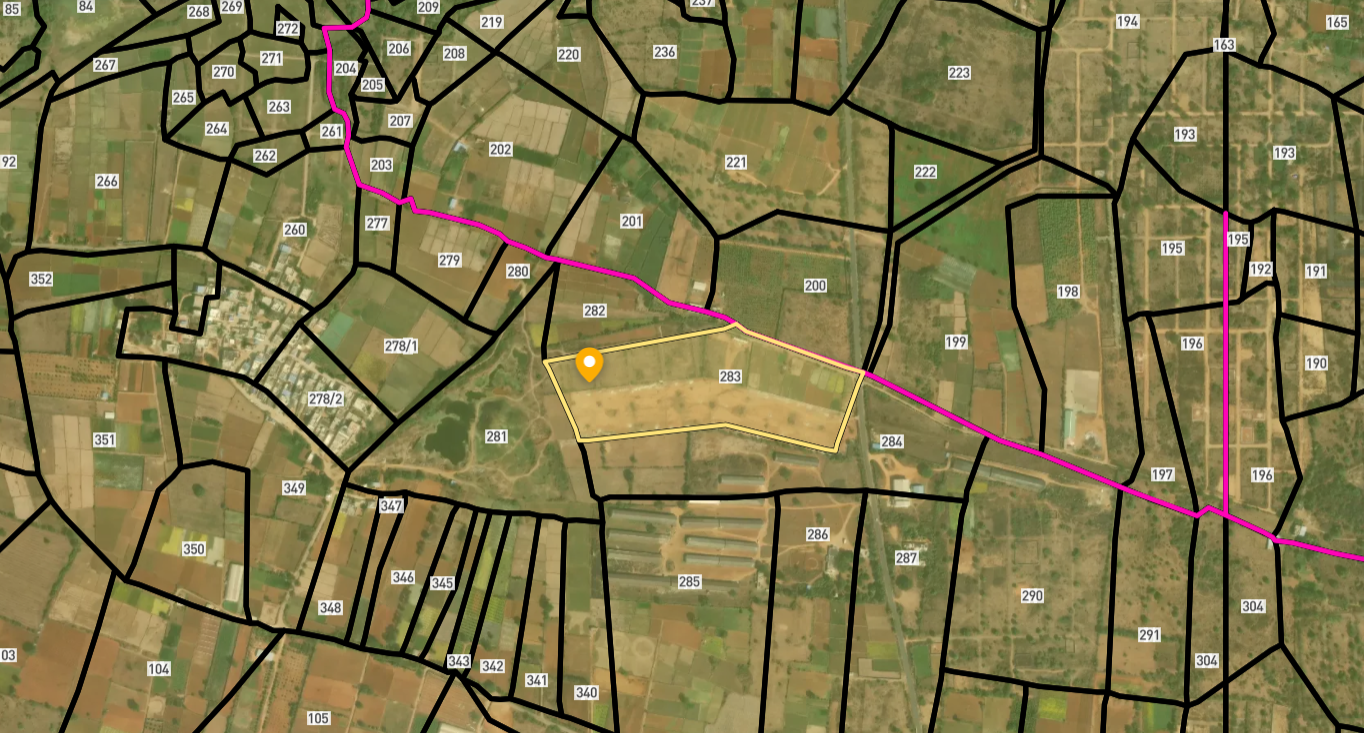
Cross-check the village map Open [mahabhunakasha
mahabhumi.gov.in](http://mahabhunakasha.mahabhumi.gov.in). Search the same survey number. Verify whether the plot falls inside the Gaothan boundary marked on the cadastral sheet, or in the 200-metre extension, or outside.
3
Check Form 8A and the Sudpatrak entry Apply for the 8A extract on Mahabhulekh
Form 8A entries flag Gaothan plots and show the holding pattern. Plots on Sudpatrak under settlement records often carry old Inam annotations.
Inam land entered in the alienation register under Section 53 MLR Code 1966 needs Collector sanction for any sale.
4
Apply for the Tahsildar's Non-Encumbrance certificate Through Aaple Sarkar at [aaplesarkar
mahaonline.gov.in](http://aaplesarkar.mahaonline.gov.in) , the Tahsildar can issue a written certification of the tenure class and any Inam status. This is the document banks ask for before sanctioning a loan. ###

Offline method (Sub-Registrar Office)

1
Visit the Tahsildar with jurisdiction Go to the Taluka office
Carry the latest 7/12, 8A, sale deed, and ID proof.
2
Inspect the Inam alienation register Request the Talathi to show the village alienation register and the Sudpatrak sheet for the survey number
Old Inam, Watan, and Jagir grants are recorded by class and year of regrant.
3
Apply for Collector NOC if needed For Class II Inam land, file an application for prior sanction under the relevant Inam Abolition Act
Pay the Nazarana, typically 50 percent of current market value for non-agricultural conversion.
4
Collect the conversion order Once the Collector signs the regrant order converting the parcel to Occupant Class I, the 7/12 is updated through a fresh Ferfar entry
Standard processing runs 30 to 90 days.
A sale registered without prior sanction on Class II land is void as against the State and the buyer can be summarily evicted.
3

What Does the Tenure Record Contain in Maharashtra?

Every 7/12 and Inam entry follows the same structure of fields that decide whether you can buy.

Field What it means What to check
Survey or Gat numberThe unique parcel IDCross-check on Mahabhunaksha and sale deed
Bhogwatdar ClassOccupant Class I or Class IIClass II needs Collector sanction before transfer
Other Rights columnInam, Watan, Jagir, mortgage, easementsAny historical grant entry triggers the Inam route
Gaothan boundary remarkInside, in 200m belt, or outsideDecides which conversion route applies
Land use classificationAgricultural, NA, Pardi, VadaPardi and Vada under Section 123 carry tax exemption
Nazarana paidConversion fee recordClass II to I needs Nazarana receipt on file
Sudpatrak referenceSettlement era recordOld Inams trace back to Sudpatrak entries
Good sign: A clean record shows Class I occupant, no Inam or Watan annotation in Other Rights, plot clearly outside Gaothan or with proper Section 44 conversion order, and Sudpatrak free of historical alienation.
4

Common Issues With Gaothan and Inam Land in Maharashtra

Every 7/12 and Inam entry follows the same structure of fields that decide whether you can buy.

Class II tenure not disclosed
Seller markets the plot as freely transferable. The 7/12 actually reads Class II. Without prior Collector sanction, the sale is void.
Fix: Pull the 7/12 yourself and read the Bhogwatdar Class line. Refuse to register until the Collector's Class I conversion order is on the table.
Inam land sold without Nazarana payment
A pre-2015 transfer of Madad Mash Inam, Service Inam, or Hyderabad Inam land without Collector NOC. The State can summarily evict.
Fix: Check whether the 2015 amendment to the relevant Inam Abolition Act allows regularisation by paying Nazarana. If not, walk away.
Property inside Gaothan with no allotment letter
Seller has built on Gaothan land but cannot produce the Letter of Allotment, Award Copy, Lease Agreement, and Final Order. Banks will not finance it.
Fix: Insist on the four CIDCO documents for Navi Mumbai parcels, or the gram panchayat allotment chain for older Gaothans, before paying any token.
Land outside 200-metre Gaothan belt sold for housing
Section 44 conversion only works within the Gaothan extension limit. Beyond it, the parcel is Green Zone and construction is barred.
Fix: Confirm distance from Gaothan boundary on Mahabhunaksha. Anything beyond 200 metres is not eligible under the Gaothan extension scheme.
Mahar Watan or Bhil Naik Inam parcel
Mahar Watan land regranted under the Inferior Village Watans Abolition Act 1958 cannot be transferred or partitioned without prior Collector sanction.
Fix: Verify the Watan class on the alienation register. The restriction is in addition to the standard Class II rule.
Gaothan property sold on lease, not freehold
Many CIDCO Gaothan plots are leasehold for fixed terms. After expiry, possession reverts. Buyers assume freehold and lose investment value.
Fix: Read the lease agreement. Pay only the proportionate value of the unexpired lease term, not freehold market price.
5

Why Gaothan and Inam Status Matters for Land Buyers in Maharashtra

The cheapest land in Maharashtra is usually the most legally complicated.
📋
Validity of the sale A registered sale deed on Class II Inam or Watan land without prior Collector sanction is void against the State
The buyer can be summarily evicted under Section 59 MLR Code, regardless of how much was paid.
Conditional ownership and Nazarana Many Inam parcels remain Occupant Class II tenure until converted
Conversion needs an application to the Collector and payment of Nazarana, often 50 percent of current market value. Skipping this step keeps the title defective forever.
🏦
Bank loan refusal Most major banks refuse home loans on Gaothan and Inam land unless the four-document chain (Allotment, Award, Lease, Final Order) is complete or a Class I conversion order is in place
Even where loans are offered, the LTV is lower and rates higher.
🔍
Maharashtra-specific: layered abolition acts Maharashtra has at least seven Inam Abolition Acts covering Personal Inams, Service Inams, Watans, Bhil Naik Inams, Hyderabad Inams, and others
Each carries its own regrant rules. Identifying the right act before buying is what separates a clean deal from a decade in revenue court.
Red flag: A seller who price-quotes Gaothan or Inam land "well below market" but cannot produce the Bhogwatdar Class entry, the allotment chain, or the Collector's NOC is hiding a tenure restriction. Walk away.

Browse verified land in Maharashtra

Every Maharashtra plot listed on [1acre.in](http://1acre.in) is checked for Gaothan, Inam, and Class II status before going live. You see the tenure, not just the price.

Browse Verified Maharashtra Lands

Frequently Asked Questions

What is a Gaothan Inam land Maharashtra check and why does it matter?
A Gaothan Inam land Maharashtra check verifies whether a parcel sits inside the restricted village settlement, in the 200-metre extension belt, or carries an old Inam grant. It decides whether the deal can be registered without prior Collector sanction.
Is buying Gaothan land legal in Maharashtra?
Yes, but only with the right document chain: Letter of Allotment, Award Copy, Lease Agreement, Final Order, and Tripartite Agreement where CIDCO is involved. Gaothan land outside the Section 122 boundary or sold without these documents is risky and usually unfinanceable.
What is Inam land in Maharashtra?
Inam land is a category of historical grant land regranted to occupants under various Inam Abolition Act statutes from the 1950s. Most regranted parcels are held as Occupant Class II, meaning transfer, sub-division, or non-agricultural use needs prior Collector sanction.
Can Inam land be sold without Collector permission?
Class II Inam land cannot be sold for non-agricultural use without prior Collector NOC and Nazarana payment of typically 50 percent of current market value. A sale without this sanction is void and can lead to summary eviction under the MLR Code.
How do I check if land is Gaothan or Inam in Maharashtra?
Run a Mahabhulekh 7/12 check at [bhulekh.mahabhumi.gov.in](http://bhulekh.mahabhumi.gov.in) . Read the Bhogwatdar Class and Other Rights entries. Cross-check the Gaothan boundary on Mahabhunakasha and the alienation register at the Tahsildar's office for any historical Inam annotation.
Do banks give home loans on Gaothan property in Maharashtra?
Most banks refuse home loans on Gaothan property unless the full document chain is in place. Even those who lend, including HDFC and SBI in select cases, apply lower LTV ratios and stricter rates due to the leasehold and Class II tenure risk.
What is Occupant Class II tenure?
Occupant Class II is a restricted tenure under the Maharashtra Land Revenue Code 1966 attached to Inam, Watan, regranted, and certain government-allotted lands. The occupant cannot transfer or change land use without prior Collector sanction and payment of any prescribed Nazarana.
What is the 12.5 percent Gaothan expansion scheme in Navi Mumbai?
The 12.5 percent Gaothan scheme, "sade barah takka", is a CIDCO programme allotting 12.5 percent of acquired village land back to original villagers as developed plots. Buyers must verify the full Allotment, Award, Lease, and Final Order chain before purchasing.