
The 8A Extract: One Holder, Whole Holding
If the 7/12 is a plot's biography, the 8A is the holder's ledger: village form 8A gathers everything one khate holds in a village, every survey number, with areas and assessment, on a single extract. For families it answers 'what do we actually have here'; for buyers it answers something sharper, whether the plot being sold is the seller's only card or one card from a hand they're not showing.
What the 8A extract shows
Definition
The 8A is the khate-wise extract from village form 8A: the account of a holder in a revenue village, listing every survey and Gat number held under that khate with areas and assessment. Mahabhulekh serves it alongside the 7/12, and the two are designed to be read together, the account naming the plots, each plot's extract telling its own story.
Its first use is completeness. Families sorting an estate pull the 8A to see the whole holding at once instead of chasing plot rumours; partition planning, succession filings and simple family clarity all start from the account's list rather than from memory's fragments.
Its second use is the buyer's audit. A seller's 8A shows whether the offered plot stands alone or belongs to a larger holding, how the family's land is distributed, and occasionally the co-held khates that mean more signatures than the negotiation mentioned. Ten minutes with the account has reshaped many conversations.
Its limit is the village boundary. Khates are per-village, so a family with land across three villages has three 8As, and 'everything we own' requires knowing where to look. The name-search route recovers the villages; the 8A then closes each one.
Pulling and reading the 8A
Account first, plots second.
The method
8A questions the extract answers
Five uses, one document.
| Situation | The 8A's answer | What follows |
|---|---|---|
| Estate clarity | Everything the khate holds here | Succession or partition planning |
| Buyer's audit | The seller's full local position | Sharper negotiation, right signatures |
| Partition prep | Plots and areas to divide | The measured, recorded split |
| Loan files | The holding behind the borrower | Bank verification made easy |
| Cross-checks | Account versus plot extracts | Gaps become questions early |
Common 8A issues, and the fix
8A work goes wrong four ways.
Where the 8A fits in diligence
Think of it as the wide-angle lens in a three-lens kit: the 8A for the holder's whole local position, the 7/12 for each plot's story, the map for each plot's shape.
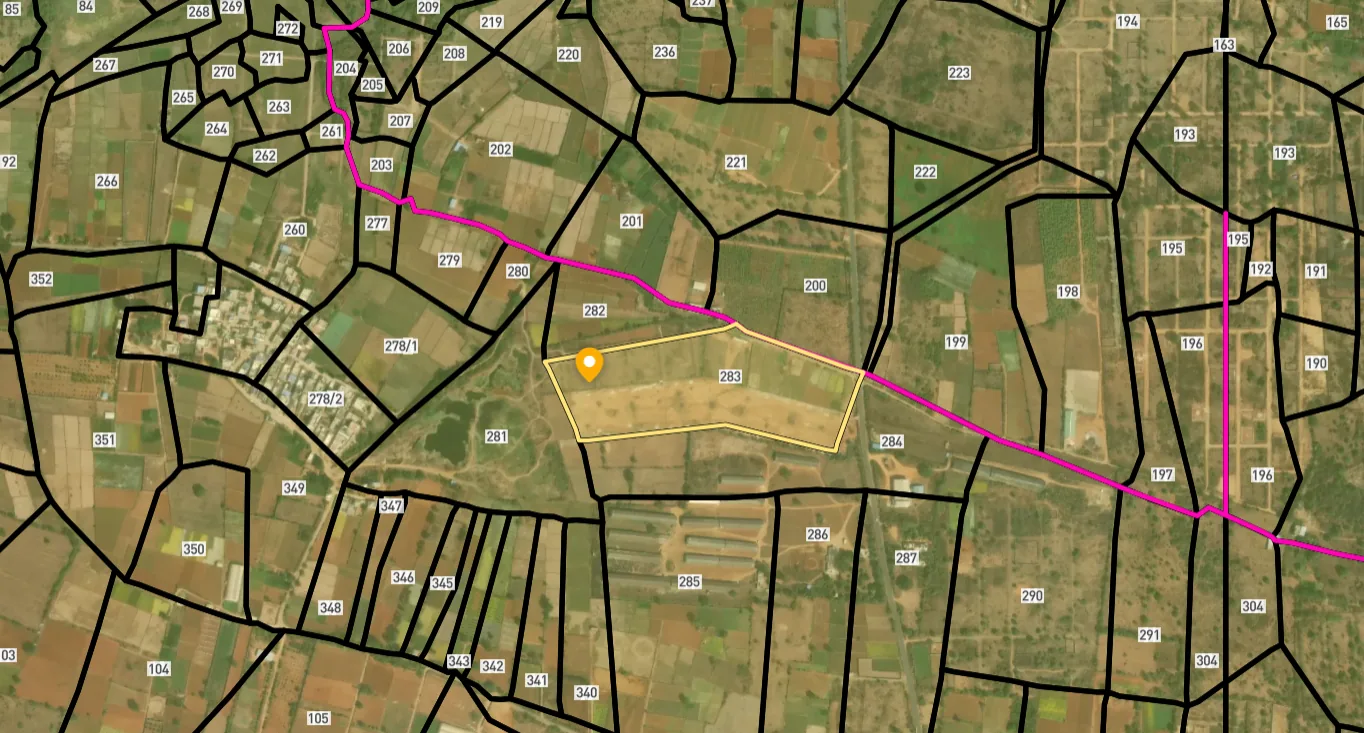
Survey Numbers View on Map Boundaries and numbers come from published state cadastral records. See all map layers.
Looking to sell your land in Maharashtra?
Browse 1,500+ verified lands & plots in Maharashtra
Frequently asked questions
What is the 8A extract?
How is it different from the 7/12?
Where do I get it?
Does it cover all my family's land?
How do buyers use it?
The 8A names my late father?
Other Related Guides
Property Card Mumbai Maharashtra 2026: CTS Verify & Download
Property Card Mumbai Maharashtra guide. Pull the Malmatta Patrak online, decode the CTS number, spot title fraud, and verify before buying urban land.
Read guide →Index 2 Maharashtra: Verify Property Registration 2026
Download Index 2 Maharashtra free on IGR. Verify the registration summary, party names, stamp duty, and every charge before paying token on any plot.
Read guide →8A Extract Maharashtra 2026: Village Form 8A Buyer Guide
Download 8A Extract Maharashtra online. Match it with the 7/12 to expose hidden plots, decode Khata details, and verify before buying agricultural land.
Read guide →Mahabhulekh
Every Maharashtra land record service in one place, with a guide for each.
Read guide →Property Tax Receipt Maharashtra: Verify Nil Dues 2026
Property tax receipt Maharashtra proves nil arrears with the Municipal Corporation. Check, pay, and download from BMC, PMC, and other portals before buying.
Read guide →Zone Certificate Maharashtra: DP/RP Zoning Guide 2026
Zone Certificate Maharashtra confirms your plot's land use under the Development Plan. Verify zoning, fees, validity, and the reservation trap before buying.
Read guide →