
e-Peek Pahani: The Crop Record, Self-Reported
For a century, what grew on a Maharashtra field entered the record through an official's seasonal rounds. e-Peek Pahani turned the pen around: the cultivator now records the crop from the field itself, through the app, geotagged and season-stamped, feeding the 7/12's form 12 directly. It sounds like an agricultural footnote; it is actually the freshening of the state's oldest possession evidence.
What e-Peek Pahani changed
Definition
e-Peek Pahani is Maharashtra's farmer-conducted crop survey: cultivators record each season's crop for their survey numbers through the mobile app, with location capture from the field, and the entries flow into form 12 of the 7/12 read on Mahabhulekh. Registration runs on the holder's details against the plot, recording happens within seasonal windows, and the record serves schemes, insurance, procurement and credit processes.
For farmers the incentives are concrete: the recorded crop is what scheme eligibility, insurance claims, procurement registration and crop-loan processing increasingly read, and an unrecorded season is friction in every one of those queues. The app made the record's accuracy the cultivator's own interest, which is precisely why it works.
The mechanics reward doing it properly: register against the correct survey numbers, record within the season's window, capture from the field itself so the geotag agrees, and review what form 12 shows after processing. Shared plots and tenancies record through the appropriate cultivator entries, and mismatches fix faster through the Talathi while the season is current.
For everyone else, the quiet significance is evidentiary. Form 12 has always been possession's paper trail; e-Peek Pahani makes that trail current and location-anchored, which sharpens every reading of it, a seller's cultivation story, a tenancy question, a dispute about who actually works the land.
Recording a season on e-Peek Pahani
Register once, record each season, verify after.
The method
What the crop record now serves
Five processes reading form 12's entries.
| Process | What it reads | Why currency matters |
|---|---|---|
| Crop insurance | The insured crop's record | Claims match recorded seasons |
| Scheme eligibility | Cultivation as declared | Benefits key off the entry |
| Procurement / MSP | What was actually grown | Registration checks the record |
| Crop loans | The farming behind the credit | Banks read the seasons |
| Buyer diligence | Possession's paper trail | Fresh entries, sharper reading |
Common e-Peek Pahani issues, and the fix
Crop-record work slips four ways.
Why buyers read the crop record
A buyer reading form 12 today reads something better than before: seasons recorded from the field by the cultivator, hard to backfill, easy to cross-examine.
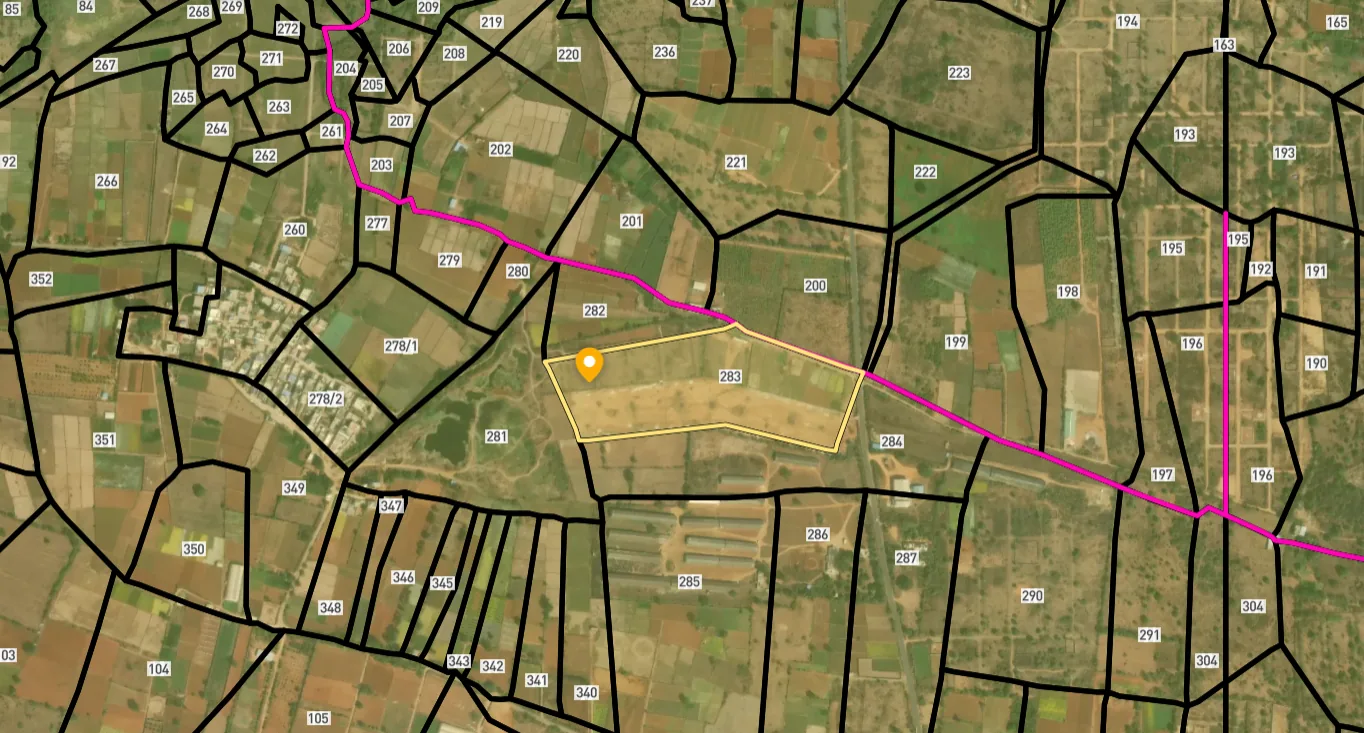
Survey Numbers View on Map Boundaries and numbers come from published state cadastral records. See all map layers.
Looking to sell your land in Maharashtra?
Browse 1,500+ verified lands & plots in Maharashtra
Frequently asked questions
What is e-Peek Pahani?
Who records the crop?
Why does it matter for farmers?
What if an entry is wrong?
Do tenants record?
Why would a buyer care?
Other Related Guides
Property Card Mumbai Maharashtra 2026: CTS Verify & Download
Property Card Mumbai Maharashtra guide. Pull the Malmatta Patrak online, decode the CTS number, spot title fraud, and verify before buying urban land.
Read guide →Index 2 Maharashtra: Verify Property Registration 2026
Download Index 2 Maharashtra free on IGR. Verify the registration summary, party names, stamp duty, and every charge before paying token on any plot.
Read guide →8A Extract Maharashtra 2026: Village Form 8A Buyer Guide
Download 8A Extract Maharashtra online. Match it with the 7/12 to expose hidden plots, decode Khata details, and verify before buying agricultural land.
Read guide →Mahabhulekh
Every Maharashtra land record service in one place, with a guide for each.
Read guide →Property Tax Receipt Maharashtra: Verify Nil Dues 2026
Property tax receipt Maharashtra proves nil arrears with the Municipal Corporation. Check, pay, and download from BMC, PMC, and other portals before buying.
Read guide →Zone Certificate Maharashtra: DP/RP Zoning Guide 2026
Zone Certificate Maharashtra confirms your plot's land use under the Development Plan. Verify zoning, fees, validity, and the reservation trap before buying.
Read guide →