
The 7/12 Utara: Maharashtra's Talking Extract
No land document in India has a reputation like the Satbara. Ask about a plot anywhere in rural Maharashtra and the answer begins with its 7/12, the extract that stitches village form 7, who holds the land and how, to village form 12, what grows on it, with a margin of annotations that reads like the plot's biography. Mahabhulekh puts this extract a few clicks away, and reading it properly is the whole first act of Maharashtra diligence.
What the 7/12 utara actually contains
Definition
The 7/12 utara is the combined extract of two village forms for a survey number: form 7, recording occupants, their class of holding, khate numbers and the rights over the land, and form 12, the crop register recording what was cultivated season by season. Mahabhulekh serves it free for viewing across all districts, with the digitally signed version available for official use.
Read form 7 in three passes. The occupant entries first: names, shares and the class of holding, because how land is held in Maharashtra shapes what a holder may do with it. The khate number second, since it ties this survey number to the holder's full account. And the other-rights column third, always third and never never: mortgages, tenancies, restrictions and claims live in that margin, and a Satbara read without its margin is a novel read without its plot.
Form 12 looks agricultural and works forensically. A crop record showing consistent cultivation supports the occupant's story; sudden gaps, changed cultivator names or a mismatch with what you saw on the ground are questions wearing a table's clothes. The e-Peek Pahani era feeds this register through farmer-reported surveys, which makes recent seasons unusually current.
The plot's identity runs on survey and Gat numbers, subdivided by hissa. Match the number on the extract to the number in the deed and on the Bhu Naksha map before believing anything else; Maharashtra's records are mature enough that most catastrophic mistakes are simply someone reading the right document for the wrong plot.
How to check the 7/12 on Mahabhulekh
Free viewing statewide; the signed copy for anything official.
Online method
Offline (Talathi)
Reading the 7/12, column by column
Five entries carry the extract's weight.
| Entry | What it records | Why it matters |
|---|---|---|
| Occupant and class | Who holds, and under what tenure | Restricted classes change what a sale needs |
| Khate number | The holder's account | Links this plot to the 8A's full holding |
| Survey / Gat / hissa | The plot's identity | Wrong number, wrong land, always |
| Other-rights column | Mortgages, tenancies, claims | The margin is where deals die or survive |
| Form 12 crop lines | Cultivation, season by season | Possession's paper trail |
Common 7/12 issues, and the fix
Satbara readings fail four familiar ways.
Why the 7/12 opens every Maharashtra file
Everything else in this hub leans on it: the 8A summarises its khate, Ferfar amends it, Aapli Chawadi announces the amendments, the digital Satbara certifies it, and the Bhu Naksha draws it.
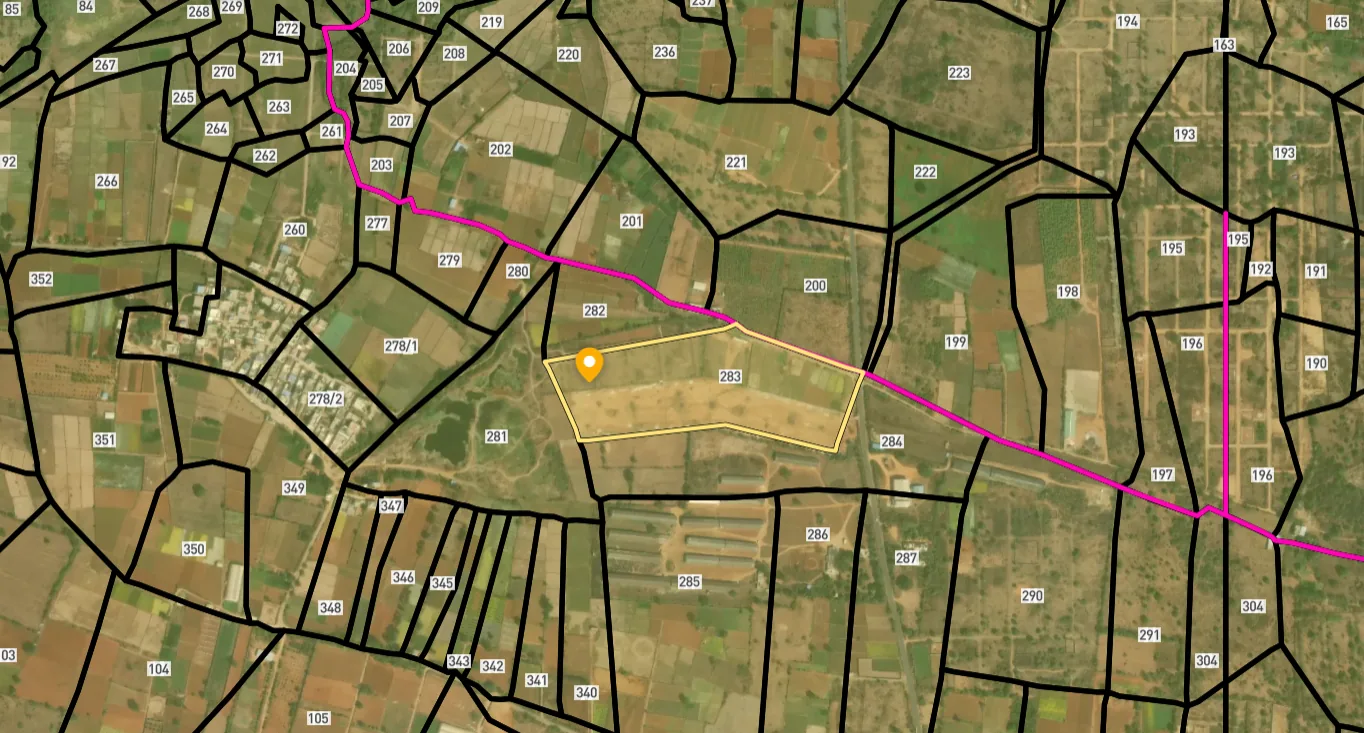
Survey Numbers View on Map Boundaries and numbers come from published state cadastral records. See all map layers.
Looking to sell your land in Maharashtra?
Browse 1,500+ verified lands & plots in Maharashtra
Frequently asked questions
What is the 7/12 utara?
How do I check the 7/12 online?
What is the other-rights column?
What are survey, Gat and hissa numbers?
Is the online view legally valid?
Does the 7/12 cover city property?
Other Related Guides
Property Card Mumbai Maharashtra 2026: CTS Verify & Download
Property Card Mumbai Maharashtra guide. Pull the Malmatta Patrak online, decode the CTS number, spot title fraud, and verify before buying urban land.
Read guide →Index 2 Maharashtra: Verify Property Registration 2026
Download Index 2 Maharashtra free on IGR. Verify the registration summary, party names, stamp duty, and every charge before paying token on any plot.
Read guide →8A Extract Maharashtra 2026: Village Form 8A Buyer Guide
Download 8A Extract Maharashtra online. Match it with the 7/12 to expose hidden plots, decode Khata details, and verify before buying agricultural land.
Read guide →Mahabhulekh
Every Maharashtra land record service in one place, with a guide for each.
Read guide →Property Tax Receipt Maharashtra: Verify Nil Dues 2026
Property tax receipt Maharashtra proves nil arrears with the Municipal Corporation. Check, pay, and download from BMC, PMC, and other portals before buying.
Read guide →Zone Certificate Maharashtra: DP/RP Zoning Guide 2026
Zone Certificate Maharashtra confirms your plot's land use under the Development Plan. Verify zoning, fees, validity, and the reservation trap before buying.
Read guide →