
Ferfar: How the 7/12 Changes Hands
Registration makes you an owner; Ferfar makes the village agree. Maharashtra's mutation is the entry that carries a registered deed, an inheritance or an order into the 7/12, written by the Talathi, published for objections, and certified by the revenue officer, and until that certification the extract keeps telling the old story. The state has made the process unusually watchable: entries flow from registration automatically, and Aapli Chawadi puts the pending list on a public screen.
How Ferfar works in Maharashtra
Definition
Ferfar is Maharashtra's mutation: a numbered entry in the village's mutation register recording a change in the 7/12, opened by the Talathi on a registered deed, succession or order, published for objections through the notice period, and certified by the certifying officer, after which the 7/12 served on Mahabhulekh reflects the change. Registration and revenue are integrated, so deed registrations flow to the Talathi's queue automatically.
The design is participatory on purpose. The entry is public, the notice period invites anyone with an interest, a co-holder, a neighbour, a creditor, to object before the change hardens, and the certifying officer hears what surfaces. For buyers this is a feature: objections that arrive during your Ferfar are cheaper than the same objections arriving as a lawsuit.
Succession Ferfars carry most family land through the generations: the death certificate, the heirs, the shares, entered and certified the same way. Where the register still names someone long gone, the estate simply hasn't filed; the fix is the heirship Ferfar, and no sale reads clean until it is done.
The buyer's discipline is a short checklist. Reconcile deed and 7/12 before registration; after registering, confirm the entry has appeared, by its Ferfar number, watch it through the notice period on Aapli Chawadi, and pull the updated extract after certification. The certified 7/12 in your name is the finish line; everything earlier is progress.
Tracking a Ferfar, buyer's route and heirs' route
Two doors into the same register.
After a purchase
Heirs (succession)
The Ferfar trail, stage by stage
What should happen, and the sign it hasn't.
| Stage | Healthy sign | Warning sign |
|---|---|---|
| Entry opened | A Ferfar number within days | No number weeks after the deed |
| Notice published | Visible on Aapli Chawadi | Nobody can point to the notice |
| Objection window | Passes quietly or is resolved | A co-holder or creditor contests |
| Certification | The officer certifies on schedule | The entry sits uncertified for months |
| 7/12 updated | The extract shows the new holder | The margin or occupant unchanged |
Common Ferfar issues, and the fix
Ferfars stall in four recognisable ways.
After certification: closing the loop
Certification deserves a small ritual: pull the digital Satbara, check the occupant, khate and margin, and store it with the deed and the Index II extract.
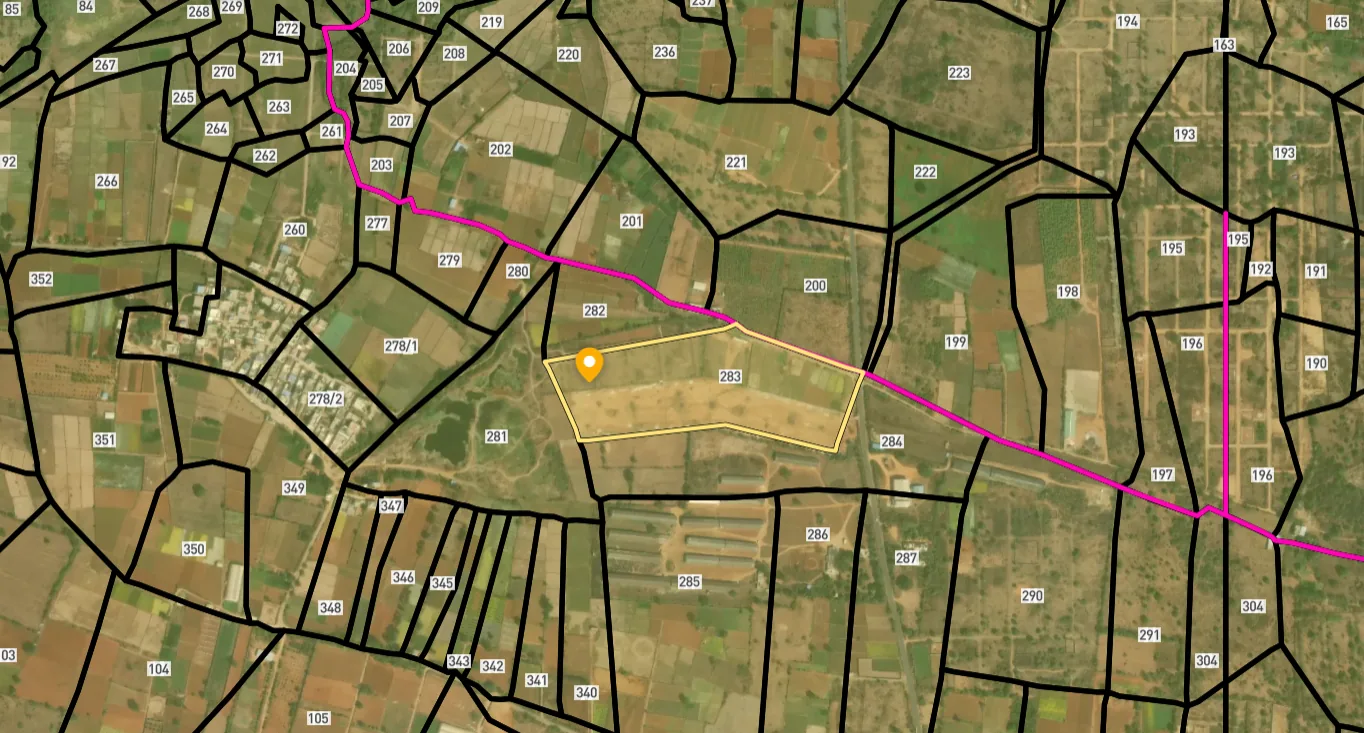
Survey Numbers View on Map Boundaries and numbers come from published state cadastral records. See all map layers.
Looking to sell your land in Maharashtra?
Browse 1,500+ verified lands & plots in Maharashtra
Frequently asked questions
What is Ferfar in Maharashtra?
Is mutation automatic after registration?
How do I track a Ferfar?
How long does Ferfar take?
What if someone objects?
When is the process complete?
Other Related Guides
Property Card Mumbai Maharashtra 2026: CTS Verify & Download
Property Card Mumbai Maharashtra guide. Pull the Malmatta Patrak online, decode the CTS number, spot title fraud, and verify before buying urban land.
Read guide →Index 2 Maharashtra: Verify Property Registration 2026
Download Index 2 Maharashtra free on IGR. Verify the registration summary, party names, stamp duty, and every charge before paying token on any plot.
Read guide →8A Extract Maharashtra 2026: Village Form 8A Buyer Guide
Download 8A Extract Maharashtra online. Match it with the 7/12 to expose hidden plots, decode Khata details, and verify before buying agricultural land.
Read guide →Mahabhulekh
Every Maharashtra land record service in one place, with a guide for each.
Read guide →Property Tax Receipt Maharashtra: Verify Nil Dues 2026
Property tax receipt Maharashtra proves nil arrears with the Municipal Corporation. Check, pay, and download from BMC, PMC, and other portals before buying.
Read guide →Zone Certificate Maharashtra: DP/RP Zoning Guide 2026
Zone Certificate Maharashtra confirms your plot's land use under the Development Plan. Verify zoning, fees, validity, and the reservation trap before buying.
Read guide →