
What is Jami Tripura?
Definition
Jami Tripura, the eJami portal run by the Revenue Department, serves the khatian, the record of rights, by district, sub-division, revenue circle, tehsil and mouza, then by khatian or Dag number, since there is no owner-name search. The online copy is reference only. Deeds sit on TORS at the sub-registrar, and a Section 187 or TTAADC restriction can govern transfer, so verify the Dag and the position on jami.tripura.gov.in before relying on the record.Hold one idea across every Tripura file: the khatian is a signpost, not the deed. It points to the plot, its co-owners and their shares, and the state itself treats the online copy as reference only. The facts that settle a purchase live around it, so the record is where a check begins and never where it ends.
What eJami gives you is that signpost, early and free. The khatian opens from any handset once you walk the location chain, district, sub-division, revenue circle, tehsil and mouza, and query by khatian or Dag; there is no name box, so a buyer must arrive with the number from the seller's paper or trace it at the revenue office. Registration is joined up too, since a deed on TORS can trigger the mutation.
What eJami cannot do is bind anything. The khatian shows a holding, while the registered deed carries title on TORS; the online copy is reference, so a formal step needs the certified Nakal; the map places a Dag without sizing it; and Section 187 and the TTAADC can decide whether the land may pass at all. The record opens the enquiry; the deed, the jurisdiction and the office close it.
Jami Tripura: what sits where, from khatian to deed
Sort the eight services by where they actually live, the record, the registration side, the map and the transfer rules, and the gap between a signpost and a binding fact stops catching buyers out. Here is the layout.
| You need | It lives at | The Tripura catch |
|---|---|---|
| Owners, shares, the Dag | The khatian on eJami | Reference only, no name search |
| A copy a counter takes | The certified Nakal | The revenue office, on a fee |
| Deeds and charges | TORS, the sub-registrar | Off the khatian, part paper for old years |
| Where the Dag sits | The Jami map | Places it, does not size it |
| A purchase recorded | Mutation at the revenue circle | A TORS trigger still needs confirming |
| Use, or a tribal transfer | The SDM, the Collector | Section 187 and the TTAADC restrict |
So the working order is plain: read the khatian and fix the Dag, trace the deeds on TORS, place the Dag on the Jami map, and carry conversion or a tribal transfer to the SDM or Collector. eJami hands you a signpost; the plot becomes a purchase only when the Dag lines up with the deed, the jurisdiction and the ground.
All Jami Tripura services, with a guide for each
The eight fall into four families set out below. A P1 badge flags the checks a purchase hangs on; a Confirm badge flags a rule worth testing again for the exact parcel.
The reference record
3 guidesThe khatian and how to reach it without a name, and the certified Nakal a formal step needs.
Owners, shares and Dag, reached by mouza and number, not a name.
No name searchWhy eJami needs a number, and how to arrive by mouza and Dag.
Certified khatian (Nakal)The stamped copy a counter takes, from the revenue office.
Title, on TORS
1 guideThe run of registered deeds that actually carries title, read on TORS and in the sub-registrar's bound volumes.
Placing the Dag
1 guideThe Jami map that locates a Dag, and cannot give you its area or its exact edge.
Recording, use and jurisdiction
3 guidesHow a purchase is mutated, the order needed to build, and when Section 187 or the TTAADC governs a transfer.
Getting started on the portal
Each service has a counter path too, at the revenue circle, the sub-registrar or the Collector.
What identifies a Tripura holding
A district, sub-division, revenue circle, tehsil and mouza place the record, and a khatian or Dag number reaches it; there is no owner-name search, so the number is the key. Take it from the seller's deed or an earlier patta, or have the revenue office trace the holding, then read the co-owners and each share before you rely on the record.
| Step | Online | Offline |
|---|---|---|
| 1. Access | Open eJami, pick a service | Go to the revenue circle in person |
| 2. Identify the parcel | Walk district to mouza | Ask the office to trace the holding |
| 3. Use the service | Search by khatian or Dag | File the application at the counter |
| 4. Keep evidence | Save the khatian and map | Collect the certified Nakal |
Three authorities settle a Tripura deal the screen cannot. The revenue circle holds the khatian, decides mutation and traces a holding when only a name is known; the SDM orders a change of use; and the Collector gives the prior permission a Section 187 transfer needs and governs the TTAADC position. The portal shows a signpost; these offices decide what the law will actually allow on the Dag.
Which Jami Tripura service do you need?
Pick the task you have now; whichever you choose, the trail tends to close on the deed and the plot on the ground, which is where a Tripura file is won or lost.
| You want to | Use this service | Guide |
|---|---|---|
| Read the khatian, owners and Dag | The reference record on eJami | Khatian guide |
| Reach a record with no name | Arrive by mouza and number | No-name-search guide |
| Get a copy a counter accepts | The certified Nakal | Certified copy guide |
| Trace the deeds and charges | The TORS deed history | EC guide |
| Place the Dag on the map | The Jami map, against the khatian | Land map guide |
| Put a purchase into your name | Mutation, triggered then confirmed | Mutation guide |
| Turn farmland into buildable land | Non-agricultural conversion | Conversion guide |
| Test whether the land can pass | Section 187 and the TTAADC | Tribal-land guide |
The order a careful buyer runs these in
A Tripura purchase runs in order: read the khatian and fix the Dag, settle status and jurisdiction, search the deeds, place and size the Dag, check the use, then register and confirm the mutation.
- Read the khatian and fix the Dag. Open the reference record on eJami, note the co-owners and shares, and pin the single Dag being sold. Guide: Khatian guide
- Establish who holds it, and where it sits. Fix the seller's status under Section 187 and whether the Dag falls inside the TTAADC before you go on. Guide: Tribal-land guide
- Search the deed history on TORS. Trace the run of deeds and charges back years, and open the sub-registrar's bound volumes for the older ones. Guide: EC guide
- Place the Dag and size it. Locate the Dag on the Jami map, then take the area from the khatian, not the drawn outline. Guide: Land map guide
- Check what the land may be used for. If you mean to build, confirm the conversion order and that the khatian has been told of it. Guide: Conversion guide
- Register, then confirm the mutation. Register on TORS, let it trigger the mutation, and follow it to a disposed khatian that names you. Guide: Mutation guide
Common issues across the portal
Most Tripura deals that fall over trip on one of these four.
The eJami khatian is relied on as if it bound the sale. Read it as reference, and confirm the registered deed on TORS for title.
One co-owner sells as if the whole holding were theirs. Read every co-owner and share on the khatian before treating the plot as available.
ST land or a TTAADC plot is bought without the Collector's permission or the Council route. Settle who holds it and where it sits; a breach is void.
Land recorded for agriculture is bought for a house without conversion. Read the recorded use, and confirm the order reached the khatian.
Jami Tripura: rules a buyer should know
The online copy is reference only, and a signpost even when certified. Read the registered deed on TORS for title, and use the certified Nakal for a counter.
eJami needs a khatian or Dag and the mouza; a name opens nothing. Take the number from the paper, or have the revenue office trace it.
Agricultural land needs conversion before you build, and the order must reach the khatian. Read the recorded use and confirm the change.
A Scheduled Tribe holder's land needs the Collector's permission to pass to a non-tribal, and TTAADC land follows the Council. A breach is void.
Looking to sell your land in Tripura?
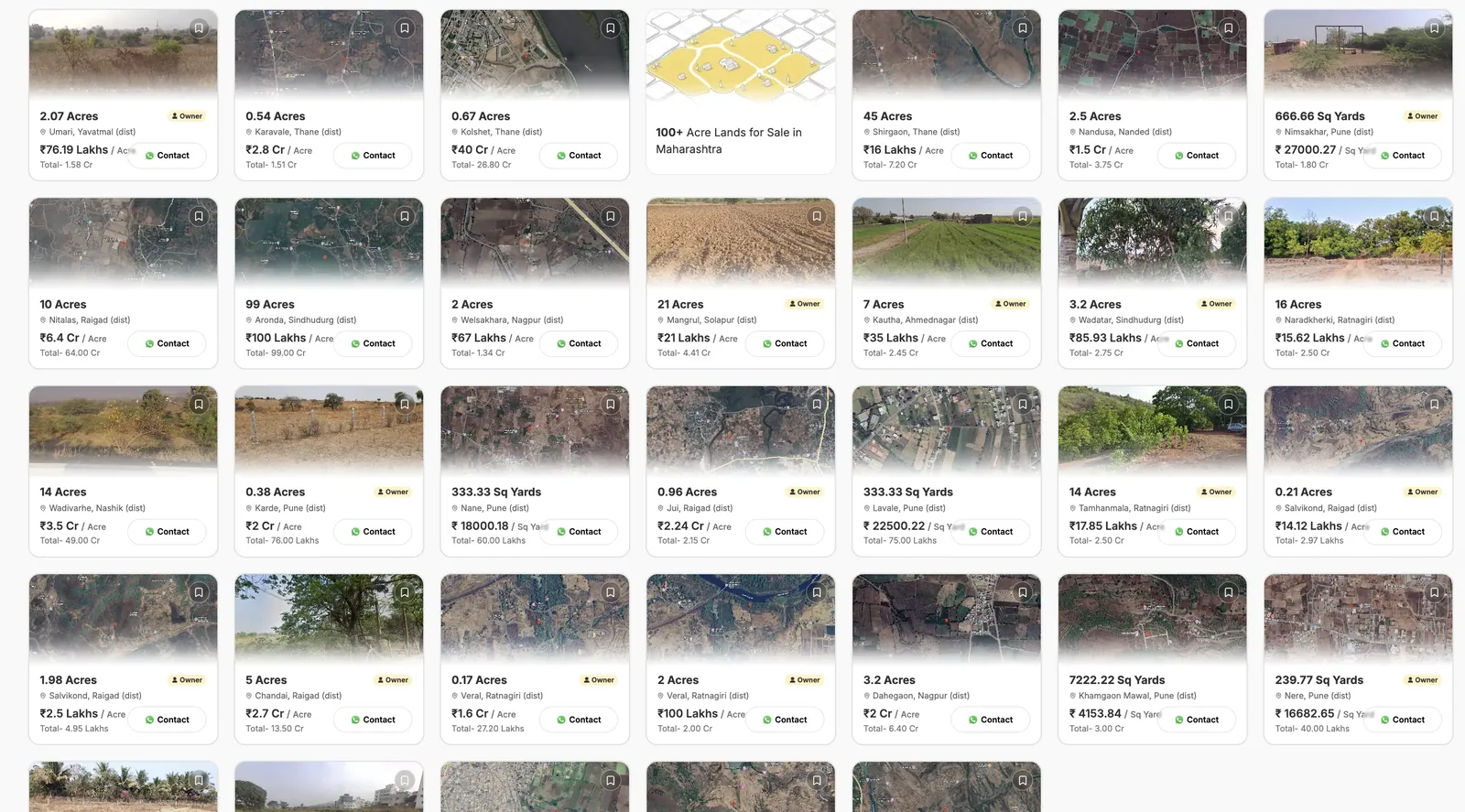
Browse 2+ verified lands & plots in Tripura
Frequently asked questions
What is Jami Tripura?
Jami Tripura, the eJami portal run by the Revenue Department, is where you view the khatian, the record of rights, by district, sub-division, revenue circle, tehsil and mouza.
Can I search Tripura land records by name?
No. eJami has no owner-name search. Reach a record by the location chain and a khatian or Dag number, taken from the seller's paper or traced at the office.
Is the online khatian legally valid?
It is valid for reference only. For a bank, a court or registration, obtain the certified khatian, the Nakal, from the revenue office, which is the accepted grade.
Does the khatian prove ownership?
No. It records a holding and its co-owners, not conclusive title. The registered deed on TORS carries title, so read it alongside the khatian.
Can a non-tribal buy tribal land in Tripura?
Only with the Collector's prior written permission. A Scheduled Tribe holder's land passes freely to another Scheduled Tribe person; a sale to a non-tribal without permission is void.
Where do I check deeds in Tripura?
On TORS and at the sub-registrar, apart from the khatian. The earliest deeds can rest in the bound volumes alone, so trace the Dag back years.
What is the TTAADC?
The Tripura Tribal Areas Autonomous District Council, a Sixth Schedule body administering land over much of the state's area, mainly the hills, through the Council.
Is the online record enough to buy on?
No. A reference signpost is not title, jurisdiction or use. First read the deed, account for every share, and clear Section 187 and any conversion.