
Land Acquisition by Government: Compensation Rules Under RFCTLARR Act
Understand how land acquisition compensation is calculated under RFCTLARR, including market value, solatium, multipliers, and rehabilitation benefits.
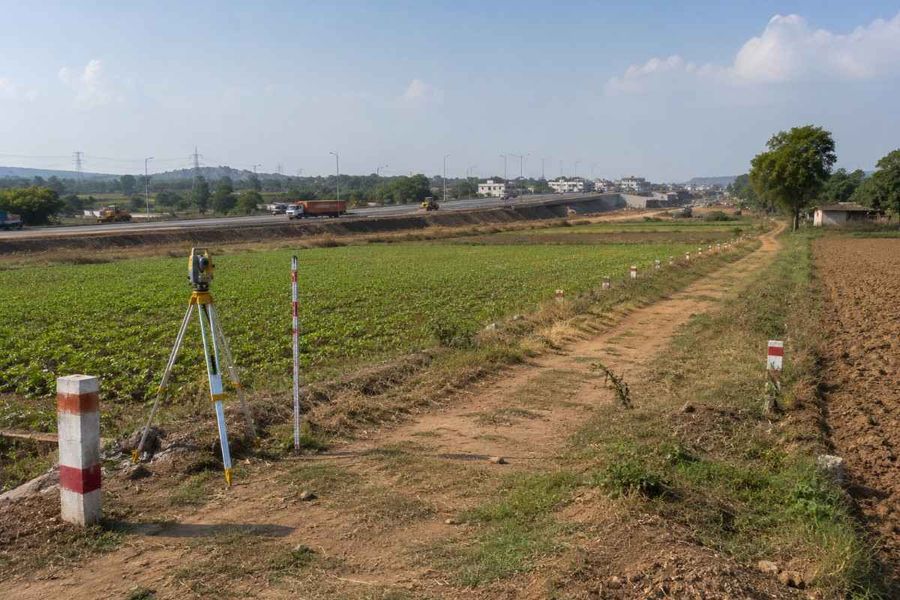
- The RFCTLARR Act, 2013 replaced the colonial-era Land Acquisition Act of 1894 and has been in force since 1st January 2014.
- Compensation isn't a single figure; it's built from market value, run through a rural or urban multiplier, then doubled by a mandatory solatium.
- Rural land gets a multiplier of 1.0 to 2.0 depending on distance from the nearest urban centre, while urban land usually sits at 1x.
- Compensation also covers standing crops, trees, wells, structures, severance damage, and relocation costs.
- The Act also provides Rehabilitation and Resettlement (R&R) benefits, including housing, allowances, and in some cases employment or annuity support for landowners and livelihood-dependent families.
- A landowner who thinks an award is short doesn't have to accept it; there's a formal path to challenge it.
What Land Acquisition Under RFCTLARR Means
Land acquisition is the government's power to compulsorily take private land for a public purpose, against compensation fixed under law, fundamentally different from a private sale where both sides negotiate freely.
The RFCTLARR Act, short for the Right to Fair Compensation and Transparency in Land Acquisition, Rehabilitation and Resettlement Act, 2013, governs most of this process across India, exists to make acquisition humane, participative, and transparent, and replaced the 1894 law that drew criticism for decades over arbitrary and inadequate payouts.

How Government Compensation Is Calculated
Nobody sets this figure by discretion; it follows a formula built around market value, a locational multiplier, and a statutory solatium on top. Section 26 lays out how the Collector arrives at market value, using registered sale deeds for similar land from the three years before acquisition, taking whichever of three benchmarks is highest, the top registered deed, the average of the top 50 percent of deeds in the vicinity, or the consented amount if the land was acquired through direct negotiation.
Historic registered deeds tend to lag real demand, so comparing recent market transactions, verified land listings, guidance values, and current asking prices in the same area provides a more realistic benchmark against the Collector's valuation.
Once market value is fixed, it gets multiplied depending on where the land sits. Urban land uses a factor of 1, while rural land follows a sliding scale, 1 to 2, that rises as the land moves farther from an urban centre, and some states push rural compensation up to 4 times market value in certain applications.
Rural vs Urban Compensation Multiplier
Urban land: 1.0x, occasionally up to 2x under state rules, driven by transaction data and infrastructure access, roughly 2x market value with solatium added.
Rural land near an urban centre: 1.0x to 1.5x, driven by distance from the urban boundary, working out to 2x to 3x market value.
Rural land far from an urban centre: up to 2.0x, up to 4x in some states, driven by remoteness and limited livelihood alternatives, 4x to 8x market value in some states.
Solatium and the 12 Percent Additional Amount
The payout doesn't stop at market value times multiplier, the law doubles it again. Landowners get an additional 100 percent as solatium, since compulsory acquisition creates hardship a voluntary sale doesn't.
On land worth 50 lakh rupees, that's another 50 lakh added, bringing the total to a full crore before anything else is counted, a real shift from the old 1894 Act, where solatium topped out at 30 percent.
On top of that, the Collector also adds 12 percent per annum on market value, running from the Social Impact Assessment notification date until the award or possession date, whichever comes first.
Rehabilitation and Resettlement Benefits
Cash isn't the whole story. The Act's Second Schedule adds a structured R&R package, housing, transport and resettlement allowances, and often employment or annuity support meant to restore livelihoods, not just replace land value.
This extends beyond landowners, agricultural labourers working someone else's field can qualify for R&R support too, even without owning the land.
Consent Rules for Private and PPP Projects
Where private companies acquire land for a defined public purpose, the Act requires consent from at least 80 percent of affected families for purely private projects, 70 percent for public-private partnerships, along with a preceding Social Impact Assessment.
National emergencies, natural disasters, and critical defence needs let the government invoke Section 40 and fast-track the process, skipping the SIA.
Common Mistakes in Compensation Awards
Authorities sometimes apply the urban multiplier to land that should be rural, understating the payout considerably. Wells, trees, and boundary structures get left out since they need a separate survey step.
The 12 percent amount gets miscalculated when the SIA notification date isn't tracked properly, and families who lose livelihood without owning land often never learn they qualify for R&R support.
How to Challenge or Dispute a Compensation Award
An undervalued award isn't final just because the collector signed off on it. A landowner can apply for a reference to the Land Acquisition, Rehabilitation, and Resettlement Authority within the prescribed time limit and appeal further to the High Court if that outcome isn't satisfactory.
Most disputes trace back to a wrong multiplier, missing asset valuation, or a miscalculated solatium, worth checking line by line before accepting an award.
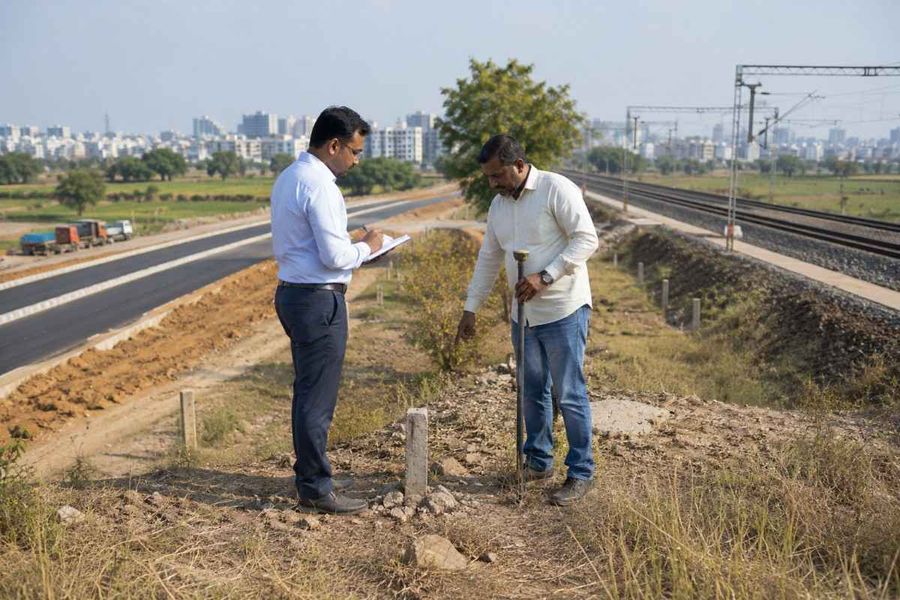
Is the RFCTLARR Process Reliable
The framework itself is fair on paper, built to avoid the arbitrariness of the 1894 law. Where it breaks down is usually implementation: A wrong multiplier here, a missed asset there, an SIA that should have happened but didn't. None of these are exotic errors, and they show up often enough that checking every line before accepting an award is just good practice.
How 1acre.in Supports Landowners Facing Acquisition
Most of what goes wrong in a compensation award is something a landowner could have caught earlier, with the right information in hand. 1acre.in's verified listings show current market pricing in a specific survey area, a real benchmark against the Collector's often dated figures.
Its satellite imagery and survey maps let landowners document land extent and structures before the government's own survey, and its geospatial land intelligence and market trends help landowners understand how surrounding development may influence land values, useful when challenging an award near a proposed infrastructure project.
Conclusion
Compensation under RFCTLARR follows a defined formula, but getting the full amount depends on checking the Collector's math against the facts on the ground. Multipliers get applied wrong, assets get missed, and interest calculations slip more often than they should. Checking each component before accepting an award is the surest way to get what's actually owed.