
What is Bihar Bhumi?
Definition
Bihar Bhumi, run by the Revenue and Land Reforms Department, serves the khata, khesra, jamabandi panji, dakhil kharij mutation, LPC and parimarjan for the state, from district down to anchal and mauza. Deeds and value sit on Bhumijankari; maps on Bhu Naksha. Because holdings are largely joint and a survey is under way, verify the share and the currency of any entry on biharbhumi.bihar.gov.in.Carry one idea into every Bihar file: the record remembers families, not plots. Generations divided their land by custom and cultivation without ever recording the partition, so a single khata routinely carries many co-sharers, some long dead. The first question is therefore never who owns the khata but which undivided share a seller can actually convey, and that question runs through mutation, possession proof, correction, and now a statewide resurvey that is retracing the divisions.
What Bihar Bhumi delivers is genuine access to that tangle. The khata and jamabandi read from any phone, dakhil kharij is applied for and tracked online, LPC comes through Parimarjan Plus, corrections through Parimarjan, and Bhu Naksha draws the khesra. For a record long locked in anchal registers, that reach lets a buyer see the co-sharers, the shares and the plot before a single meeting, and start asking the partition question early rather than after possession.
What the portal cannot do is settle the division for you. The jamabandi shows the joint holding, not who owns which slice; the deeds and value live on Bhumijankari; the boundary shifts across three surveys; and the special survey may renumber everything before long. The share, the partition and the currency are settled at the anchal, with the Circle Officer, and on the ground. The screen finds the family; the office finds the slice.
Bihar Bhumi: what sits where, and the joint-holding trap
Nine services across records, deeds, maps and corrections, all shadowed by partition and the survey. Here is the map of it.
| You need | It lives at | The Bihar catch |
|---|---|---|
| Ownership and shares | Bihar Bhumi (jamabandi, khata) | Usually joint, partition unwritten |
| Mutation | Dakhil kharij, the anchal | Must carve a share from a joint khata |
| Deeds and value | Bhumijankari | MVR value; older deeds in volumes |
| Plot boundary | Bhu Naksha Bihar | Three surveys, numbers can differ |
| Correction | Parimarjan | Fixes digitisation errors only |
| Possession proof | LPC via Parimarjan Plus | Possession, not title |
In practice, read the khata on Bihar Bhumi for the share, settle deeds and value on Bhumijankari, correct any error through Parimarjan, and take the partition and mutation to the anchal. The screen locates the holding; the anchal separates your slice from it.
All Bihar Bhumi services, with a guide for each
Nine services, sorted into four families below. The P1 tag marks the reads a purchase turns on; the Bhumijankari tag marks the one service that lives on the registration side.
Reading the khata
3 guidesThe joint holding, the way to reach it by name, and the attested copy others accept.
The khata, khesra and jamabandi panji, and the joint holding behind them.
Search by nameReach a khata from a raiyat name, allowing for ancestral entries.
Certified copyThe attested jamabandi or Register-II a bank, court or the survey accepts.
Deeds & possession
2 guidesThe registered deed trail and value, and the certificate that proves recorded possession.
The registered deed trail and MVR value, on the registration side.
Land Possession CertificateProof of recorded possession, not title, for loans and the survey.
The plot map
1 guidesThe boundary map that locates a khesra across Bihar's several surveys.
Correcting & changing
3 guidesMoving a share into your name, fixing record errors, and testing what a plot may become.
Getting started on the portal
Each service has a counter twin at the anchal or the registration office.
What identifies a Bihar holding
The mauza narrows the record, the khata groups a family's land, and the khesra numbers a single plot; a raiyat's name is the soft fallback, though it often points to an ancestor rather than the seller. A computerised jamabandi number, where you have it, reaches the exact entry fastest.
| Step | Online | Offline |
|---|---|---|
| 1. Access | Open Bihar Bhumi, choose a service | Call at the anchal office |
| 2. Identify the parcel | Drill to district and mauza | Ask the karmchari for the khata |
| 3. Use the service | Search by khata, khesra or name | File at the anchal counter |
| 4. Keep evidence | Save the record and the map | Collect the attested copy |
The anchal is where Bihar's land work still settles: the Circle Officer who orders a dakhil kharij, the karmchari who holds the register, and the partition history that no screen records. The joint holding, above all, is separated here. The portal locates the khata; the anchal, and a walk on the khesra, decide the share.
Which Bihar Bhumi service do you need?
Start from what you need done; several services lead back to the khata, because that is where a Bihar file begins.
| You want to | Use this service | Guide |
|---|---|---|
| Read who holds and what share | The jamabandi and khata | Jamabandi guide |
| Find land from a raiyat name | The name search, per mauza | Name search guide |
| Check the deeds and value | Bhumijankari and the MVR | EC guide |
| Record a purchase into your name | Dakhil kharij at the anchal | Dakhil kharij guide |
| See the plot across surveys | Bhu Naksha Bihar | Bhu Naksha guide |
| Prove possession for a loan | The Land Possession Certificate | LPC guide |
| Fix an error in the record | Parimarjan correction | Parimarjan guide |
| Check whether you may build | The land-use conversion route | Land-use guide |
The order a careful buyer runs these in
A Bihar purchase runs in order: khata and shares read, seller traced, plot mapped, deeds searched, land use checked, share mutated and corrected.
- Read the khata and the shares. One entry usually holds many co-sharers; find the seller's slice before anything else. Guide: Jamabandi guide
- Trace the seller by name. Reach the khata from a name, remembering the land may still stand under an ancestor. Guide: Name search guide
- Place the khesra, and note the survey. The same plot can differ across the cadastral, revisional and special-survey maps. Guide: Bhu Naksha guide
- Search the deeds and the value. Bhumijankari for the registered chain and the MVR, with the older deeds in the volumes. Guide: EC guide
- Check land use where building is the plan. The classification, and any flood or embankment status, decide what the plot may become. Guide: Land-use guide
- Mutate the share, fix errors, take your LPC. Carve the share via dakhil kharij, correct any entry through parimarjan, then get your LPC. Guide: Dakhil kharij guide
Common issues across the portal
Four snags account for most stalled Bihar files.
One entry, many co-sharers, treated as a lone owner. List every co-sharer and fix the seller's exact share before you value the plot.
The jamabandi carries a grandfather who last paid rent. Expect a succession dakhil kharij before the seller is the recorded holder.
A wrong name, area or khesra on the computerised entry. Fix it through parimarjan before it blocks a mutation or a copy.
Diyara or embankment land bought for building. Confirm the classification and the location before you plan a structure on it.
Bihar Bhumi: rules a buyer should know
Most holdings are joint. Establish the seller's undivided share and the partition before you treat any plot as clean.
It certifies recorded possession and can go to a co-sharer. Never read a seller's LPC as proof of the whole plot.
Cadastral, revisional and special surveys can number a plot differently. Match paper, record and map to one survey.
The record shows the holding; Bhumijankari shows the deeds and the MVR value. Read both, and reach the volumes for old deeds.
Looking to sell your land in Bihar?
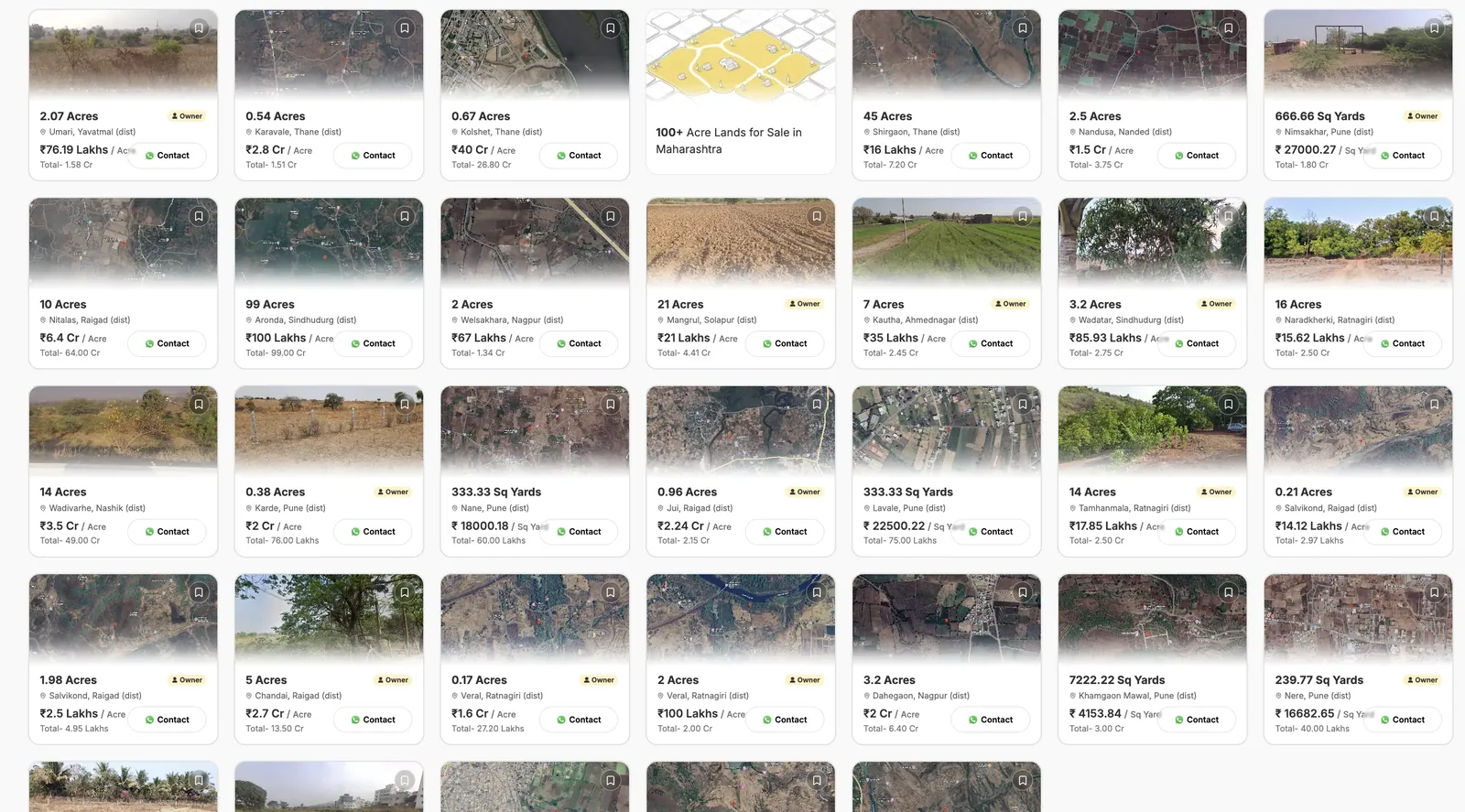
Browse 31+ verified lands & plots in Bihar
Frequently asked questions
What is Bihar Bhumi?
Bihar Bhumi, run by the Revenue and Land Reforms Department, is the state portal to view the khata, khesra, jamabandi and mutation, and to apply for dakhil kharij and LPC.
Why are Bihar holdings usually joint?
Families partitioned land among heirs by custom without recording the division, so one khata commonly carries many co-sharers. The first task is finding the seller's exact share.
What is dakhil kharij?
Bihar's mutation: recording a transfer into the jamabandi through the Circle Officer at the anchal, which also moves the land rent to the new holder.
Where do I check deeds in Bihar?
On Bhumijankari, the registration portal, through the registered deed search and the Minimum Value Register. Older deeds may sit only in the registration office volumes.
Does an LPC prove ownership?
No. A Land Possession Certificate certifies recorded possession, not title, and can be issued to a co-sharer. Confirm ownership through the full record and deeds.
What is the Bihar special survey?
A statewide resurvey retracing holdings, which asks for a vanshavali, or family tree, to trace partition. It may renumber plots, so confirm its status for the mauza.
Is checking Bihar land records free?
Reading the khata, jamabandi and map online is free. Certified copies, deed searches and applications carry the scheduled fees, so confirm current charges before relying on them.
Is the online record enough to buy on?
No. It shows the joint holding, not the partition or the deeds. Confirm the share, the deed trail and the mutation at the anchal before you commit.