
How to Check a Conversion Sanad in Goa — Complete Guide 2026
Form I and XIV Goa are the Mamlatdar's revenue records that prove ownership and cultivation status of agricultural parcels. Form XIV tenancy and Mundkar entries enjoy strong statutory protection. They cannot be removed without a Mamlatdar court order. This guide covers verification, fields, and red flags.
What is a Conversion Sanad in Goa?
Definition
Form I and XIV Goa are the two-part revenue record maintained by the Mamlatdar for every agricultural parcel. Form I (Index of Holdings) records ownership; Form XIV (Record of Tenancy and Cultivation) records who actually cultivates the land, including tenants and Mundkars. Both are governed by the Goa Land Revenue Code, 1968.
Form I and Form XIV are pulled together for every Goa land transaction. Form I lists the owner, share, area, and survey-sub-division reference. Form XIV records the cultivator, tenant name, Mundkar entries, and crop pattern. The two should match in ordinary cases. Where they diverge, Form XIV controls in the field. A buyer who holds Form I but ignores Form XIV may inherit a tenant or Mundkar who cannot be removed.
Two state laws make Form XIV entries dangerous. The Goa, Daman and Diu Agricultural Tenancy Act, 1964 gives tenants Section 18A "deemed purchase" rights at statutory prices. The Goa, Daman and Diu Mundkars (Protection from Eviction) Act, 1975 protects dwelling-house occupants and lets them buy the surrounding land. A Sale Deed signed without resolving these entries leaves the buyer with paper title and a third party in possession. Settlement requires a compromise deed and Mamlatdar order, or a Negative Declaration under Section 8A.
How to Get Form I and XIV in Goa: Step-by-Step on goaonline.gov.in
Two routes for Form I and XIV verification. The goaonline.gov.in portal returns digital extracts. The Mamlatdar's office through the Talathi or Patel holds the village registers. Carry survey number, sub-division, Taluka, and the seller's deed bundle.
Online method (recommended)
Offline method (Sub-Registrar Office)
What Do Form I and XIV Contain in Goa?
The two-part record carries the parcel's ownership, area, and cultivation history. Mismatch on any field indicates either a pending mutation or an active third-party claim.
| Field | What it means | What to check |
|---|---|---|
| Survey Number / Sub-division | Parcel identifier | Match Form I, Form XIV, FMB sketch, Sale Deed |
| Owner Name (Form I) | Registered owner | Confirm against seller's ID and Sale Deed |
| Share / Area (Form I) | Owner's share and parcel area | Match against Sale Deed and FMB sketch |
| Cultivator Name (Form XIV) | Person actually cultivating the land | Should match owner unless tenant exists |
| Tenancy Entry (Form XIV) | Tenant or sub-tenant under the 1964 Act | Section 18A purchase rights apply |
| Mundkar Entry (Form XIV) | Dwelling-house occupant under the 1975 Act | Protected from eviction; purchase rights apply |
| Land Category | Khajan, Ker, or general agricultural | Affects buildability and use restrictions |
| Mamlatdar Signature | Authentication of the extract | Digital signature for online; physical for manual |
Common Issues With Form I and XIV in Goa
Most Goa agricultural-land disputes trace to one of these six recurring Form XIV defects.
Why Form I and XIV Matter for Land Buyers in Goa
Form I and XIV are the master ownership and cultivation record for any Goa agricultural parcel; both must be clean before purchase.
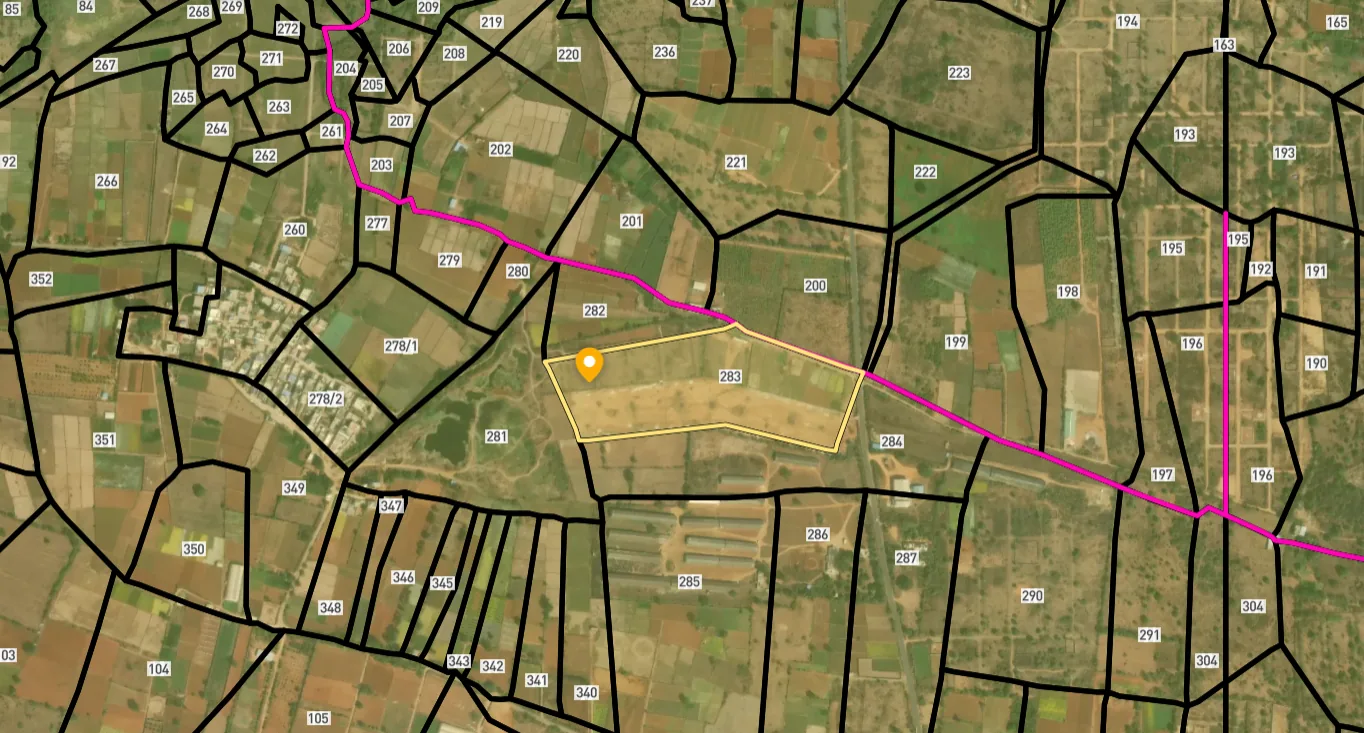
Survey Numbers View on Map Boundaries and numbers come from published state cadastral records. See all map layers.
Looking to sell your land in Goa?
Browse 88+ verified lands & plots in Goa
Frequently Asked Questions
What are Form I and XIV Goa?
How do I check Form I and XIV online in Goa?
What is a Mundkar in Goa?
Can a tenant entry on Form XIV be removed in Goa?
What if Form I and Form XIV show different names?
What is Khajan land in Goa?
What is a Negative Declaration in Goa?
Are Form I and XIV the same as Patta in Goa?
Other Related Guides
Survey Sketch Goa: Cadastral Map Verification Guide 2026
The Survey Sketch Goa from DSLR confirms plot boundaries, area, and shape. Cross-check survey area against the Sale Deed before any purchase. Pull from goaonline.gov.in.
Read guide →Sanctioned Building Plan Goa: Approved Plan Guide 2026
The Sanctioned Building Plan Goa is the Panchayat or Municipal-issued construction approval. Verify the actual building matches the sanctioned plan before any property purchase.
Read guide →Prenuptial Contract Goa: Contrato Antenupcial Guide 2026
In Goa, marriage defaults to Communion of Assets. Verify the Prenuptial Contract (Contrato Antenupcial) before any property purchase. No prenup means both spouses sign.
Read guide →Gram Panchayat NOC Goa: Village Council Clearance Guide 2026
The Gram Panchayat NOC Goa is the Village Council's no-objection certificate. Required for all Panchayat-area properties before Sale Deed registration or building approvals.
Read guide →Marriage Certificate Goa: Seller Verification Guide 2026
The Marriage Certificate (Certidão de Casamento) of a Goan seller is mandatory before any property purchase. Default Communion means both spouses must sign every document.
Read guide →Health Department NOC Goa: Sanitation Clearance Guide 2026
Health Department NOC Goa is the DHS sanitation clearance for construction. Required alongside the Gram Panchayat NOC, not as a substitute. Pull from goaonline.gov.in.
Read guide →