
Certified Nakal in Haryana: the attested copy
Jamabandi Haryana puts the Fard on screen for free, and the screen version is the right tool for a buyer's own research. When a bank, a court or a registrar needs the record, they want the attested Nakal from the revenue office. The difference is not a formality: the certified copy carries the Patwari's attestation, and only that grade is accepted at a counter. Two things follow: obtain the right grade for the right step, and remember that even the attested copy proves the record, not the title.
Attested Nakal and view-only copy in Haryana
Definition
A certified Nakal or Fard in Haryana is the attested copy carrying the Patwari's signature, issued at the tehsil or revenue office for the scheduled fee. The Jamabandi screen copy is view-only and not accepted for a bank, a court or the sub-registrar. The attested copy certifies the Fard, its co-holders, shares and khasra, as recorded evidence; it does not certify title, which the registered deed carries, or the soundness of the Intkaal chain behind the entry.
There is a practical boundary between the screen copy and the attested Nakal. The screen copy from Jamabandi is a view-only record, good for checking a holding, confirming co-holders against the seller's papers or verifying a khasra number before a meeting. It is not accepted at a bank, at a court or by the sub-registrar, who will ask for the attested Nakal from the revenue office, with the Patwari's signature on it.
Getting the attested Nakal means going to the tehsil or the Patwari's office with the particulars of the holding, paying the scheduled fee, and receiving the signed copy. It is worth asking the receiving institution which grade of copy they need before applying, since some desks accept a recent attested copy and some want one dated close to the transaction, and making two trips is avoidable if the requirement is known in advance.
Then comes the boundary the Nakal cannot cross. It proves, with a signature, that the Fard shows a particular set of co-holders, shares and khasra, as the record at a particular date. It does not prove that the Intkaal chain behind that entry is complete, that the title is clear or that the holder may sell. An attested Nakal naming the seller is a useful reference document and a poor substitute for the registered deed and a clear Intkaal chain.
How to get an attested Nakal in Haryana
The request is straightforward; knowing the grade the counter needs and reading the copy's limits is the discipline.
Getting the copy
Match to purpose
Haryana Nakal copies: which grade, which use
Match the copy to the task, and never read an attested record as proof of title.
| View-only copy | Attested Nakal | Use it for |
|---|---|---|
| Jamabandi screen print | Patwari-signed copy | Each step |
| Your own research | Bank and court filing | The counter step |
| Confirming details | A legal submission | The specific counter |
| Reference checking | Evidence of the record | The office's requirement |
| Free to pull | Scheduled fee applies | Budget accordingly |
Common Haryana certified Nakal issues, and the fix
Four ways a Haryana Nakal copy is misused.
Why the Nakal is evidence, not title
The most useful thing to fix about the attested Nakal is where it stops. Signed and dated, it proves that the Fard shows a particular set of co-holders, shares and khasra at a particular date. It does not prove the Intkaal chain that led to that entry is complete, that the holding survived consolidation cleanly, or that the title is clear of encumbrances. A buyer who relies on the Nakal as if it closed those questions has mistaken a certified description of the record for a clean title. Use the Nakal for what it is worth and the deed and the chain for what they settle. Take the attested copy for the counter that needs it, read it alongside the registered deed from the Jamabandi deed search, and check the Intkaal log for the chain. When the Nakal, the deed and the chain all point to the same holder with no gap, the holding is on firm ground. When any of them diverges, the honest answer is legal advice before the transaction rather than another copy.
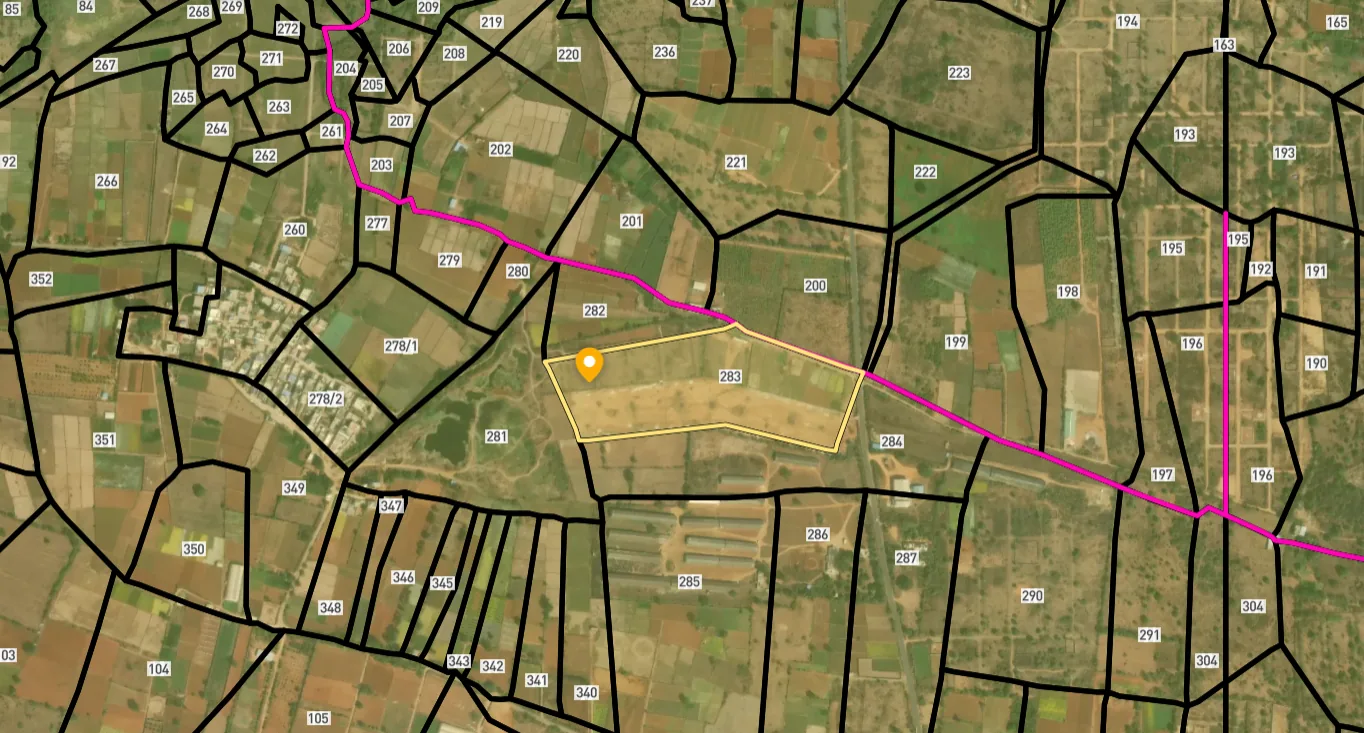
Survey Numbers View on Map Boundaries and numbers come from published state cadastral records. See all map layers.
Looking to sell your land in Haryana?
Browse 200+ verified lands & plots in Haryana
Frequently asked questions
Is the Jamabandi screen copy accepted at a bank?
What is an attested Nakal in Haryana?
Does a certified Nakal prove ownership?
How recent does the Nakal need to be?
Does the Nakal show the Intkaal chain?
What does the attested Nakal cost?
Other Related Guides
Legal Heir Certificate Haryana 2026: Complete Step-by-Step Guide
Learn how to get a Legal Heir Certificate in Haryana in 2026. Covers Antyodaya SARAL online process, documents, fees, Patwari verification, and why all heirs must consent before sale.
Read guide →Encumbrance Certificate Haryana 2026: Complete Buyer's Guide
Get your Encumbrance Certificate Haryana 2026 guide. Check EC via IGRS HR, apply online, verify 30-year mortgage history, and avoid hidden liabilities before buying land.
Read guide →DTCP CLU Haryana 2026: Complete Guide to Change of Land Use
Understand DTCP CLU Haryana 2026. Learn how to verify Change of Land Use approval, apply via dtcp.haryana.gov.in, and avoid buying plots in illegal unapproved colonies.
Read guide →Building Plan Haryana 2026: Sanctioned Plan Approval Guide
Get your Building Plan Haryana 2026 guide. Learn how to apply via ulbharyana.gov.in, verify sanctioned plans, check deviations, and avoid demolition risk before buying.
Read guide →Title Deed Haryana 2026: Complete Guide for Land Buyers
Verify title deed in Haryana before buying land. Check 30-year ownership chain on jamabandi.nic.in, spot fake deeds, and know stamp duty rates for 2026.
Read guide →Jamabandi Haryana
Every Haryana land record service in one place, mapped for buyers.
Read guide →