
What is Jamabandi Haryana?
Definition
Jamabandi Haryana, run by the Revenue Department, carries the Nakal or Fard, keyed by khewat and khasra, alongside the deed search, cadastral maps and collector rates on one platform. The Fard reflects the post-chak-consolidation record; the Intkaal chain from that consolidation forward is the title story. The attested Nakal and the CLU come from the Patwari and TCP Haryana respectively. Verify the live records on jamabandi.nic.in.Carry one idea into every Haryana file: the Fard is only as reliable as the consolidation it survived. Chak consolidation reshaped villages across the state from the 1970s to the 1990s, re-assigning khasra numbers and re-attesting holdings. The Fard a buyer reads today is a post-consolidation document, and the Intkaal chain from that consolidation to the current holder is the full title story.
Jamabandi Haryana's integration is a genuine advantage. The Fard, the deed search, the Bhu Naksha and the collector rates are on one platform at jamabandi.nic.in, so the three reads a Haryana check requires, the record, the deeds and the map, need no change of portal. A name search also sits on the platform, gathering the khewat entries a seller holds in a village for cross-checking.
What Jamabandi cannot do is confirm the consolidation chain or supply an attested copy. Pre-digital deed records sit in the sub-registrar's volumes; the attested Nakal comes from the Patwari's office; and the CLU for non-agricultural use comes from TCP Haryana. The portal opens a Haryana check; the Patwari, the sub-registrar and TCP close it.
Jamabandi Haryana: what sits where, from Fard to deed
Seven services across the record, the deeds, the map and the conversion route, all shaped by the consolidation that reshaped much of the state's land. Here is the layout.
| You need | It lives at | The Haryana catch |
|---|---|---|
| The holders and chain | The Nakal / Fard on Jamabandi | Read through the consolidation |
| All a seller's holdings | The name search on Jamabandi | Watch for consolidation name drift |
| An attested copy | The Patwari's office | Screen copy is view-only |
| Deeds and charges | The deed search on Jamabandi | Search old khasra too in consolidated villages |
| The khasra on the map | Bhu Naksha on Jamabandi | Post-consolidation layout only |
| CLU and NA conversion | TCP Haryana | Agricultural land needs CLU before building |
In practice: read the Fard on Jamabandi and trace the Intkaal chain, search the name for all khewat entries, run the deed search across a long span under both khasra numbers where consolidation applies, and take CLU to TCP Haryana. The portal brings most of it together; the Patwari and TCP carry the rest.
All Jamabandi Haryana services, with a guide for each
Seven services in four families below. P1 marks the reads a purchase turns on; Confirm marks a rule to verify fresh for the exact parcel.
The record
3 guidesThe Fard, how to reach it by name, and the attested Nakal a counter needs.
The Fard through the consolidation: khewat, khasra and the Intkaal chain.
Search by nameReach the khewat by name; gather all holdings in the village.
Certified NakalThe attested copy a bank or court accepts, from the Patwari.
Deeds, on the same portal
1 guideThe registered deed chain and charges, searchable alongside the Fard on Jamabandi.
The khasra on the map
1 guideThe post-consolidation khasra on the cadastral map, to reconcile with the Fard area.
Transfer and use
2 guidesThe Intkaal that updates the Fard, and the CLU for building on agricultural land.
Getting started on the portal
Each service has an offline path too, at the Patwari, the tehsil or TCP Haryana.
What identifies a Haryana holding
A district, tehsil and village place the record; the khewat groups a holder's khasra plots in that village; the khasra is the individual plot. A name search is the loose fallback when the khewat is not known. In consolidated villages confirm the post-consolidation khasra, since the pre-consolidation number may point to a re-assigned or no-longer-current parcel.
| Step | Online | Offline |
|---|---|---|
| 1. Access | Open Jamabandi, pick a service | Go to the Patwari or tehsil in person |
| 2. Identify the parcel | Set district, tehsil, village | Ask the Patwari for the Fard |
| 3. Use the service | Search by khewat, khasra or name | File the application at the counter |
| 4. Keep evidence | Save the Fard and deed results | Collect the attested Nakal |
Two authorities settle a Haryana deal the screen cannot. The Patwari at the tehsil holds the Fard, issues the attested Nakal, processes the Intkaal and can explain a consolidation-era gap in the chain; TCP Haryana decides whether agricultural land may change its use. Jamabandi shows the record; these offices decide what may lawfully be done with it.
Which Jamabandi Haryana service do you need?
Pick the task you have; most Haryana checks end on the Intkaal chain and the deed, which is where the purchase is decided.
| You want to | Use this service | Guide |
|---|---|---|
| Read the Fard and the Intkaal chain | The Nakal after chak consolidation | Fard guide |
| Find all holdings by a seller's name | The khewat behind the name | Name-search guide |
| Get an attested copy for a counter | The certified Nakal | Certified copy guide |
| Trace the deeds and charges | The deed search on Jamabandi | EC guide |
| Place the khasra on the cadastral map | The post-consolidation layout | Bhu Naksha guide |
| Put a purchase into the Fard | Intkaal, with a clean chain | Intkaal guide |
| Change what the land may be used for | CLU from TCP Haryana | CLU guide |
The order a careful buyer runs these in
A Haryana purchase runs in order: read the Fard and the Intkaal chain, gather all holdings by name, search the deeds, place the khasra on the map, register and complete the Intkaal, then clear the CLU if building is planned.
- Read the Fard and the Intkaal chain. Open the Nakal on Jamabandi, note the co-holders and shares, and trace the Intkaal chain from the chak consolidation period to the current entry. Guide: Fard guide
- Gather all the seller's holdings. Run the name search in the village; a consolidated holding may have been split across khewat entries a seller does not mention. Guide: Name-search guide
- Search the deed history on Jamabandi. Use the deed search on the same portal to trace registered charges back many years, and search the old khasra number too in consolidated villages. Guide: EC guide
- Place the khasra on the map. Open the Bhu Naksha, confirm the post-consolidation khasra, and reconcile the shape against the Fard area. Guide: Bhu Naksha guide
- Register, then complete the Intkaal. Register the deed and complete the Intkaal at the tehsil; confirm the updated Fard names you on a clean chain. Guide: Intkaal guide
- Clear the CLU if you mean to build. If non-agricultural use is planned, obtain the CLU from TCP Haryana and confirm the Fard reflects the change. Guide: CLU guide
Common issues across the portal
Most Haryana deals that trip do so on one of these four.
The Intkaal chain has a gap around the chak consolidation period. Ask the Patwari for the consolidation order; a gap here means the holding's post-consolidation status was never formally recorded.
One co-holder sells as if the whole khewat were theirs. Read every co-holder and share on the Fard before treating any khasra as one person's to sell.
An encumbrance search under only the post-consolidation khasra misses a charge taken before the reshuffle. Search under both khasra numbers in consolidated villages.
Agricultural land is bought for a house without a CLU from TCP Haryana. Read the recorded use in the Fard and obtain the CLU before any construction.
Jamabandi Haryana: rules a buyer should know
The current Fard is post-consolidation. Confirm the Intkaal chain runs from the re-attestation to the present holder with no gap before treating the entry as settled.
The Jamabandi screen print is for reference. A bank, a court or the sub-registrar wants the attested Nakal from the Patwari's office.
In a consolidated village, search the deed history under the pre-consolidation khasra too; a mortgage on the old number can bind the land even if the current entry looks clear.
Agricultural land needs a Change of Land Use from TCP Haryana before any non-agricultural construction. Building without it is unlawful and carries penalties.
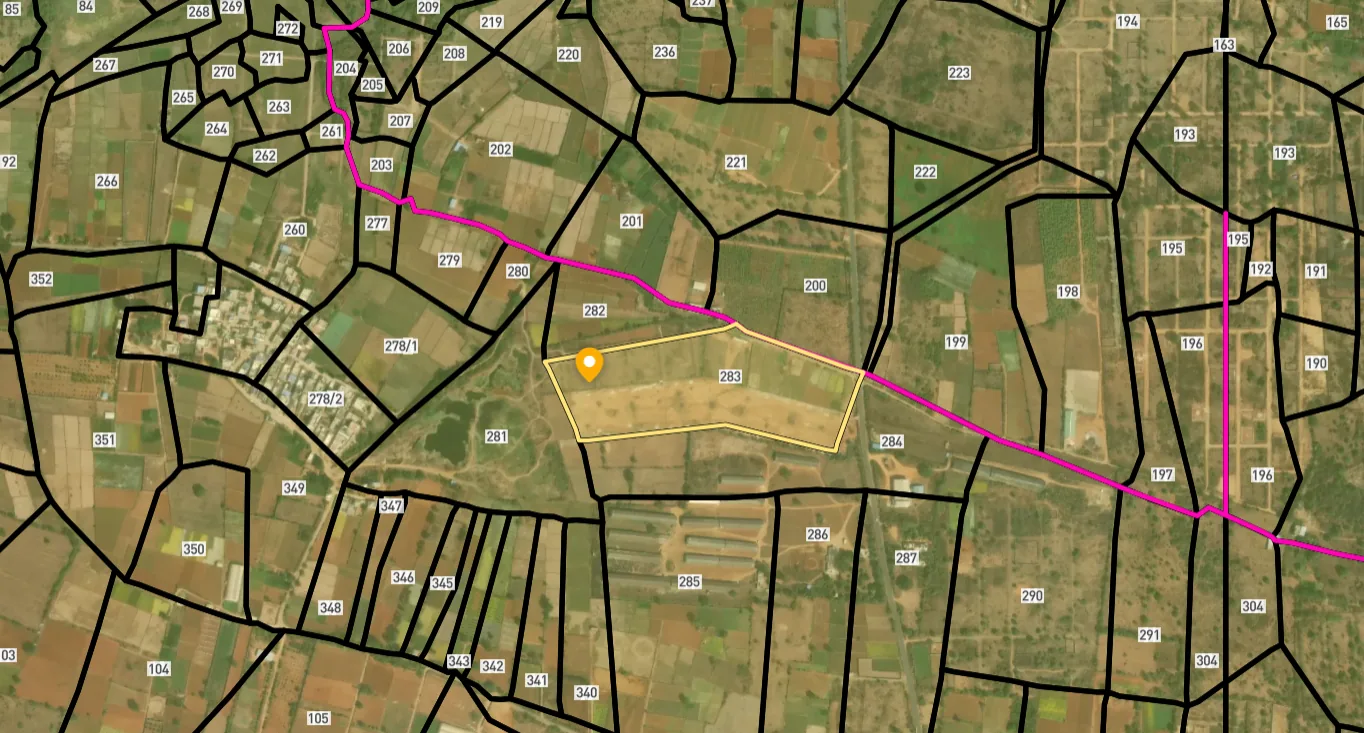
Survey Numbers View on Map Boundaries and numbers come from published state cadastral records. See all map layers.
Looking to sell your land in Haryana?
Browse 200+ verified lands & plots in Haryana
Frequently asked questions
What is Jamabandi Haryana?
Jamabandi Haryana at jamabandi.nic.in is the integrated land-records portal carrying the Nakal, Fard, deed search, cadastral map and collector rates in one place, run by the Revenue Department.
What is chak consolidation?
A programme that pooled scattered strips and re-allotted compact holdings, re-assigning khasra numbers and re-attesting the Jamabandi; the post-consolidation khasra and Intkaal chain are what matters.
Does the Fard prove ownership?
No. It records possession and co-holders after consolidation. The registered deed on the Jamabandi deed side carries title; the Intkaal chain shows how title reached the current holder.
What is Intkaal in Haryana?
Intkaal is the Haryana mutation that updates the Fard to name a new holder after a sale, gift or inheritance, processed at the tehsil and recorded on Jamabandi.
Is the Jamabandi screen copy accepted at a bank?
No. It is view-only. Banks, courts and the sub-registrar want the attested Nakal signed by the Patwari, obtained from the tehsil for the scheduled fee.
Where do I check deeds in Haryana?
On the deed-search side of Jamabandi at jamabandi.nic.in, which carries registered deeds and charges alongside the Fard. Also check the sub-registrar's volumes for older deeds.
What is CLU in Haryana?
Change of Land Use, the permission from TCP Haryana to put agricultural land to non-agricultural use such as residential or commercial; required before any such construction.
Is checking records on Jamabandi free?
Viewing the Fard, deed history and Bhu Naksha is free. The attested Nakal, registered deed copies and CLU application each carry the applicable scheduled fee.