
The Haryana Nakal and Fard: read through the consolidation
The Nakal or Fard on Jamabandi Haryana shows who holds a plot and how their khewat, khasra and share are recorded. What it does not show is whether that holding has passed through chak consolidation cleanly. Haryana consolidated large parts of its agricultural land in the 1970s to 1990s, reshuffling khasra numbers and re-attesting holdings, so a Fard from 1995 and a Fard from 1978 may point to different physical parcels. Reading the Fard means reading it in light of the consolidation the land went through.
What the Haryana Fard records after chak consolidation
Definition
The Nakal or Fard is the Haryana record of rights on Jamabandi, keyed by khewat number, khasra number and khata, showing co-owners, shares and the area of each plot. Jamabandi Haryana at jamabandi.nic.in integrates the record, deeds search and cadastral map on the same platform. Where consolidation reshaped the land, the khasra numbers and the Intkaal chain that follows consolidation define what the Fard actually points to. Read through those before relying on the current entry.
A khasra number in Haryana is not always the same shape of land it was thirty years ago. In the chak consolidation programme, villages across the state had their agricultural plots reshuffled: scattered strips were pooled and re-allotted as compact holdings, the khasra numbers were re-assigned and the Jamabandi was re-attested to record the new positions. What this means for a buyer is that the Fard they read today is a post-consolidation document, and whether the physical parcel matches the description depends on whether consolidation was completed cleanly and recorded correctly.
Jamabandi Haryana gives a buyer early sight of that record. The Fard opens from any connection, keyed down through the district, tehsil, village and then by khewat number, khasra or khata, and it names the co-holders with their shares and areas. It is searchable by name too, so a buyer who holds only the seller's name can pull their khewat before gathering the khasra details. Because the same portal also carries the deeds and cadastral map, the three reads for a Haryana check sit on one platform.
Reading the Fard, then, is a two-step job. The first step is reading what it says: the co-holders, shares, area and khasra. The second step is placing it in sequence: is the current Fard a continuation of the pre-consolidation record, or is there a gap in the Intkaal chain where consolidation should have produced a mutation but did not? A Fard whose Intkaal chain runs clean from the pre-consolidation record to the present holder is a strong starting point; one whose chain has a gap at or near the consolidation period is a holding with a question to answer before price is discussed.
How to read the Haryana Nakal online
Reach the record by one of three keys: name, khewat or khasra. The name route is the fallback; the khewat route is the precise one.
On Jamabandi
Then confirm
The Haryana Fard: what it records and what it does not
The Fard names the post-consolidation holder; title and the Intkaal chain sit around it.
| What the Fard gives | What it does not | Where that sits |
|---|---|---|
| Co-holders and shares | Whether the khasra survived consolidation unchanged | The consolidation record |
| The khasra area | Conclusive title | The registered deed |
| The current Intkaal entry | Whether earlier mutations are complete | The full Intkaal chain |
| A searchable online record | An attested copy for a bank | The revenue office |
| The Khewat number | Whether a co-holder's share is disputed | The court / DC office |
Common Haryana Fard issues, and the fix
Four Fard checks that routinely miss the real problem.
Why the consolidation chain matters more than the current entry
Most of a Haryana Fard's risk is not in the current entry but in what happened to that entry decades ago. Chak consolidation was a bulk administrative act, and in many villages it produced clean re-attested Fards with unbroken Intkaal chains; in others it left gaps, overlaps or re-assigned khasras that were never formally mutated into the modern record. Reading only the current Fard tells you who is shown as holding the land today but nothing about whether that holding emerged cleanly from the consolidation. So treat the Intkaal chain as the real subject of the check. A holding whose chain runs from the pre-consolidation Jamabandi through the re-attestation to the present, with every Intkaal logged, is a holding on firm ground. One with a gap at the consolidation point is a holding with a question, and the right place to resolve it is at the revenue office with the consolidation order in hand, before rather than after a price is agreed.
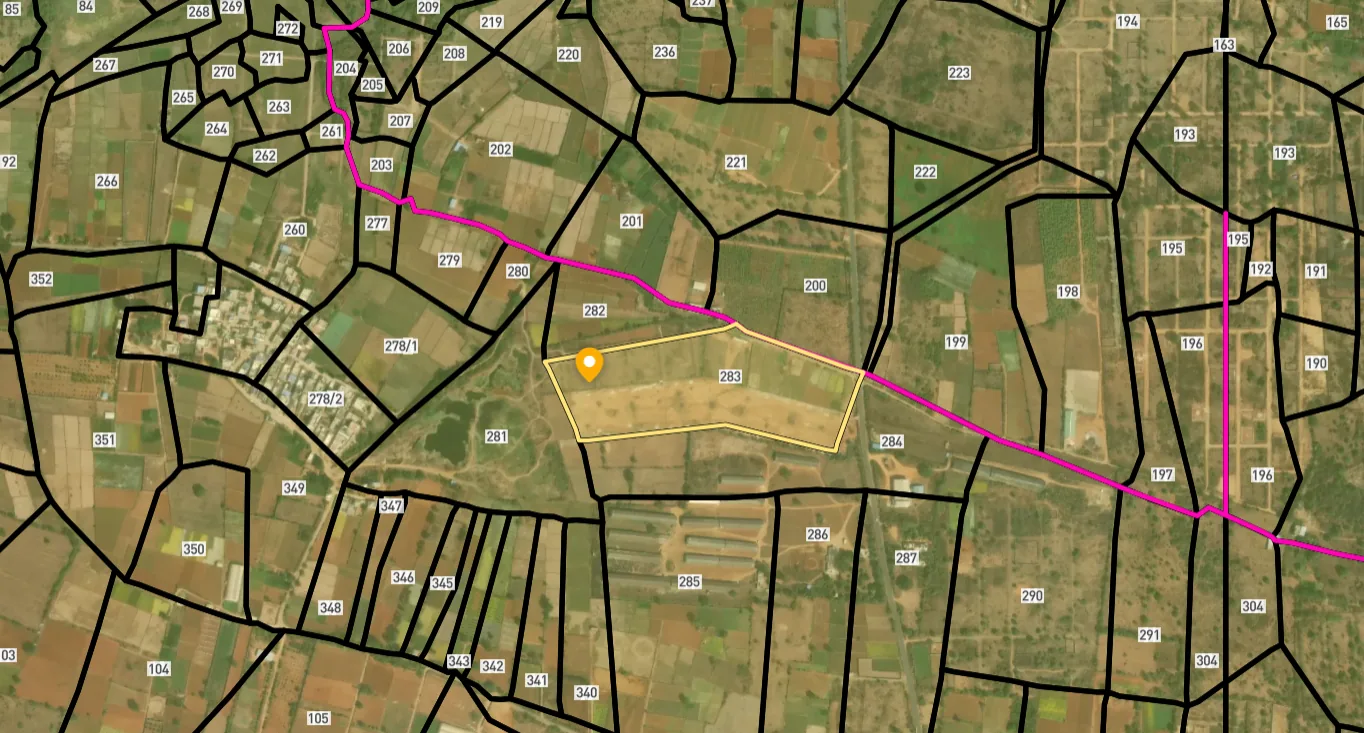
Survey Numbers View on Map Boundaries and numbers come from published state cadastral records. See all map layers.
Looking to sell your land in Haryana?
Browse 200+ verified lands & plots in Haryana
Frequently asked questions
What is a Fard or Nakal in Haryana?
What is chak consolidation in Haryana?
How do I search the Haryana Fard online?
Does the Fard prove ownership?
What is Intkaal in Haryana?
Is viewing the Haryana Fard free?
Other Related Guides
Jamabandi Haryana
Every Haryana land record service in one place, mapped for buyers.
Read guide →Property Tax Haryana 2026: Complete Guide for Land Buyers
Check property tax dues and get Nil Dues Certificate in Haryana before buying. Pay online via NDC portal, avoid inheriting arrears. Full buyer guide 2026.
Read guide →Intkal Mutation Haryana 2026: Complete Buyer's Guide
Learn how to check and verify Intkal Mutation in Haryana 2026. Full 30-year chain guide, jamabandi.nic.in steps, common risks, and Tehsildar tips for land buyers.
Read guide →Jamabandi Haryana 2026: Complete Guide for Land Buyers
Check Jamabandi Haryana online at jamabandi.nic.in. Verify seller name, Khasra, Khewat, mutation status before buying land. Full buyer guide 2026.
Read guide →Khasra Girdawari Haryana 2026: Complete Guide for Land Buyers
Check Khasra Girdawari Haryana before buying land. Verify land use, crop status, and NA conversion via jamabandi.nic.in. Full buyer guide 2026.
Read guide →Legal Heir Certificate Haryana 2026: Complete Step-by-Step Guide
Learn how to get a Legal Heir Certificate in Haryana in 2026. Covers Antyodaya SARAL online process, documents, fees, Patwari verification, and why all heirs must consent before sale.
Read guide →