
Intkaal in Haryana: the mutation that updates the Fard
Intkaal is the Haryana mutation that writes a new holder into the Fard after a sale, gift or inheritance. It is the administrative act that joins one step of the Intkaal chain to the next, and in a state where chak consolidation may have left a gap in that chain, an Intkaal that runs cleanly from a clean prior entry is worth more than one that attempts to close a gap by simply adding a current name. The Fard names the holder; the Intkaal chain is what makes that entry worth reading.
What Intkaal changes in the Haryana Fard
Definition
Intkaal is the Haryana mutation process that updates the Jamabandi to name a new holder after a sale, gift or inheritance, handled by the Patwari at the tehsil and tracked through the Jamabandi platform. It is triggered after the deed is registered. The mutation order names the new khewat holder and updates the khasra entries. The Intkaal chain from the pre-consolidation Fard through to the present is what a buyer reads as the title story, so a gap in that chain at the consolidation period is a holding with an unanswered question.
An Intkaal does one thing: it rewrites the Fard to name a different holder. Registration records the deed; Intkaal records the ownership change in the village-level record. Until Intkaal is complete, the Fard still names the seller, whatever the registered deed says, and a buyer who does not follow the mutation to completion holds a deed without a matching record.
In Haryana, the Intkaal chain is the title story. Each Intkaal is a step in a sequence that should run, unbroken, from the earliest Fard through the consolidation period to the present holder. Where consolidation produced a re-attested Jamabandi, a proper Intkaal at that point was the administrative act that linked the old record to the new. Where that Intkaal was skipped or recorded incompletely, the current holder's entry floats above a gap, and any further Intkaal adding another name on top of a gap carries that gap forward.
So the buyer's task is not only to confirm the current Intkaal was ordered and completed, but to read the chain it joins. A mutation order naming the buyer in a complete chain is a mutation worth relying on; one sitting on top of an unconsolidated or unrecorded gap is a mutation that has not resolved the underlying problem. Confirm both: that the Intkaal for the current transfer completed, and that the chain it joins runs back cleanly.
How to apply for and track Intkaal in Haryana
The registration triggers the process; confirming the chain and the completed order is the buyer's task.
Applying and tracking
After the order
Intkaal in Haryana: what it changes and what it carries forward
The Intkaal writes a new holder; the chain it joins decides whether the entry is solid.
| Intkaal records | It does not fix | To settle it, confirm |
|---|---|---|
| The new holder's name | A gap in the prior chain | The full Intkaal chain |
| The updated khasra | A pre-consolidation mortgage | The deed search on Jamabandi |
| The transfer sequence | Whether a co-holder concurred | All co-holders' signatures |
| The current entry | An objection not yet disposed | The case status on Jamabandi |
| The mutation order | Conclusive title | The registered deed |
Common Haryana Intkaal issues, and the fix
Four failures that leave a Haryana Intkaal looking complete when it is not.
Why the Intkaal chain matters more than the order
The Intkaal order for the current transfer is the last step; the chain it joins is the whole story. In Haryana, where consolidation reshuffled holdings and required a round of re-attested Intkaals, a gap in that chain is a holding that consolidation never formally closed. Adding a current Intkaal on top of a gap records the latest transfer correctly while leaving the underlying uncertainty unresolved, and a future buyer will face the same gap when they come to read the chain. So confirm both parts: that the current Intkaal was disposed and the Fard correctly updated, and that the chain it joins runs unbroken from the pre-consolidation record. Where both hold, the mutation is sound. Where the chain has a gap, the right move is to engage the revenue office and, if needed, a lawyer to understand how the holding emerged from consolidation, before the current transfer proceeds.
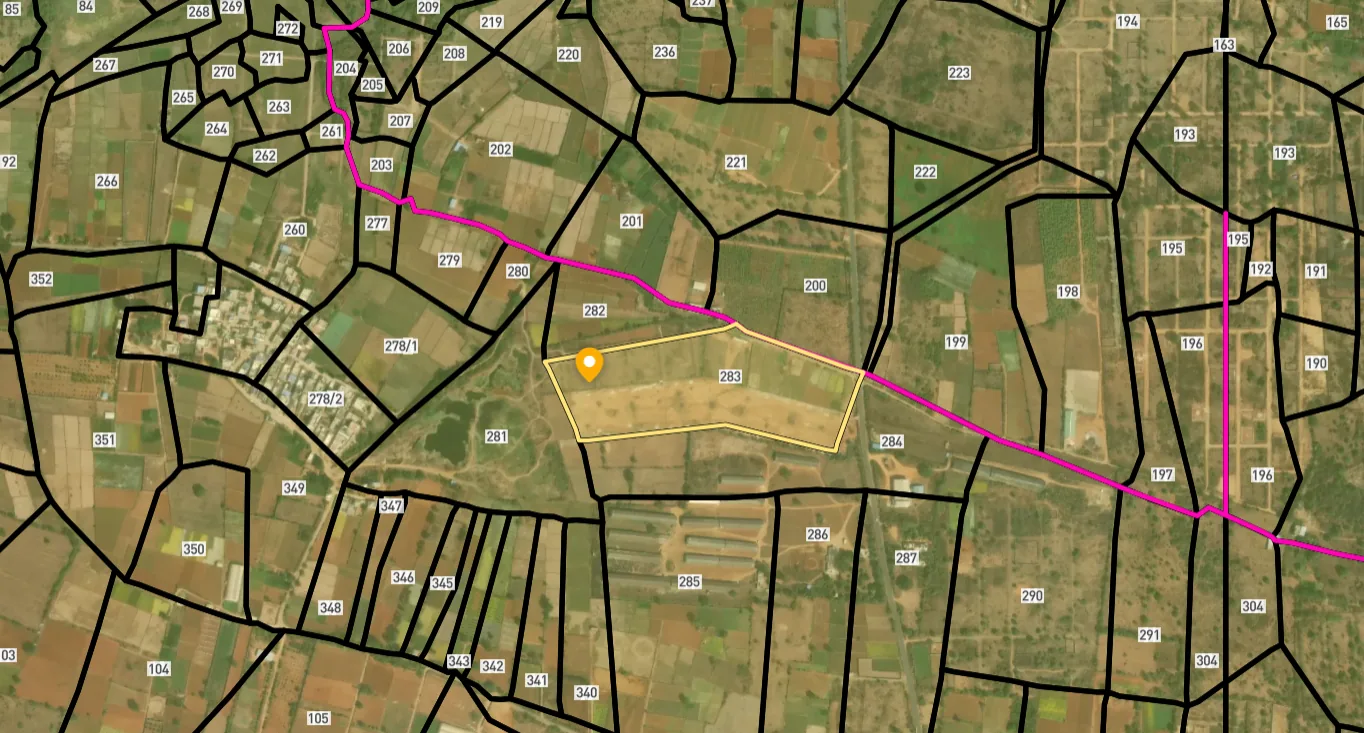
Survey Numbers View on Map Boundaries and numbers come from published state cadastral records. See all map layers.
Looking to sell your land in Haryana?

Browse 200+ verified lands & plots in Haryana
Frequently asked questions
What is Intkaal in Haryana?
Does registering a deed complete the Intkaal?
How do I track an Intkaal in Haryana?
What is the Intkaal chain?
What does chak consolidation mean for Intkaal?
What does Intkaal cost in Haryana?
Other Related Guides
Jamabandi Haryana
Every Haryana land record service in one place, mapped for buyers.
Read guide →Property Tax Haryana 2026: Complete Guide for Land Buyers
Check property tax dues and get Nil Dues Certificate in Haryana before buying. Pay online via NDC portal, avoid inheriting arrears. Full buyer guide 2026.
Read guide →Intkal Mutation Haryana 2026: Complete Buyer's Guide
Learn how to check and verify Intkal Mutation in Haryana 2026. Full 30-year chain guide, jamabandi.nic.in steps, common risks, and Tehsildar tips for land buyers.
Read guide →Jamabandi Haryana 2026: Complete Guide for Land Buyers
Check Jamabandi Haryana online at jamabandi.nic.in. Verify seller name, Khasra, Khewat, mutation status before buying land. Full buyer guide 2026.
Read guide →Khasra Girdawari Haryana 2026: Complete Guide for Land Buyers
Check Khasra Girdawari Haryana before buying land. Verify land use, crop status, and NA conversion via jamabandi.nic.in. Full buyer guide 2026.
Read guide →Legal Heir Certificate Haryana 2026: Complete Step-by-Step Guide
Learn how to get a Legal Heir Certificate in Haryana in 2026. Covers Antyodaya SARAL online process, documents, fees, Patwari verification, and why all heirs must consent before sale.
Read guide →