
Haryana land records by owner name: the khewat behind the name
A name search on Jamabandi is the loose key into the Haryana record: enter the seller's name and the portal can gather the khewat entries across a village in which they appear. The real discipline is converting the name into a khewat number, because the khewat is the precise unit the record is built on. And in a state where chak consolidation may have split one holder's land across different khewat numbers, a name search also catches the holdings a seller omits from their own account.
How a name search reaches the Haryana Jamabandi
Definition
Jamabandi Haryana at jamabandi.nic.in allows a search by owner name, keyed within a chosen district, tehsil and village, returning the khewat entries in which that name appears. The khewat number groups the khasra plots a holder owns in a village, and a name search gathers them for cross-checking. Name drift after chak consolidation, where a holder's name was entered slightly differently in the re-attested record, can cause a search to miss entries. Verify the search route and coverage on the portal before relying on it.
A seller's name on Jamabandi unlocks the search. Enter it within the right district, tehsil and village and the portal returns the khewat entries in which that name appears, showing the co-holders, shares and khasra plots. That is enough to open a check and to catch a holding the seller did not raise, but it is the khewat number the search produces, not the name itself, that carries the record.
In a consolidated village, a name search has one extra step. Chak consolidation re-attested the Jamabandi, and in doing so sometimes recorded a name in a slightly different form, splitting or merging holdings under different spellings. A search under one spelling can miss khewat entries that belong to the same holder under another. Where the land was consolidated, it is worth trying variant spellings, and confirming all the khewat entries with the Patwari where there is any doubt.
What a name search cannot do is settle the right to sell. It gathers the holdings in the Fard; it says nothing about whether the holder's Intkaal chain is complete, whether a share is disputed, or whether a co-holder has a competing claim. Use the name to find all the khewat entries a seller holds in a village, then check each khewat's Intkaal trail and the registered deed before treating any khasra as available.
How to search Haryana records by owner name
The search is quick; the discipline is gathering every khewat entry and checking the Intkaal chain behind it.
On Jamabandi
Then verify
Haryana name search: name to khewat to chain
The name finds the khewat; the khewat leads to the khasra and the Intkaal chain that settles the holding.
| A name search gives | It does not give | To settle it, check |
|---|---|---|
| The khewat entries a name appears in | Whether the holder may sell | The Intkaal chain |
| All khasra plots in those khewats | Conclusive title | The registered deed |
| A cross-check of undisclosed holdings | Whether a share is disputed | The full co-holder list |
| A route to the Fard | Whether consolidation was recorded | The consolidation order |
| A starting point for due diligence | The right to transfer | The mutation trail |
Common Haryana name-search issues, and the fix
Four traps in a Haryana owner-name search.
Turning a name into a complete Haryana picture
A name search is how a Haryana check broadens. Done in the right village, it gathers every khewat entry the seller holds, surfacing the plot they omitted or the co-holding they never mentioned. That is worth doing early, before a price is discussed, because a hidden co-holding or a gap in one khewat's Intkaal chain is cheaper to find on the portal than in a dispute after money has moved. After gathering the khewat entries, the check narrows. Each khewat leads to a khasra, the Intkaal log shows whether the chain from consolidation to today is complete, and the registered deed carries the title that the Fard records only by description. The name opens the search; the khewat number, the chain and the deed are what settle it.
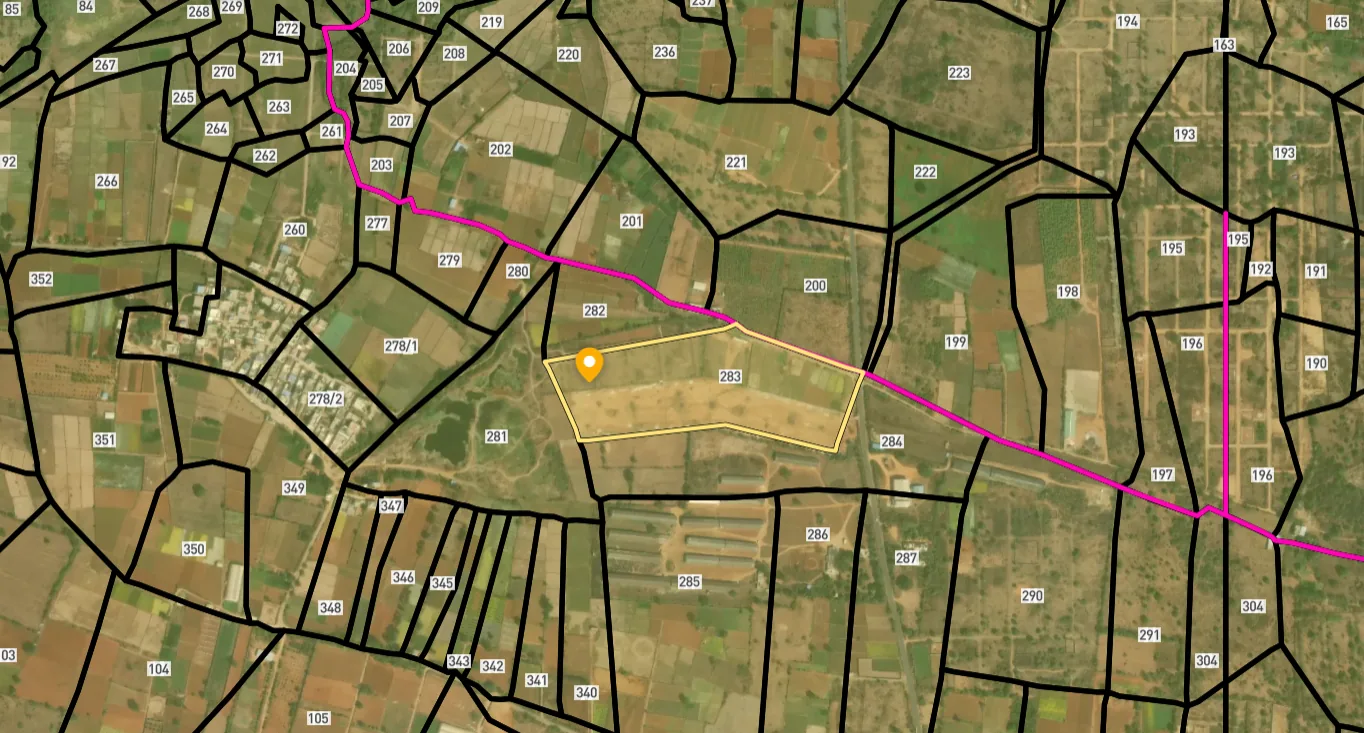
Survey Numbers View on Map Boundaries and numbers come from published state cadastral records. See all map layers.
Looking to sell your land in Haryana?
Browse 200+ verified lands & plots in Haryana
Frequently asked questions
Can I search Haryana land records by name?
What is a khewat number in Haryana?
Does a name search show all of a seller's land?
Does the search confirm ownership?
What is name drift after consolidation?
Is the Haryana name search free?
Other Related Guides
Legal Heir Certificate Haryana 2026: Complete Step-by-Step Guide
Learn how to get a Legal Heir Certificate in Haryana in 2026. Covers Antyodaya SARAL online process, documents, fees, Patwari verification, and why all heirs must consent before sale.
Read guide →Encumbrance Certificate Haryana 2026: Complete Buyer's Guide
Get your Encumbrance Certificate Haryana 2026 guide. Check EC via IGRS HR, apply online, verify 30-year mortgage history, and avoid hidden liabilities before buying land.
Read guide →DTCP CLU Haryana 2026: Complete Guide to Change of Land Use
Understand DTCP CLU Haryana 2026. Learn how to verify Change of Land Use approval, apply via dtcp.haryana.gov.in, and avoid buying plots in illegal unapproved colonies.
Read guide →Building Plan Haryana 2026: Sanctioned Plan Approval Guide
Get your Building Plan Haryana 2026 guide. Learn how to apply via ulbharyana.gov.in, verify sanctioned plans, check deviations, and avoid demolition risk before buying.
Read guide →Title Deed Haryana 2026: Complete Guide for Land Buyers
Verify title deed in Haryana before buying land. Check 30-year ownership chain on jamabandi.nic.in, spot fake deeds, and know stamp duty rates for 2026.
Read guide →Jamabandi Haryana
Every Haryana land record service in one place, mapped for buyers.
Read guide →