
The RTC (Pahani): Reading Karnataka's Land Record
Karnataka digitised its land records before anyone else in India, and the depth shows. The RTC, the Record of Rights, Tenancy and Crops, packs sixteen columns of history into one extract: owner, cultivator, crop, soil, irrigation, liabilities, and the mutation trail behind them all. Bhoomi serves it in seconds. Reading it properly takes a little longer.
What the RTC actually contains
Definition
The RTC is Karnataka's core land record, maintained per survey number and hissa on the Bhoomi system. Its columns carry ownership, khata reference, extent, soil class, cultivator, crops by season, irrigation source, liabilities and the mutation register entries that changed any of them.
Sixteen columns sounds bureaucratic until you realise what they let you do: reconstruct the parcel's working life. Who owned it, who actually tilled it, what grew on it season by season, whether a loan sits recorded against it, and which mutation entry brought the present owner in.
Three columns earn special attention from buyers. The cultivator column, where a name other than the owner hints at tenancy or an arrangement nobody wrote down. The liabilities column, where acquisition proceedings and loans surface. And the mutation reference, the MR number, which is your thread back through every change the record has absorbed.
Karnataka classifies land as tari, khushki or bagayat, wet, dry or garden, and the class drives value, water rights and the conversion question. One caution for city buyers: the municipal khata of Bengaluru property is a different instrument entirely; the RTC is the revenue record for land.
How to check the RTC on Bhoomi
The unsigned view is free. Keep the survey number, hissa and village handy.
Online method
Offline (VA / kiosk)
The RTC columns that decide deals
Six of the sixteen columns do most of the work in a purchase.
| Column | What it records | Why a buyer cares |
|---|---|---|
| Owner & khata | Recorded holder and account | Must equal the seller and the deed |
| Extent & hissa | Area of this subdivision | Hissa-level precision prevents wrong-parcel deals |
| Soil class | Tari, khushki or bagayat | Drives value, water rights, conversion |
| Cultivator | Who actually tills | A stranger here means unresolved rights |
| Liabilities | Loans, acquisition, court entries | Surfaces burdens before the EC stage |
| Mutation (MR) refs | Entries that changed the record | Your thread through the parcel's history |
Common RTC issues, and the fix
RTC checks fail in four recognisable ways.
Why the RTC opens every Karnataka land file
Bhoomi has been running long enough that the RTC's history is itself evidence: two decades of digitised entries that show not just the present state but the path to it.
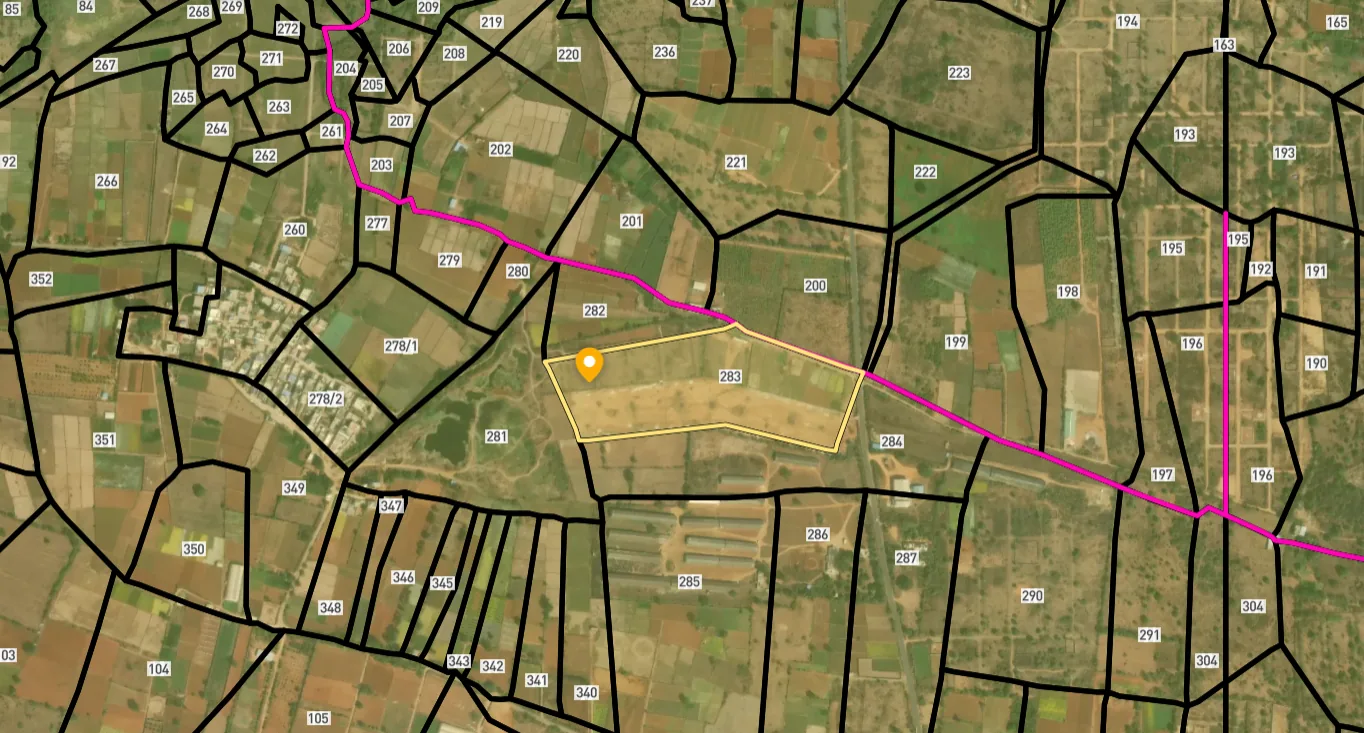
Survey Numbers View on Map Boundaries and numbers come from published state cadastral records. See all map layers.
Looking to sell your land in Karnataka?
Browse 1,300+ verified lands & plots in Karnataka
Frequently asked questions
How do I check my RTC on Bhoomi?
What do RTC and Pahani mean?
What are tari, khushki and bagayat?
Why does the hissa number matter?
Is the free RTC valid for a bank?
Can I see older RTC entries?
Other Related Guides
Survey Sketch Mojini Karnataka: Complete Guide 2026
Survey Sketch Mojini Karnataka guide: understand hissa numbers, download 11E sketches on bhoomojini.karnataka.gov.in, verify plot boundaries, and avoid boundary fraud.
Read guide →Revenue Court Case Karnataka Land Buying: Complete Guide 2026
Check RCCMS Karnataka before buying land. A pending revenue court case on any survey number blocks mutation and puts your entire investment at risk. Here's how to verify.
Read guide →Gram Panchayat NOC Karnataka: Land Buying Guide 2026
Need a Gram Panchayat NOC in Karnataka? Learn what it proves, when it's mandatory for land conversion, how to apply online via e-Swathu, and how to spot a fake certificate.
Read guide →Land Use Certificate Karnataka BDA: Complete Guide 2026
Land Use Certificate Karnataka guide: check BDA zone codes under RMP 2015, verify before commercial purchase, apply for CLU online, and avoid demolition risk in Bangalore.
Read guide →Khata Extract Karnataka: Complete Guide 2026
Understand Khata Extract in Karnataka, what it proves, how to get it online via BBMP e-Aasthi, key fields, B Khata risks, and why every buyer must verify it before purchase.
Read guide →DC Conversion Karnataka: Section 95 Certificate Guide 2026
DC Conversion Karnataka guide: apply under Section 95, check status on Bhoomi, verify the conversion order, and understand what the 2025 amendment changed for buyers.
Read guide →