Document Guide · Tamil Nadu

How to Check Mother Deed in Tamil Nadu — Complete Guide 2026

The Mother Deed Tamil Nadu, also called Mula Deed or parent document, traces 30 years of registered ownership through TNREGINET. Tamil Nadu requires every link in the chain to be verified on tnreginet.gov.in before purchase. This guide covers verification, certified copy download, common defects, and seller red flags.

Quick Reference
Also calledMula Deed, Parent Document, Title Deed
Issued bySub-Registrar Office under the Inspector General of Registration, Tamil Nadu
Valid forLifetime (no expiry once registered)
Cost₹280 to ₹300 for a TNREGINET certified copy, page-count based
Time taken5 to 7 working days online; 15 to 30 days for pre-1987 manual records
Online portaltnreginet.gov.in
noteVerify every registered document in the chain on TNREGINET before purchase
1

What is Mother Deed in Tamil Nadu?

Definition

A Mother Deed in Tamil Nadu is the earliest registered title document tracing a property's ownership chain back at least 30 years through the Sub-Registrar Office records. It is governed by the Registration Act, 1908, as amended in Tamil Nadu by Act 41 of 2022, with all registered instruments accessible through the TNREGINET portal.

The Mother Deed is the foundation of every Tamil Nadu property transaction. The latest sale deed proves the most recent transfer; the Mother Deed proves where the title came from. A Chennai advocate verifying a flat purchase reads the Mother Deed first, then walks each registered transfer forward through partition deeds, gift deeds, and sale deeds until the seller's name appears. Without it, ancestral heirs and unrecorded partition holders can surface years after registration. Banks reject home loan files in Tamil Nadu without a 30 years chain of ownership traced through registered instruments.

TNREGINET hosts digitised registry records back to 1975. Under E-Services, Document Search lets you pull any registered deed by document number, year, and SRO. The TNREGINET certified copy carries the Sub-Registrar's digital signature and a per-page QR code that links to the live record. Certified copy fees run around ₹280 to ₹300 depending on page count. Pre-1975 deeds and some manual books still need a Sub-Registrar Office Tamil Nadu visit. Section 22-B of the Tamil Nadu Registration Act (inserted by Act 41 of 2022) lets the SRO refuse a forged document at registration.

State-specific note: After the Madras High Court struck down Section 77A in August 2024, Tamil Nadu District Registrars no longer cancel a fraudulent deed administratively. Cancellation now requires a Civil Court suit within three years.
2

How to Get Mother Deed in Tamil Nadu: Step-by-Step on TNREGINET

Two routes pull a Mother Deed in Tamil Nadu. TNREGINET serves digitised records from 1975 onwards. Older manual books sit at the SRO that registered the deed.

Online method (recommended)

1
Register on TNREGINET Visit tnreginet
gov.in. Click User Registration. Enter username, password, name, mobile, email, and Aadhaar or PAN. Verify the OTP. Activate via the email link within 7 days.
2
Open Document Search Log in
Go to E-Services, then Document Search. Choose search by Document Number for the fastest result. Enter SRO, registration year, and document number.
3
Apply for the Certified Copy Confirm the survey number and parties match your sale deed
Click apply for Certified Copy. Pay via net banking, UPI, debit, or credit card. Save the e-receipt.
4
Download the signed PDF After SRO approval the digitally signed copy lands under E-Services, Certified Copy, Request List
Each page shows the Sub-Registrar's signature and a QR code. Scan the QR to verify against the live record.
Pull a 30-year EC for the same survey number in the same session. Cross-check every document number listed in the EC against the chain of deeds.

Offline method (Sub-Registrar Office)

1
Identify the registering SRO Section 28 of the Registration Act requires registration at the SRO covering the property
Use Know Your Jurisdiction on TNREGINET. Enter survey number and district to find the correct office.
2
File the application Get the Certified Copy form at the SRO counter
Fill document number, year, parties, and survey number. Carry Aadhaar or PAN and two passport photos for mother deed verification.
3
Pay the counter fee Cash payments under ₹1,000 are accepted at the counter
Larger amounts go through PoS or a bank challan. Keep the stamped receipt.
4
Collect the certified copy The Sub-Registrar verifies the manual register, signs the copy, and hands it over
Pre-1987 records take 15 to 30 days. Computerised SROs deliver within 4 working days.
Demand the original parent document Tamil Nadu plus every intermediate sale, gift, partition, and release deed. Buyers regularly miss a release deed buried in the chain.
3

What Does Mother Deed Contain in Tamil Nadu?

Every Mother Deed carries the same set of registration fields. Mismatch on any one against the EC or current sale deed is a title-defect signal.

Field What it means What to check
Document NumberUnique SRO identifier assigned at registrationCross-check with the EC for the same period
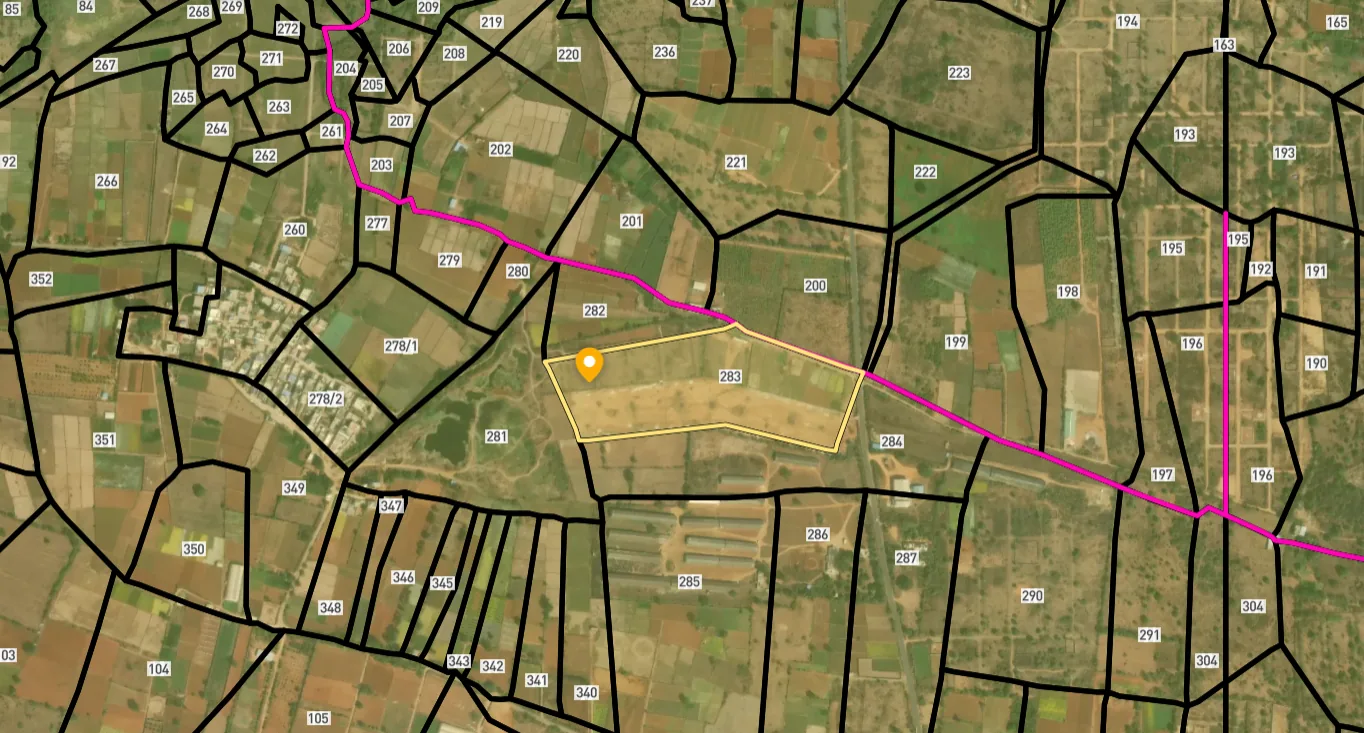
Survey Number and Sub-divisionLand parcel identificationMatch to current Patta and FMB sketch
Schedule of PropertyBoundaries, extent, and built-up detailsVerify against on-ground measurement
Vendor and Vendee NamesParties to the transferTrace each name through earlier deeds
Consideration ValueSale value paid in the transactionWide variance between deeds in the chain flags benami transfers
Registration Date and SROWhen and where the deed was registeredConfirm the SRO had jurisdiction at that time
Stamp Duty ParticularsStamp paper details and valueInsufficient stamping makes a deed inadmissible
Good sign: A clean Mother Deed shows continuous registered transfers, identical survey numbers across the chain, intact stamp duty, and a TNREGINET certified copy carrying QR codes on every page.
4

Common Issues With Mother Deed in Tamil Nadu

Most Tamil Nadu title disputes trace back to one of six recurring Mother Deed defects.

Mother Deed not produced
The seller shows only the latest sale deed. Without the parent document Tamil Nadu title cannot be sourced to a clear origin. Ancestral and partition claims surface decades later. Banks reject loan files instantly.
Fix: Walk away if the seller cannot produce the original Mother Deed plus every intermediate transfer. Demand the full 30-year chain before any advance.
Forged signature or impersonation
Tamil Nadu has seen registered sale deeds executed by impersonators using a forged Patta. Original owners discover the fraud only on EC inspection. The Madras HC quashed such a deed in S.R.M. Packiri Rajan v. IGR (2021).
Fix: Pull a 30-year EC and verify each registered document number on TNREGINET. Demand a certified copy of any deed in the chain that looks unfamiliar.
Properties bundled across SRO jurisdictions
The Madurai Bench in W.A. (MD) No. 462 of 2025 set aside a sale deed bundled with a small parcel in another district to manipulate registration jurisdiction under Section 28 of the Registration Act.
Fix: Confirm the registering SRO had territorial jurisdiction over each property in the chain using TNREGINET's Know Your Jurisdiction tool.
Survey number mismatch across the chain
Survey numbers in Tamil Nadu have been resurveyed and sub-divided multiple times. The Mother Deed may show S.No. 16/18 while the current Patta shows 16/18A. Buyers who do not reconcile lose extent.
Fix: Get a fresh FMB sketch from the VAO. Overlay it on every survey number across the chain. Resolve mismatches before paying.
Inadequate stamp duty in legacy deeds
Pre-2000 deeds occasionally carry insufficient stamp duty under earlier rates. An under-stamped deed in the chain weakens enforceability and attracts a penalty when next presented for registration.
Fix: Have a registered document writer review stamp particulars on every deed in the chain. Pay deficit duty before resale.
Civil Court challenge pending
After Section 77A was struck down in August 2024, fraud cancellations need a Civil Court suit. A deed in the chain may be under litigation without showing in the EC.
Fix: Search the Madras High Court e-portal for litigation against any party in the chain. Get a written legal opinion from a Madras Bar advocate before payment.
5

Why Mother Deed Matters for Land Buyers in Tamil Nadu

The Mother Deed is the single document that decides whether your investment can be defended in court, mortgaged with a bank, or resold cleanly.
📋
TNREGINET verification is mandatory The Buyer Warning is direct: every registered document in the chain must be verified on TNREGINET
The Sub-Registrar's digital signature and QR code on each page confirm the deed has not been tampered with locally.
Required for home loan disbursement All major banks demand the original Mother Deed plus a 30-year EC before sanctioning a property loan in Tamil Nadu
A missing parent document blocks loan approval and reduces resale liquidity.
🏦
Tamil Nadu-specific: Civil Court is the only cancellation route The Madras HC struck down Section 77A in August 2024
Cancellation of a fraudulent deed in the chain now requires a Civil Court suit under Article 59 of the Limitation Act, with a 3-year window from discovery.
Red flag: s.

Browse verified land in Tamil Nadu

Every land listing on 1acre.in is mapped to its survey number with chain-of-title and EC layers ready for review. Skip the broker noise and start with verified parcels.

Browse Verified Tamil Nadu Lands

Frequently Asked Questions

What is Mother Deed Tamil Nadu?
Mother Deed Tamil Nadu, also called Mula Deed or parent document, is the earliest registered title deed tracing a property's ownership chain over at least 30 years through the Sub-Registrar Office. It is the foundation document for every property transaction in the state.
How many years of ownership history must a Mother Deed cover?
Tamil Nadu lawyers and banks require a minimum 30 years chain of ownership traced through registered instruments. The Encumbrance Certificate from TNREGINET shows registered transactions for the same period. Some senior advocates extend mother deed verification to 40 years for ancestral properties.
How can I download a Mother Deed from TNREGINET?
Log in at tnreginet.gov.in, go to E-Services then Document Search, and apply for a certified copy of registered documents using SRO, year, and document number. Digitally signed copies from 1975 onwards are available. Pre-1975 records need an SRO visit.
What does a TNREGINET Certified Copy cost?
Certified copy fees depend on page count. Most parent documents cost between ₹280 and ₹300 through the TNREGINET certified copy online payment. Older manual records may attract a slightly higher counter fee at the Sub-Registrar Office for pre-1975 deeds.
Can a Sub-Registrar cancel a fake deed registration Tamil Nadu?
No. The Madras High Court struck down Section 77A in August 2024, ruling that District Registrars cannot cancel registered documents for alleged fraud. Cancellation requires a Civil Court suit under Article 59 of the Limitation Act, with a 3-year window from discovery.
Is the latest Sale Deed enough to prove ownership in Tamil Nadu?
No. The latest Sale Deed proves only the most recent transfer. Without the parent document Tamil Nadu plus every intermediate deed, ancestral heirs, partition holders, or release-deed beneficiaries can surface and claim a share. Banks reject loan files missing parent documents.
What if the Mother Deed is reported lost by the seller?
Demand the FIR copy filed at the local police station and the public notice published in two newspapers. Then apply for a certified copy from the original SRO via TNREGINET. A genuine seller will produce all three without resistance.
How do I verify a Mother Deed at the Sub-Registrar Office Tamil Nadu?
Carry the original deed and apply for a certified copy of the same document from the SRO that registered it. The Sub-Registrar matches your copy against the manual register and confirms signatures, stamp particulars, and registration entries.