
ROR Correction in Telangana: File Before 13 April 2026
Years of Dharani migration left names misspelled, extents wrong and surveys missing. The RoR Act gives one year to fix them at the Tahsildar level, and that window closes on 13 April 2026. Here is what can be corrected, how to file, and why waiting is the real risk.
What ROR correction covers in Telangana
Definition
ROR correction is the statutory process for fixing errors in the Record of Rights carried over from the Dharani era: misspelled names, wrong extents, missing survey numbers and misclassifications. Filed at the Tahsildar, with a one-year window ending 13 April 2026.
The Act's bargain is simple: one clean year to challenge and repair the migrated record, after which entries attain finality and casual correction closes. That is generous compared to the Dharani years, and brutal if you sleep on it.
Correctable errors fall in four buckets: identity (name spellings, father's name), quantity (extent mismatches), location (missing or wrong survey and LPM linkages), and character (wet shown as dry, agricultural shown otherwise). Ownership disputes are not corrections; those go to civil remedies.
Authority sits with the Tahsildar now, with appeals to the RDO and Collector. Decisions are time-bound, which is why filed cases move faster than the old system ever did.
How to file ROR correction on Bhu Bharati
Paper wins these cases. Assemble proof first, then file.
Filing at the Tahsildar
ROR correction documents: errors and winning proof
Match your error to the documents that typically decide it.
| Error | Winning proof | Watch out |
|---|---|---|
| Name misspelled | Aadhaar, passbook, old Pahani | Fix must match the deed spelling too |
| Extent wrong | Sale deed, survey sketch, old records | Neighbouring claims can surface |
| Survey number missing | Old Pahani, FMB, resurvey LPM data | Often an LPM linkage issue, not loss |
| Wrong classification | Old Pahani, revenue records | Affects value and conversion rights |
| Deceased still on record | This is mutation, not correction | File succession at the Tahsildar instead |
Common ROR correction issues, and the fix
Correction cases fail for process reasons more than merit. Avoid these four.
Why the ROR correction deadline matters most
After 13 April 2026, the record you have is presumed the record that is right.
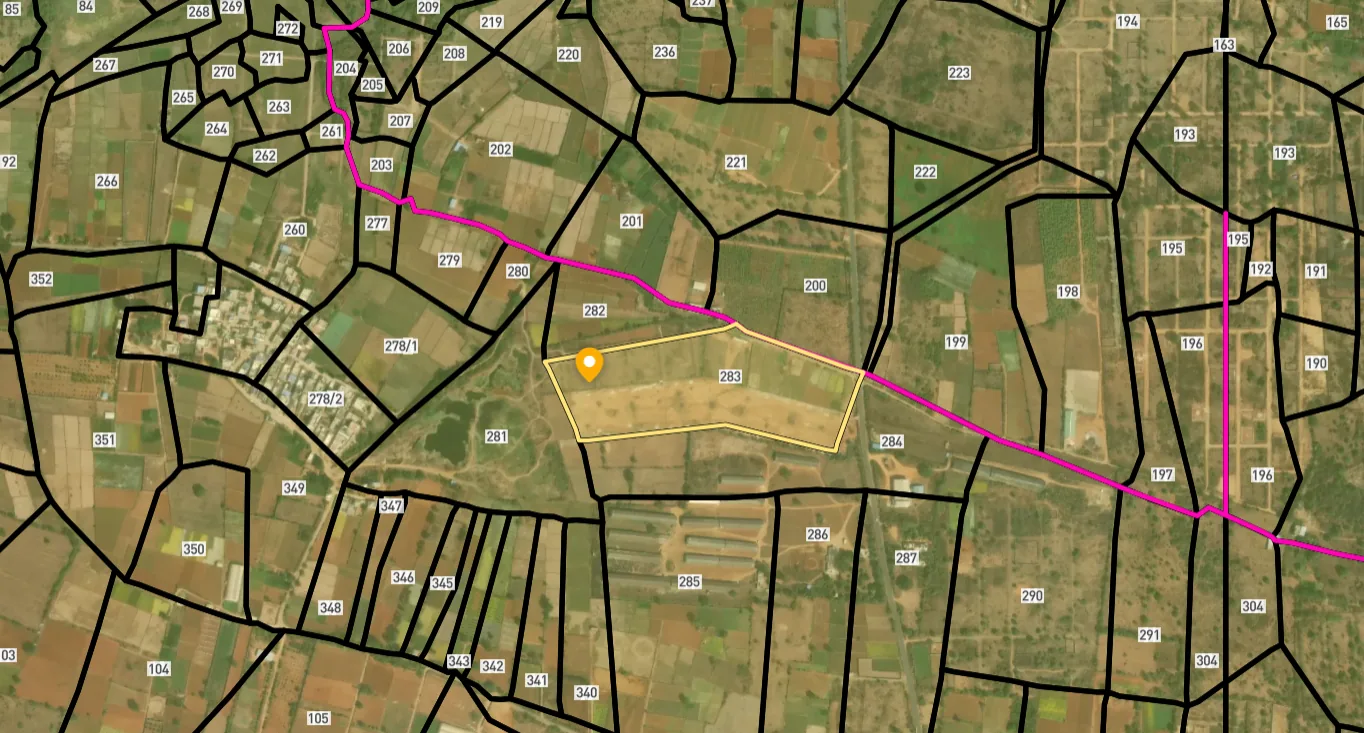
Survey Numbers View on Map Boundaries and numbers come from published state cadastral records. See all map layers.
Looking to sell your land in Telangana?
Browse 8,300+ verified lands & plots in Telangana
Frequently asked questions
What is the ROR correction deadline?
Who decides correction cases?
What can be corrected?
What documents should I attach?
What happens after the deadline?
Can I still sell with a pending correction?
Other Related Guides
Bhu Bharati
Every Bhu Bharati service in one place, with a guide for each.
Read guide →Title Deed Mother Deed Telangana: Complete Guide 2026
Understand the Title Deed and Mother Deed in Telangana. Learn what Mula Deed means, how to verify it on IGRS, get certified copies, and avoid fraud before buying land in 2026.
Read guide →Property Tax Receipt Telangana 2026: GHMC PTIN Guide & Download
Pay and download Property Tax Receipt Telangana via [onlinepayments.ghmc.gov.in](http://onlinepayments.ghmc.gov.in) . PTIN search, due dates, mutation rules, Nil Dues check, and the 2% penalty trap explained.
Read guide →Pattadar Passbook Telangana Land Buying Guide 2026
Buying land in Telangana? Here's what the Pattadar Passbook actually is, why banks demand it for every agri loan, and what happens if you skip the title transfer.
Read guide →Building Plan Approval Telangana 2026: GHMC & BuildNow Guide
Get your sanctioned plan in Telangana via BuildNow (formerly TG-bPASS). Fees, deviation rules, GHMC process, and how buyers can spot fake approvals in 2026.
Read guide →Pahani RoR 1-B Telangana Land Buying Guide 2026
Buying land in Telangana? Here's what Pahani and RoR 1-B actually tell you, where to check them for free, and the exact red flags that have cost buyers lakhs.
Read guide →