
Form I & XIV: Goa's Record of Rights
Goa keeps two memories of every field. The younger one is Form I & XIV, the record of rights maintained under the Directorate of Settlement and Land Records, occupants, tenants, crops and remarks for each survey and subdivision number. The older one is Portuguese: Communidade rolls, Conservatória registrations, Matriz numbers, a century of title that the modern form summarises but never quite replaces. Reading the form well means knowing it has a basement.
What Form I & XIV actually contains
Definition
Form I & XIV is Goa's record of rights under the DSLR: for each survey and subdivision number, the occupants and their nature of holding, the tenants' column, cultivable and crop details, and the remarks that carry everything else, Mundkar entries, disputes, notes from older proceedings. Online viewing runs through the DSLR's records services; verify current access and treat certified copies from the DSLR machinery as the version institutions act on.
Read the occupants column with Goan scepticism: the name written there is the beginning of the ownership question, not its end. Much of the state's land traces to Communidade grants, Portuguese-era purchases registered at the Conservatória, and family holdings that crossed generations through Civil Code inventory proceedings, and a form that shows a clean occupant can still sit on an unfinished older story.
The tenants column and the Mundkar entries deserve their own reading. Goa's tenancy law converted many cultivating tenants into protected holders, and the Mundkar law gives registered dwellers rights that survive any sale; a name in either place is not a detail but a co-star, and transactions that ignored them have spent decades in Goa's courts.
Anchor everything to the survey and subdivision number, and insist that deed, form and survey plan speak of the same one. Goa's plots are small, subdivided and expensive, which makes number confusion both easier to commit and costlier to keep.
How to check Form I & XIV online
View through the DSLR's services; certify through its machinery.
Online method
Offline (Talathi / DSLR)
Form I & XIV, column by column
Five readings that decide Goa deals.
| Column | What it holds | Why it matters |
|---|---|---|
| Occupant | The recorded holder | The beginning, not the end, of title |
| Tenants | Protected cultivators | Tenancy rights survive sales |
| Mundkar remarks | Registered dwellers | Their rights outrank your deed |
| Survey / subdivision | The plot's identity | Small plots, costly confusion |
| Remarks & references | The older memory's index | Each citation is homework |
Common Form I & XIV issues, and the fix
Form readings fail four Goan ways.
The older memory beneath the form
Treat Form I & XIV as the top page of a stack.
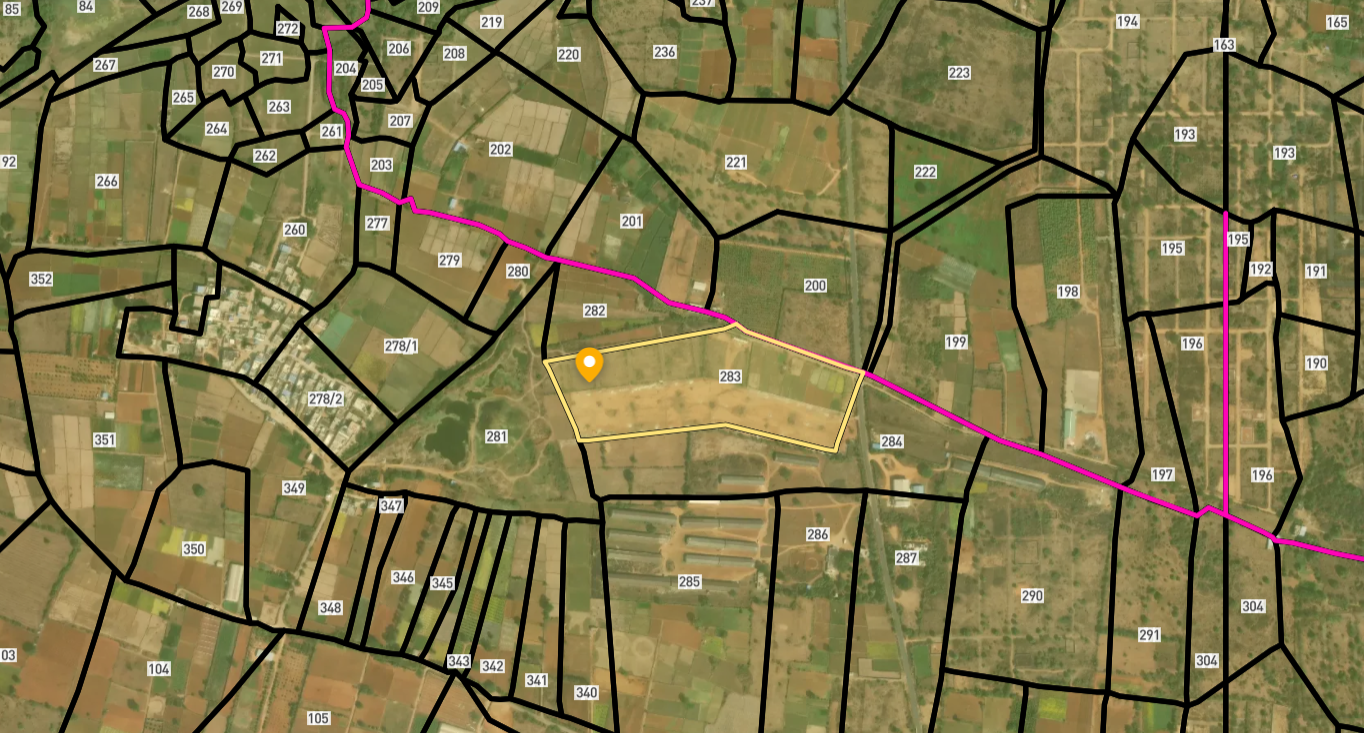
Survey Numbers View on Map Boundaries and numbers come from published state cadastral records. See all map layers.
Looking to sell your land in Goa?
Browse 91+ verified lands & plots in Goa
Frequently asked questions
What is Form I & XIV?
How do I check it online?
Why does the tenants column matter?
What is a Mundkar entry?
What are Communidade and Conservatória references?
Is the online view enough for a bank?
Other Related Guides
Goa Land Records
Every Goa land record service in one place, with a guide for each.
Read guide →Form I & XIV in Goa: Record of Rights Complete 2026 Guide
Read, obtain, and verify Form I & XIV in Goa. Covers DSLR portal, Mamlatdar process, Section 105 presumption, tenant entries, mundkar warnings, and mutation.
Read guide →Mining Zone Check Goa: Mines & Geology Verification Guide 2026
The Mining Zone Check Goa confirms whether land sits in an active or legacy iron ore mining area. Former mining zones carry construction restrictions and health hazards.
Read guide →Property Tax Receipts Goa: Nil Dues Verification Guide 2026
Property Tax Receipts Goa prove the seller paid all dues. Pull 5 years minimum and a Nil Dues Certificate. Unpaid tax transfers with the property to the buyer.
Read guide →Water Bill Dues in Goa: Buyer's Guide 2026
Water Bill Dues in Goa stay with the meter. Verify nil water dues using the 8-digit Consumer ID, transfer the connection, avoid PWD disconnection.
Read guide →TCP Technical Clearance Goa: FAR Certificate Guide 2026
The TCP Technical Clearance Goa confirms FAR and height compliance under the T&CP Act 1974. Excess construction is illegal. Verify before buying any built property.
Read guide →