
The Encumbrance Certificate Question in Goa
Goa's registration runs on NGDRS, the national registration platform the state adopted, and that is where the money history of a plot now writes itself: sales, mortgages, releases, each registered document searchable by property and party. The encumbrance question gets its modern answer there, and its older answers, as with everything in Goa, in the layers beneath: the sub-registrar's earlier books and the Portuguese-era Conservatória before them.
How the encumbrance certificate works in Goa
Definition
Goa serves the encumbrance function through its registration machinery on NGDRS, the National Generic Document Registration System: registered documents searchable by property and party, with certified search results and copies through the registration services. A purchase file assembles the registered history across its window, extends into pre-NGDRS registers and, for older titles, the Conservatória layer, and reads the whole beside Form I & XIV.
The modern search is straightforward: anchor on the property, the village and survey and subdivision number as the deeds write them, pull the registered documents across your window, then cross-check by the seller's and predecessors' names for instruments that described the plot differently. NGDRS's structure makes the recent decades the easy part of a Goa title, which is a sentence nobody says about the earlier ones.
The earlier ones are where Goa earns its reputation. Titles here regularly predate the modern registration era, running through the sub-registrar's older books and, before liberation, the Portuguese land registration system whose Conservatória entries many families still hold as their root of title. A thirty-year window often satisfies; an old family property deserves a search that reads until the story actually begins.
Then reconcile with the revenue side: registered transfers should have reached Form I & XIV through mutation, and charges should be consistent with the form's remarks. In Goa the reconciliation has a third participant, the tenancy and Mundkar positions, because a clean money history says nothing about the protected rights that never needed registering.
Running the encumbrance certificate search in Goa
Modern platform first, older books as deep as the title goes.
The search
Goa's money history, layer by layer
Three eras, three places the chain lives.
| Era | Where it is written | How it is searched |
|---|---|---|
| The NGDRS years | The platform's registered documents | Online by property and party |
| Pre-NGDRS decades | The sub-registrar's books | Commissioned record search |
| The Portuguese era | Conservatória registrations | Through the old registration records |
| Any era: charges | Mortgages and releases in the chain | Every mortgage matched to its release |
| Any era: silence | Nothing registered for years | The village and the lawyer explain it |
Common encumbrance certificate issues, and the fix
The EC question goes wrong four ways here.
Reading the chain beside Form I & XIV
The two records audit each other on a delay: registration writes the transaction, mutation carries it into the form, and the remarks hold what charges and proceedings touched the plot.
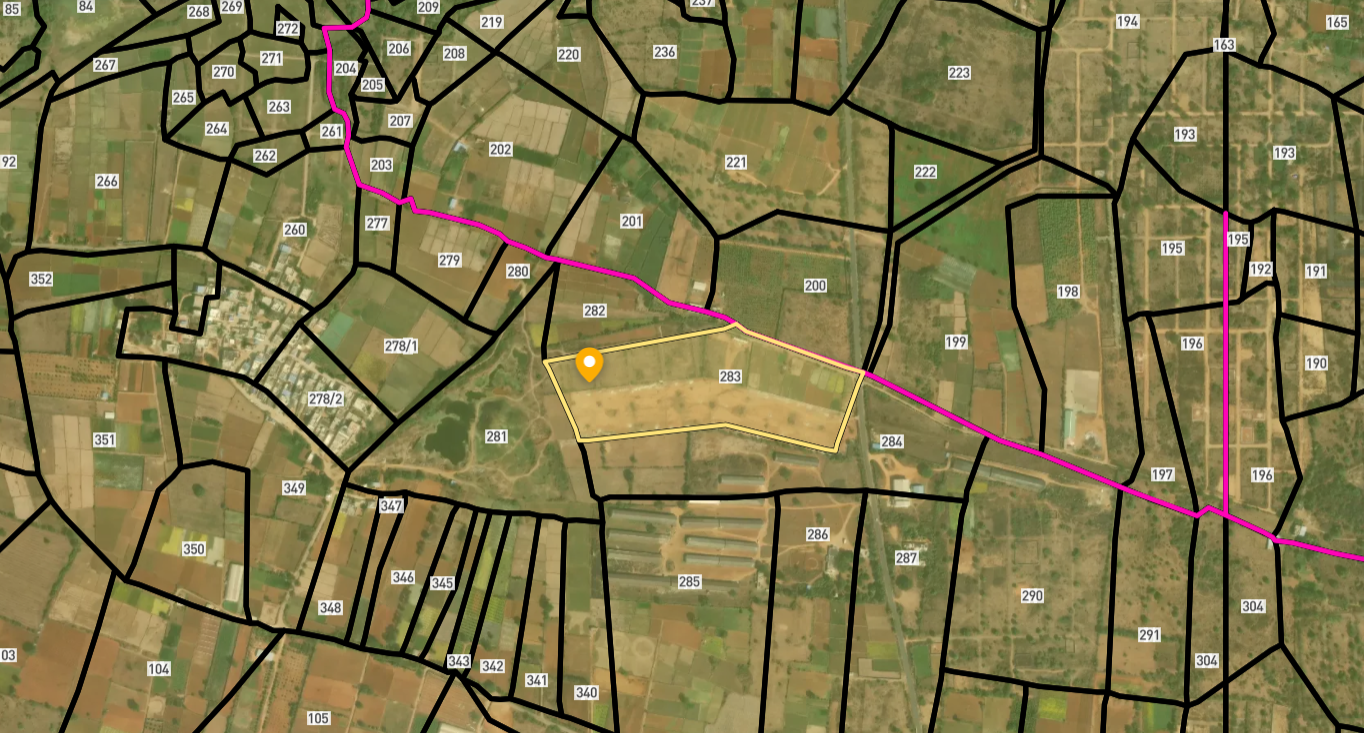
Survey Numbers View on Map Boundaries and numbers come from published state cadastral records. See all map layers.
Looking to sell your land in Goa?
Browse 92+ verified lands & plots in Goa
Frequently asked questions
How do I get an encumbrance history in Goa?
What does the search cover?
How far back should I search?
Is a clean chain a clean title?
What is the Conservatória layer?
What if the chain and the form disagree?
Other Related Guides
Goa Land Records
Every Goa land record service in one place, with a guide for each.
Read guide →Form I & XIV in Goa: Record of Rights Complete 2026 Guide
Read, obtain, and verify Form I & XIV in Goa. Covers DSLR portal, Mamlatdar process, Section 105 presumption, tenant entries, mundkar warnings, and mutation.
Read guide →Mining Zone Check Goa: Mines & Geology Verification Guide 2026
The Mining Zone Check Goa confirms whether land sits in an active or legacy iron ore mining area. Former mining zones carry construction restrictions and health hazards.
Read guide →Property Tax Receipts Goa: Nil Dues Verification Guide 2026
Property Tax Receipts Goa prove the seller paid all dues. Pull 5 years minimum and a Nil Dues Certificate. Unpaid tax transfers with the property to the buyer.
Read guide →Water Bill Dues in Goa: Buyer's Guide 2026
Water Bill Dues in Goa stay with the meter. Verify nil water dues using the 8-digit Consumer ID, transfer the connection, avoid PWD disconnection.
Read guide →TCP Technical Clearance Goa: FAR Certificate Guide 2026
The TCP Technical Clearance Goa confirms FAR and height compliance under the T&CP Act 1974. Excess construction is illegal. Verify before buying any built property.
Read guide →