
Gujarat Land Records by Owner Name
Gujarat exports its people and keeps their land. From Surat to New Jersey, families carry the same questions across generations: what does the khata near Anand still hold, was the Kutch plot ever divided, whose names stand on grandfather's fields today? AnyRoR's name search is the way back: a remembered holder resolved to a khata, the khata opened into survey numbers, the numbers read as extracts.
How the name search works in Gujarat land records
Definition
AnyRoR's name search is a ladder climbed inside one village's records: a holder's name tested against the register, resolved to a khata, the khata opened through the VF 8A into survey numbers, and each number read as its VF 7/12. Village-scoped by design, because that is how Gujarat keeps its books; no statewide lookup exists, and none is needed once the village is known.
Geography first, as always, but Gujarat adds its own wrinkle: emigration means the family's memory of the village is often two generations old, filtered through visits and stories. Old documents beat memories, a tax receipt, an old extract, a wedding invitation with the village printed on it, and the district-taluka-village triple, once fixed, does most of the work.
Spelling second, with Gujarati patience. Names crossed scripts and clerks for a century, and the register's form may not be the family's. Cycle the variants, expand and contract the father's name, and when the search box gives up, the Talati's register, read with someone who knows the village's families, recognises what software cannot.
Numbers last, and always. The khata is the finding, the 8A is its contents, and each plot's 7/12, with its rights entries and tenure class, is the truth about what the family actually has. A name match that never becomes numbers is a story, not an answer.
Running the Gujarat land records name search
Village, name forms, khata, numbers, in that order.
The trace
With the Talati
The trace's ladder: from memory to record
Five rungs; skipping one drops the climber.
| Rung | What you hold there | What can go wrong |
|---|---|---|
| Family memory | A name and a district | Two generations of drift |
| Old paper | A receipt or extract naming the village | Filed away and forgotten |
| The register | Name forms tested against it | Transliteration hides the match |
| The khata | The account, finally numbered | Namesakes claim it falsely |
| The extracts | 8A and each 7/12, current | Reading stops one page early |
Common name search issues, and the fix
Gujarat name traces stall four ways.
Gujarat land records by name: the seller audit
Buyers should run this route in reverse as routine: the seller's name in their village resolves to their khata, the 8A shows the full local holding, and the extracts show shares, co-holders, encumbrances and tenure.
Looking to sell your land in Gujarat?
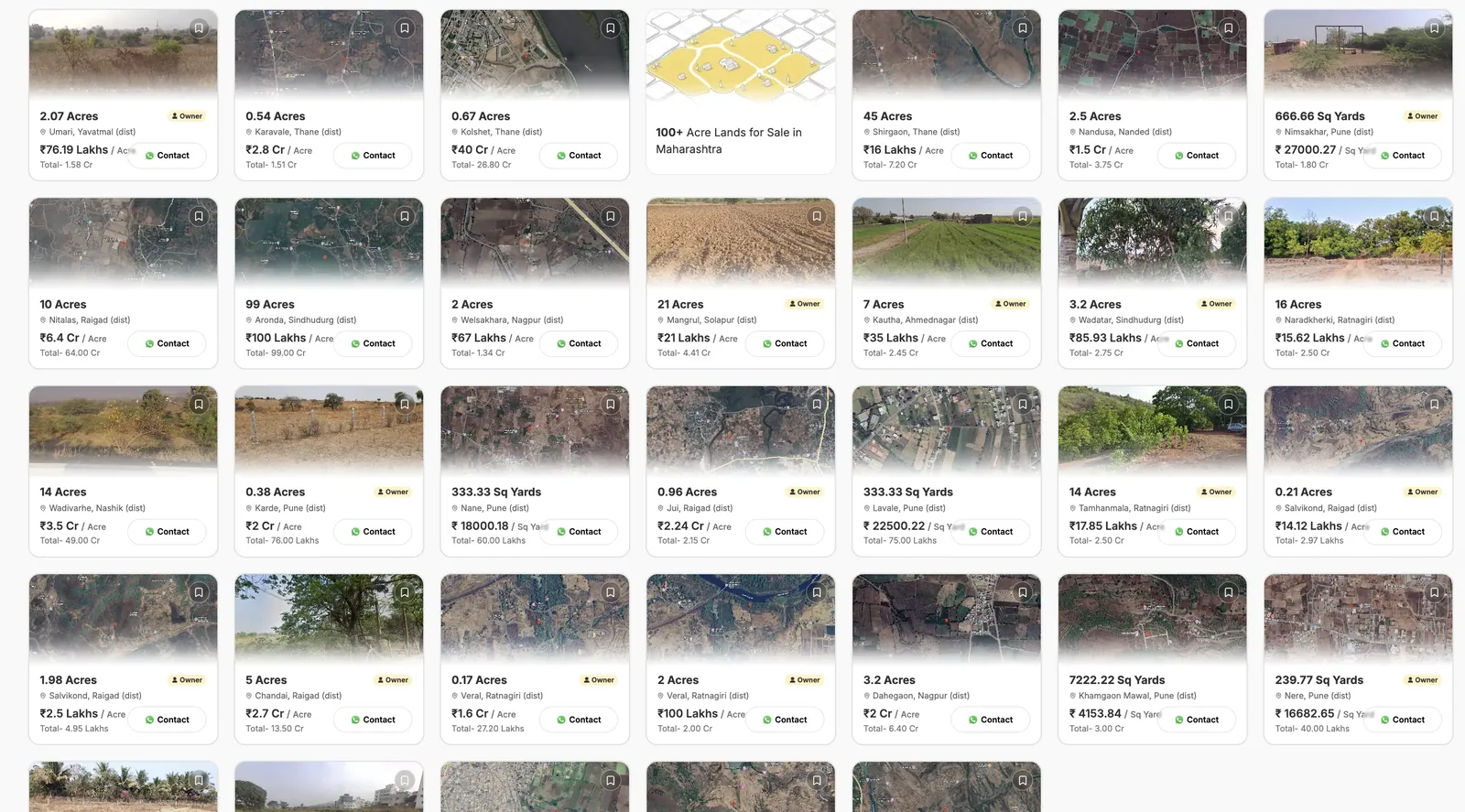
Browse 500+ verified lands & plots in Gujarat
Frequently asked questions
Can I search Gujarat land records by name?
Which village do I search?
What about old spellings?
What closes the trace?
The khata names my late grandfather?
Can buyers audit sellers this way?
Other Related Guides
AnyRoR
Every Gujarat land record service in one place, with a guide for each.
Read guide →GIDC Gujarat Allotment: BU Permission Buyer Guide 2026
Apply for a GIDC Gujarat allotment for industrial or commercial plots. Understand BU Permission, GIDC NOC, lease terms, and red flags. Buyer's guide 2026.
Read guide →Title Deed Gujarat: Complete Buyer's Guide 2026
Verify Title Deed (Mool Dastavej) in Gujarat using IGR Garvi portal. Trace 30-year ownership chain, check Index-2, avoid fraud. Buyer guide 2026.
Read guide →7/12 Utara Gujarat: Complete Buyer Guide 2026
Check 7/12 Utara Gujarat on AnyROR portal. Verify ownership, land type, liabilities. Section 63 rules for non-agriculturists. Buyer's guide 2026.
Read guide →Encumbrance Certificate Gujarat: Buyer Guide 2026
Get the Encumbrance Certificate Gujarat from IGR Garvi or the sub-registrar office. Verify mortgages, charges, and claims. Buyer's guide 2026 with steps and red flags.
Read guide →e-Dhara Gujarat: Certified Land Record Buyer Guide 2026
Get certified land records from e-Dhara Gujarat. Mamlatdar-issued copies for sale deeds, bank loans, and court use. Step-by-step buyer's guide 2026.
Read guide →