
Land-use conversion in Haryana: the CLU permission
Holding a Haryana khasra and being allowed to build on it are two different things. Agricultural land stays recorded for cultivation until the Town and Country Planning Department, TCP Haryana, grants a Change of Land Use permission, or until the land is notified for a development purpose. A seller who says the land is suitable for building has stated an intention; the CLU permission, and its reflection in the Fard, is the only thing that makes it a fact.
Why use sits alongside the right to hold in Haryana
Definition
In Haryana, change of agricultural land use to non-agricultural purposes requires a Change of Land Use, CLU, permission from TCP Haryana, the Town and Country Planning Department, under the Punjab Scheduled Roads and Controlled Areas Restriction of Unregulated Development Act 1963 and related rules. The change in recorded use should be reflected in the Fard and in the relevant plans. Without CLU permission, building on agricultural land is unlawful and penalties apply. State status is Confirm: verify the current route, fees and zoning rules for the specific plot with TCP Haryana and the revenue office.
A khasra recorded as agricultural land in Haryana stays agricultural until the state's planning machinery says otherwise. TCP Haryana is the authority that grants CLU permission for converting agricultural khasra to residential, commercial or industrial use, and without that permission a structure on the land is unlawful, exposed to penalties or demolition orders. A seller pitching a plot as ready to build, near a highway, ring road or industrial area, is describing potential unless the CLU permission is in hand.
The CLU route runs through TCP Haryana's office, which checks the location against the applicable development plan, zoning rules and the controlled-area notification. Not all land near a town or highway is convertible on the same terms; proximity to a controlled area, a national highway or an airstrip can restrict or condition the CLU, and the specific rules the plot sits under are the thing to confirm before any fee is paid or plan is made.
What ties the CLU to the record is that a genuine change of use should be visible in the Fard and in the updated entries, not only in a permission document a seller holds. Because the Fard is how subsequent buyers and banks read the land, a CLU that never reached the record is a permission that the land's own history does not carry. Confirm both: that the CLU was granted for the specific plot, and that the recorded use has been updated to reflect it.
How land-use conversion works in Haryana
The permission runs through TCP Haryana; the recorded change must follow in the Fard.
The CLU route
Confirm at source
Haryana land-use conversion: what to confirm
Each row is its own question; in a restricted area the first rows can end the matter.
| Before CLU | After CLU granted | Buyer's check |
|---|---|---|
| Recorded as agricultural | Recorded for the new use | The Fard shows the change |
| Zoning and plan unclear | Controlled area cleared | TCP Haryana rules confirmed |
| CLU not on the record | Updated in Fard | Reconcile with the record |
| A seller's claim | A signed CLU order | Read the order yourself |
| Use potential only | Use permitted | Confirmed for this specific plot |
Common Haryana land-use conversion issues, and the fix
Four land-use failures in Haryana.
Why the CLU must reach the record
A CLU permission sitting in a file changes how a plot may be used, but it changes how the record reads only once it is reflected in the Fard and the planning records. Banks and future buyers will read the Fard; a CLU that never reached the record is a permission that the land's own history does not carry, and the land will be read as agricultural by the next person who checks it. So confirm both parts. Verify the CLU was granted for the exact khasra, with the TCP Haryana rules for that plot and that zone checked first. Then confirm the recorded use was updated in the Fard. Confirm each with TCP Haryana and the revenue office rather than with the seller. In Haryana the Fard says what the land is recorded for; the CLU says whether it may be used for something else, and only a Fard that reflects the CLU tells that story consistently.
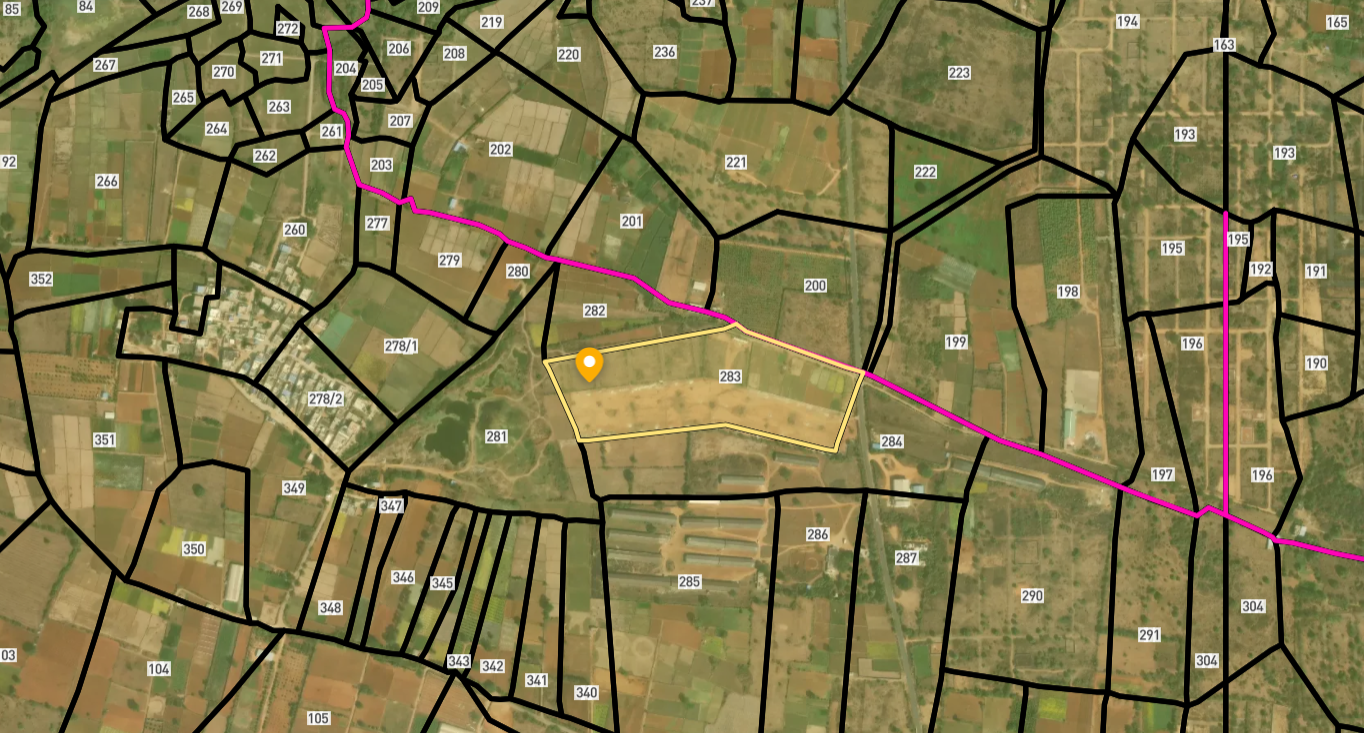
Survey Numbers View on Map Boundaries and numbers come from published state cadastral records. See all map layers.
Looking to sell your land in Haryana?
Browse 200+ verified lands & plots in Haryana
Frequently asked questions
What is CLU in Haryana?
Does holding a khasra let me build on it?
Who grants the CLU in Haryana?
Why check the Fard after a CLU?
What are controlled areas in Haryana?
What does a CLU cost in Haryana?
Other Related Guides
Jamabandi Haryana
Every Haryana land record service in one place, mapped for buyers.
Read guide →Property Tax Haryana 2026: Complete Guide for Land Buyers
Check property tax dues and get Nil Dues Certificate in Haryana before buying. Pay online via NDC portal, avoid inheriting arrears. Full buyer guide 2026.
Read guide →Intkal Mutation Haryana 2026: Complete Buyer's Guide
Learn how to check and verify Intkal Mutation in Haryana 2026. Full 30-year chain guide, jamabandi.nic.in steps, common risks, and Tehsildar tips for land buyers.
Read guide →Jamabandi Haryana 2026: Complete Guide for Land Buyers
Check Jamabandi Haryana online at jamabandi.nic.in. Verify seller name, Khasra, Khewat, mutation status before buying land. Full buyer guide 2026.
Read guide →Khasra Girdawari Haryana 2026: Complete Guide for Land Buyers
Check Khasra Girdawari Haryana before buying land. Verify land use, crop status, and NA conversion via jamabandi.nic.in. Full buyer guide 2026.
Read guide →Legal Heir Certificate Haryana 2026: Complete Step-by-Step Guide
Learn how to get a Legal Heir Certificate in Haryana in 2026. Covers Antyodaya SARAL online process, documents, fees, Patwari verification, and why all heirs must consent before sale.
Read guide →