How to Buy Land in
Goa:
Complete Property Buyer's Guide 2026
Goa is unlike anywhere else in India: ownership is still governed by the Portuguese Civil Code of 1867, most married sellers hold property under the Communion of Assets regime, large parts of the state fall under Coastal Regulation Zone (CRZ) restrictions, and Portuguese-era records — Matriz, Escrituras and Inventários — must line up with modern Form I & XIV records. A single missing document can make an entire purchase legally void. This guide covers every check to make before you pay a single rupee of advance.
Why Buying Land in Goa is Different from the Rest of India
Portuguese Civil Code (1867) — still operative for property and inheritance in Goa.
Communion of Assets is the default — both spouses jointly own and must both sign.
Matriz, Escrituras and Inventories must align with modern Form I & XIV.
Extensive CRZ zones along beaches, rivers, backwaters, creeks and mangroves.
Goa is unlike any other state in India. Centuries-old Portuguese laws still govern ownership here, Coastal Regulation Zones cover large parts of the state, and a single missing document can make your entire purchase legally void.
The Portuguese Civil Code remains operative in Goa. This means standard India due-diligence frameworks are insufficient — Portuguese-era documents such as the Matriz, Escrituras Públicas and Inventário must be obtained, certified, translated and reconciled against current records before any purchase can be considered safe.
Because the Portuguese Civil Code governs ownership, the usual North-Indian or South-Indian checklist will not protect you in Goa. Old Portuguese documents, certified translations, the seller's marital regime and CRZ classification are all decisive — and a defect in any one of them can render the sale void.
What Types of Properties Are Safe to Buy in Goa
A Goa property is only safe when all five of these conditions are met.
Every deed in the chain must be present, with no gaps permitted. You must verify that the Portuguese-era documents align with the current records.
Only Settlement-zoned land permits free construction. Agricultural land requires a Conversion Sanad. Forest land and eco-sensitive zones carry construction restrictions.
For existing structures you need the Sanad, Technical Clearance (with FAR noted), Panchayat NOC, Health Department NOC, the sanctioned plan and the Occupancy Certificate (OC). Without a valid OC you are buying an unauthorised structure regardless of how finished or occupied it appears.
House tax, property tax and water/electricity dues attach to the property itself. Obtain a no-dues certificate from the panchayat or municipality.
Matriz survey numbers must align with Form I & XIV (both manual and digital). Escrituras must match the mutation records. Inheritance requires a proper Inventário with all heirs included.
Orchard land restriction: If a property is classified as an orchard in the revenue records, you can construct on only 10% of the total plot area. A 1,000 sq.mt. orchard plot allows a maximum of 100 sq.mt. of built-up area.
Types of Property to Avoid When Buying Land in Goa
Often marketed as farmhouse plots, but cannot be legally built upon without a Conversion Sanad. Verify the Sanad at the Mamlatdar office.
Land near beaches, rivers, backwaters, creeks and mangroves likely falls under CRZ restrictions. Check the official CRZ notification maps before buying.
A structure that was never granted an OC is illegal. Banks refuse loans, and legal residence or rental is prohibited.
Missing Escritura pages, an incomplete Inventário or untraceable Matriz numbers all constitute title defects.
Under the Communion of Assets regime, the non-signing spouse can legally challenge the transaction indefinitely.
A notarised-only Power of Attorney is insufficient — only a registered POA is legally valid for a transaction.
Title Check Procedure
Goa's title chain joins the Portuguese-era records to the modern revenue records — verify both, and confirm they reconcile.
Portuguese-Era Documentation: Mandatory Checks
Goa property ownership traces through six core Portuguese-era documents. Each must be obtained, and any that is in Portuguese must come with a certified translation before it can be relied upon.
The six core Portuguese documents:
Records the ownership registration. Frequently overlooked.
Describes the boundaries and physical details of the property. Frequently overlooked.
The official cadastral map showing the plot boundaries. Frequently overlooked.
Translation rule: Every Portuguese document you receive must come with a certified translation from a registered, authorised translator. Uncertified translations have no legal standing.
Conversion Sanad: A Sanad is the official government order converting agricultural land to non-agricultural use. Without a valid Sanad, construction on formerly agricultural land is illegal.
Common title defects to watch for:
Why Both Spouses Must Sign Every Property Document in Goa
Under the default Communion of Assets marital regime of the Portuguese Civil Code, property acquired during marriage is jointly owned by both spouses. As a result, both spouses must sign every key document — a sale signed by only one spouse is legally defective.
Sale Agreement
Sale Deed
Power of Attorney (if the seller is abroad)
NOC (if required)
Title becomes legally defective.
The non-signing spouse can challenge the sale.
The buyer may lose possession entirely.
The buyer may lose all money paid.
Prerequisite check: Obtain the seller's Marriage Certificate and verify whether a Prenuptial Contract is registered with a notary — a registered prenuptial contract can change the default Communion of Assets regime.
Zoning & CRZ
| Classification | Construction status |
|---|---|
Settlement zone | Freely buildable. |
Agricultural | Requires a Conversion Sanad before construction. |
Forest land | Restricted construction. |
Eco-sensitive zones | Restricted construction. |
High Tide Zones | Restricted construction. |
CRZ verification: Always check the current Goa Regional Plan and the official CRZ notification maps for any property near water — beaches, rivers, backwaters, creeks or mangroves.
Building Checks
For any existing structure, confirm the full approval chain is in place. A missing Occupancy Certificate means the building is unauthorised, regardless of how complete or occupied it appears.
Required approvals for an existing structure:
NRI / OCI Rules
Many Goans hold Portuguese passports and sell their Goa property from abroad through a Power of Attorney. This makes POA verification one of the most important checks for any NRI / OCI-linked sale.
Only a registered Power of Attorney is legally valid for a property transaction in Goa. A notarised-only POA is insufficient and will not protect the buyer.
Red Flags When Buying Property in Goa: Walk Away Immediately
Aframantos (Tenant Rights)
Aframantos are tenant rights that can attach to Goa property. Where they exist they are a recognised title defect, so confirm whether any tenant rights subsist on the land before you buy.
Mundkar Rights
Mundkar rights can attach to Goa property and are a recognised title defect. Confirm that no Mundkar rights subsist on the land before you buy.
Goa Property Buyer Checklist: Documents to Verify Before You Buy
Goa due-diligence checklist
| Portal | What you get | URL |
|---|---|---|
Goa Online | Revenue mutation, registration, Forest dept, TCP (zoning), Agriculture and property plan. | |
DSLR Goa | Form I & XIV, Form D, Form III & Form B, partitions, mutations and maps. |
For online verification you will need the Taluka, Village / Town name, Survey Number, and Subdivision or Chalta Number.
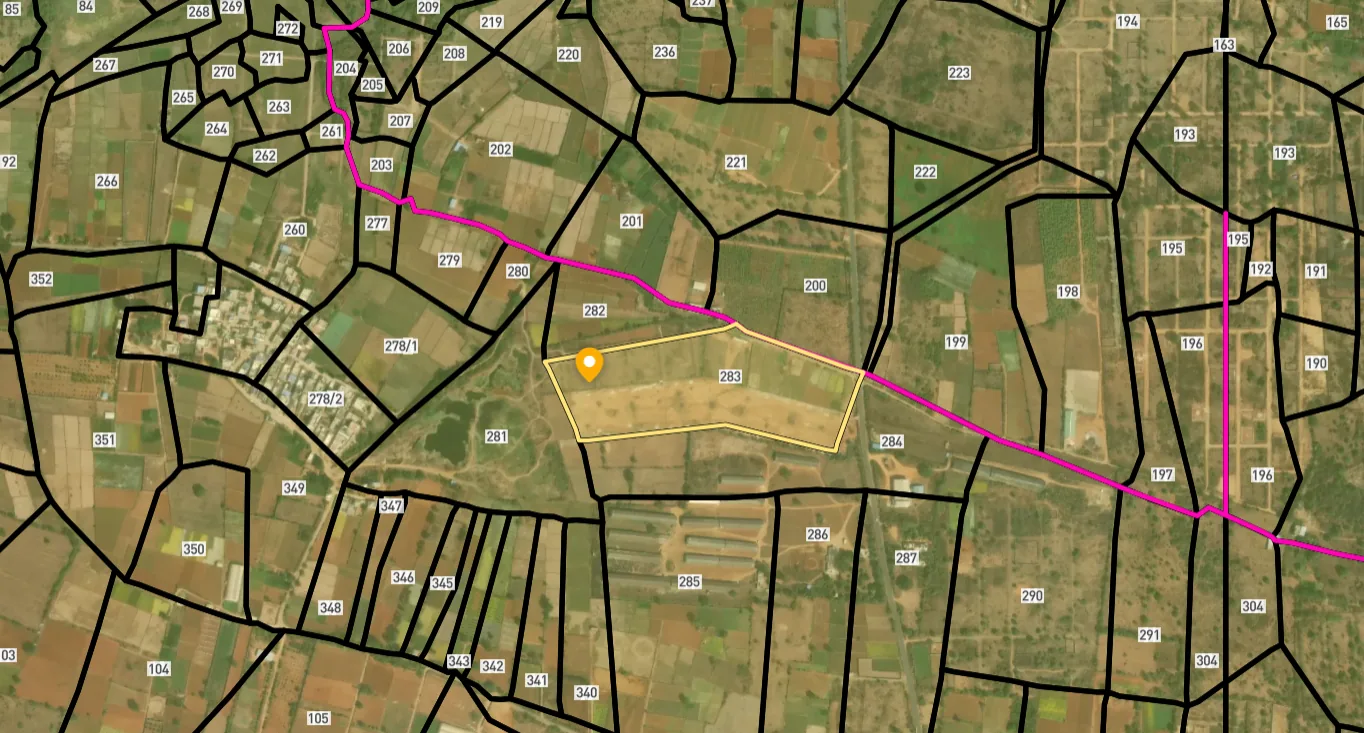
Survey Numbers View on Map Boundaries and numbers come from published state cadastral records. See all map layers.