
The i-RTC: Karnataka's Signed Record Copy
Karnataka draws a clean line through its own record. The RTC you view free on Bhoomi is information; the i-RTC, the same record issued under digital signature for a small fee, is evidence. Banks, sub-registrars and courts act only on the second, and knowing when to pull a fresh one is most of the skill.
Why the i-RTC exists at all
Definition
The i-RTC is the RTC issued as a digitally signed document through the Bhoomi system, for a small statutory fee. The signature makes it verifiable and tamper-evident, which is why lending, registration and judicial processes accept it where the free unsigned view carries no standing.
The two-tier design is deliberate. Free viewing keeps the record public and diligence cheap; the signed issue gives institutions a version they can rely on without wondering what an editor changed. One record, two purposes, cleanly separated.
Because the i-RTC is generated from the live record, it is also a snapshot with a date. What it certifies is the record as of issue, which is why lenders want recent copies and why the smart sequence is always: verify the record, fix what needs fixing, then sign what is finally correct.
An i-RTC faithfully certifying a wrong entry is a rejected document with a receipt attached. The mutation trail, the liabilities column and the owner spelling get audited on the free view first; the fee comes last.
Getting and verifying the i-RTC
Minutes online once the underlying record is actually right.
Online method
Free RTC view versus i-RTC
Which version for which job.
| Job | Version | Why |
|---|---|---|
| Shortlisting parcels | Free view | Unlimited, instant, sufficient |
| Site-visit cross-check | Free view | Live pull beats any printout |
| Bank loan file | i-RTC, fresh | Signed and dated is what sanction reads |
| Registration desk | i-RTC, fresh | Details must mirror the deed |
| Dispute or court | i-RTC | Signed snapshots build the trail |
| Post-purchase archive | i-RTC in your name | The file's cornerstone, after mutation |
Common i-RTC issues, and the fix
i-RTC problems are timing problems in disguise.
When the signed copy earns its fee
Three triggers, reliably: a loan file being assembled, a registration date approaching, and the weeks after your own purchase, when the i-RTC in your name becomes the archive's anchor document.
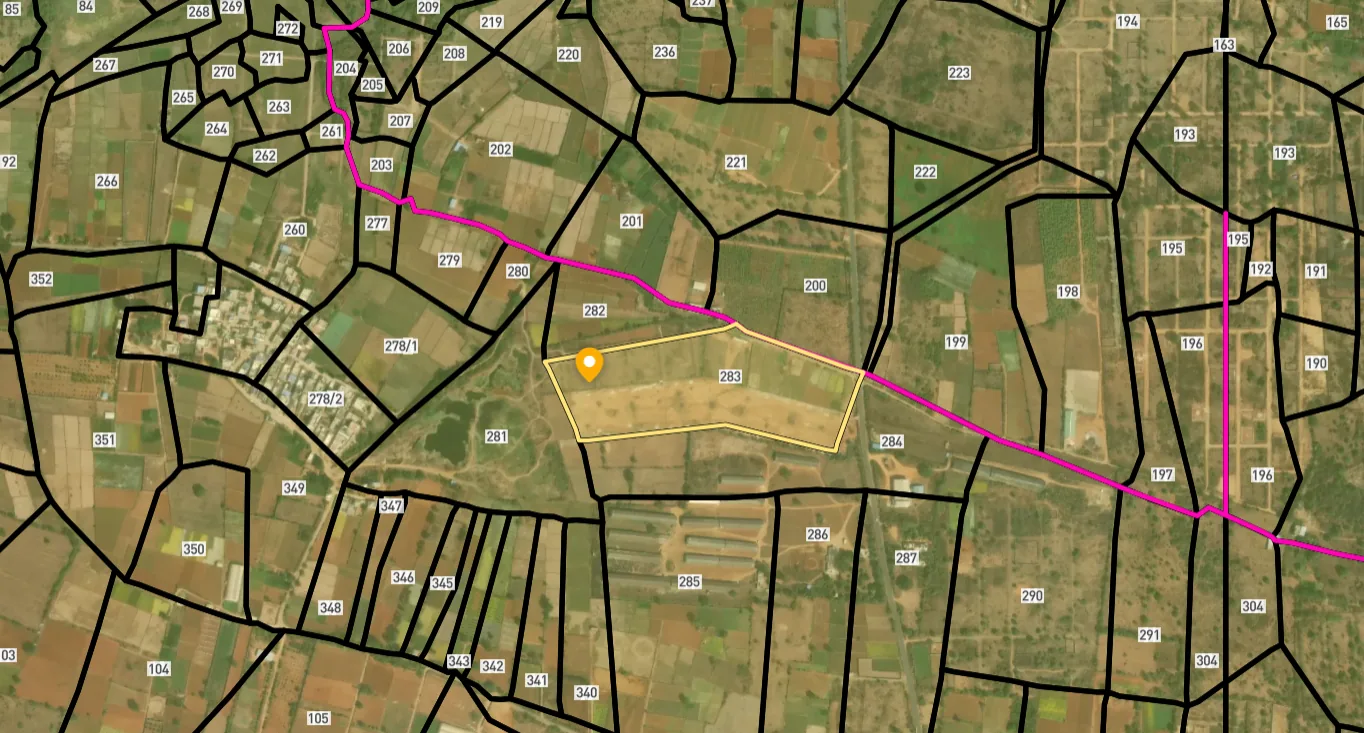
Survey Numbers View on Map Boundaries and numbers come from published state cadastral records. See all map layers.
Looking to sell your land in Karnataka?
Browse 1,300+ verified lands & plots in Karnataka
Frequently asked questions
What is the i-RTC in Karnataka?
Is the free RTC view not enough?
How do I get an i-RTC?
How recent should the copy be?
The i-RTC shows a wrong entry?
Should I pull it before or after mutation?
Other Related Guides
Survey Sketch Mojini Karnataka: Complete Guide 2026
Survey Sketch Mojini Karnataka guide: understand hissa numbers, download 11E sketches on bhoomojini.karnataka.gov.in, verify plot boundaries, and avoid boundary fraud.
Read guide →Revenue Court Case Karnataka Land Buying: Complete Guide 2026
Check RCCMS Karnataka before buying land. A pending revenue court case on any survey number blocks mutation and puts your entire investment at risk. Here's how to verify.
Read guide →Gram Panchayat NOC Karnataka: Land Buying Guide 2026
Need a Gram Panchayat NOC in Karnataka? Learn what it proves, when it's mandatory for land conversion, how to apply online via e-Swathu, and how to spot a fake certificate.
Read guide →Land Use Certificate Karnataka BDA: Complete Guide 2026
Land Use Certificate Karnataka guide: check BDA zone codes under RMP 2015, verify before commercial purchase, apply for CLU online, and avoid demolition risk in Bangalore.
Read guide →Khata Extract Karnataka: Complete Guide 2026
Understand Khata Extract in Karnataka, what it proves, how to get it online via BBMP e-Aasthi, key fields, B Khata risks, and why every buyer must verify it before purchase.
Read guide →DC Conversion Karnataka: Section 95 Certificate Guide 2026
DC Conversion Karnataka guide: apply under Section 95, check status on Bhoomi, verify the conversion order, and understand what the 2025 amendment changed for buyers.
Read guide →