
How to Check the Khatiyan in Odisha — Complete Guide 2026
A Khatiyan Odisha is the settlement record prepared during state survey operations under the Odisha Survey and Settlement Act, 1958. The RS Khatiyan from the Revisional Settlement is treated as the definitive title source in Odisha land deals. This guide breaks down what it shows, how to obtain it, and what to verify.
What is the Khatiyan in Odisha?
Definition
The Khatiyan is the village-wise record of rights drawn up during settlement operations carried out under the Odisha Survey and Settlement Act, 1958. It captures the rights, possession, and classification of every plot in a village as recorded by the settlement officer.
Odisha has gone through more than one round of settlement. Older villages carry an MS Khatiyan from the Major Settlement. Most districts have since seen a Revisional Settlement, producing the RS Khatiyan. Both belong to the same family, but the RS Khatiyan is treated as the latest authoritative entry of settlement rights, against which all later mutations are read.
For title work, this record carries weight that a current Bhulekh extract alone cannot. A Hal Khatiyan can be amended through mutation. The Settlement Khatiyan is what the state itself produced after surveying the ground, hearing objections, and finalising entries. When a title is challenged in court, the RS record is usually the anchor.
How to Get the Khatiyan Odisha: Step-by-Step
For villages already digitised on Bhulekh Odisha, the Settlement Khatiyan can be viewed online. For older or non-digitised records, the Tahasil and the District Record Room remain the source of truth.
Online method (recommended)
Offline method (Sub-Registrar Office)
What Does the Khatiyan Odisha Contain?
A Settlement Khatiyan is densely packed; every column tells a buyer something specific about the parcel.
| Field | What it means | What to check |
|---|---|---|
| Khatiyan Number | Holding number assigned during settlement | Matches the number quoted in the deed chain |
| Plot Numbers | Survey plots grouped under the Khatiyan | Cross-checked against the Bhunaksha sketch |
| Raiyat Name | Holder recorded at settlement, with father or husband name | Lines up with the original deed predecessor |
| Area (Acres / Decimals) | Total extent across plots in the Khatiyan | Tallies with the deed and any later partitions |
| Kisam | Land classification entered by the settlement officer | Matches your intended use or needs conversion |
Common Issues With the Khatiyan in Odisha
A Settlement Khatiyan is densely packed; every column tells a buyer something specific about the parcel.
Why the Khatiyan Matters for Land Buyers in Odisha
The Settlement Khatiyan is the document that decides whether your sale deed has firm ground under it.
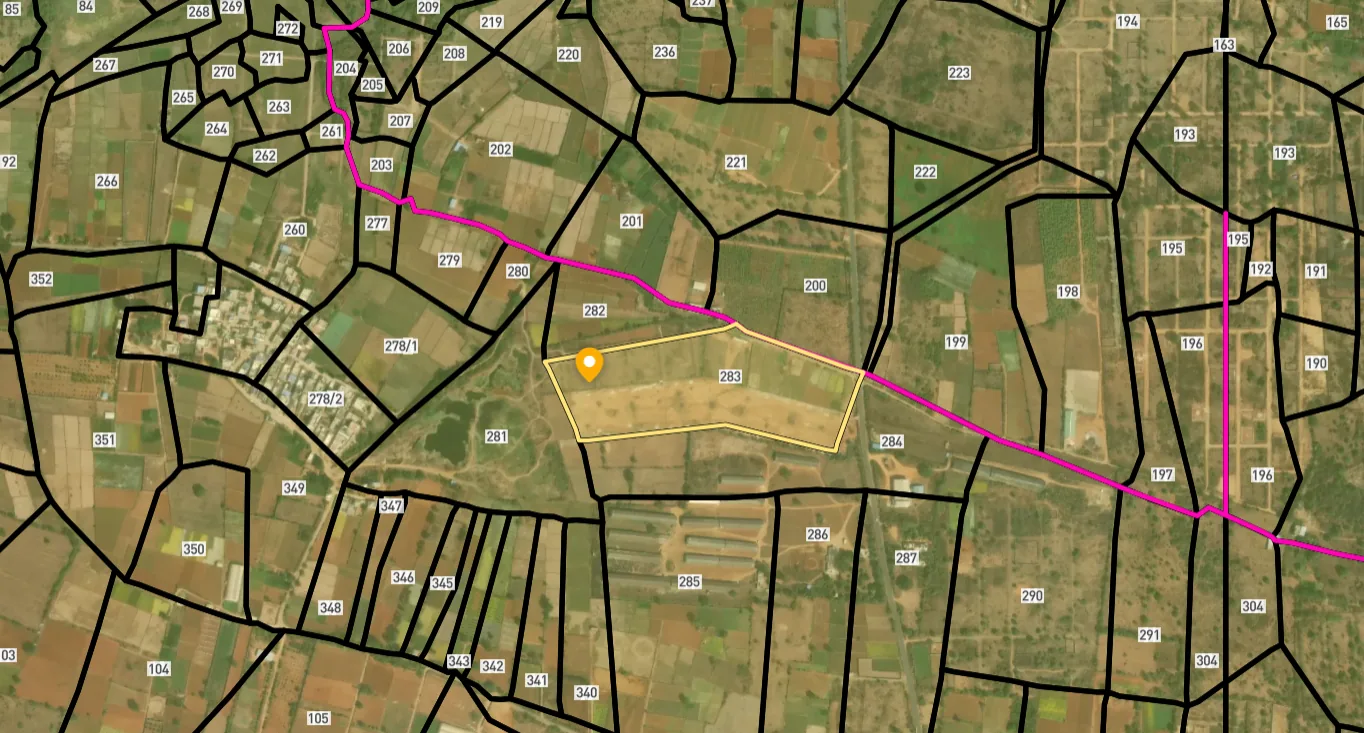
Survey Numbers View on Map Boundaries and numbers come from published state cadastral records. See all map layers.
Looking to sell your land in Odisha?
Browse 200+ verified lands & plots in Odisha
Frequently Asked Questions
What exactly is a Khatiyan Odisha and why does the RS version matter most?
Is the RS Khatiyan more important than the current Bhulekh Khatiyan?
How do I get a certified copy of the Settlement Khatiyan in Odisha?
What is the difference between MS Khatiyan and RS Khatiyan in Odisha?
How many years of Khatiyan should a buyer check before purchasing land in Odisha?
Does the Bhulekh Odisha portal display the Settlement Khatiyan or only the current record?
Other Related Guides
Title Deed Odisha 2026: Mother Deed & Chain Guide
A Title Deed Odisha is the registered parent document in a property's chain of ownership. Verify the Mother Deed via IGRS Odisha for a clean 30-year title trace.
Read guide →RoR / Plot Extract Odisha: Bhulekh Guide 2026
Download your RoR / Plot Extract from Bhulekh Odisha, decode Khatiyan and Kisam fields, and verify Raiyat ownership before any land purchase in Odisha.
Read guide →Patta Odisha 2026: Hal Patta & Transfer Guide
A Hal Patta Odisha is the current ownership certificate that must be in the seller's name on the day of sale. Read what it proves and how to transfer it.
Read guide →Mutation Odisha 2026: Dasakhata & Patta Update Guide
Mutation Odisha is the Tahasildar's order that updates Patta after sale. Read what Dasakhata records, how to track it, and how to confirm it is final.
Read guide →Encumbrance Certificate Odisha 2026: IGRS OD Guide
The Encumbrance Certificate Odisha lists every registered transaction on a plot. Cover 30 years through IGRS OD before any land purchase in the state.
Read guide →Land Conversion Odisha 2026: Agri to NA Order Guide
Buying agri land in Odisha and planning to build? Get the Land Conversion Order under Section 8(A) of the OLR Act first. Read how, where, and the buyer traps.
Read guide →