
How to Check the RoR / Plot Extract in Odisha — Complete Guide 2026
The Bhulekh Odisha RoR is your single window into who actually owns a plot, how much land they hold, and what the revenue books say about it. It is issued by the Revenue and Disaster Management Department and is available free at bhulekh.ori.nic.in for any survey number in the state.
What is the RoR / Plot Extract in Odisha?
Definition
The Record of Rights, commonly called Khatiyan in Odisha, is the legal land record maintained by the Revenue Department. It is prepared and updated under the Odisha Survey and Settlement Act, 1958, and the rules notified thereunder.
The RoR is the working document that captures the present status of a piece of land. It tells you the Khatiyan number, the plots that belong to that Khatiyan, the name of the Raiyat (the recorded holder), the area in acres and decimals, the Kisam or land classification, and the rent or revenue payable. Every village in Odisha has its own Khatiyan register, digitised onto the Bhulekh Odisha platform.
For a buyer, the RoR Odisha is the first record you read, not the last. It does not by itself confirm clean title. It confirms what the Revenue Department currently has on file. You still need the parent deeds, mutation order, encumbrance certificate from IGR Odisha, and a fresh Bhunaksha sketch to triangulate. Treat the RoR as the spine of your due diligence.
How to Get RoR / Plot Extract in Odisha: Step-by-Step
The Bhulekh Odisha RoR can be pulled online in minutes if you have either the Khatiyan number or the Plot number. For a stamped, signed copy, you visit the Tahasil office of the relevant block.
Online method (recommended)
Offline method (Sub-Registrar Office)
What Does the RoR / Plot Extract Contain in Odisha?
A clean Odisha Khatiyan packs a tight set of fields, and every one of them deserves a buyer’s second look.
| Field | What it means | What to check |
|---|---|---|
| Khatiyan Number | The holding number bundling related plots under one Raiyat | Matches the number quoted in the sale agreement |
| Plot Number | Individual survey unit within the Khatiyan | Matches Bhunaksha plot and the boundary on site |
| Raiyat Name | Recorded holder of the land | Exactly matches seller’s ID and registered deed |
| Area | Extent in acres and decimals (100 decimals to an acre) | Tallies with sale agreement and Bhunaksha |
| Kisam | Land classification such as Sarad, Bahal, Gharabari, Patita | Use determines mutation rights and conversion need |
Common Issues With RoR / Plot Extract in Odisha
A clean Odisha Khatiyan packs a tight set of fields, and every one of them deserves a buyer’s second look.
Why the RoR / Plot Extract Matters for Land Buyers in Odisha
The Khatiyan is the document that determines whether the land you are paying for actually exists in the seller’s name on the day of sale.
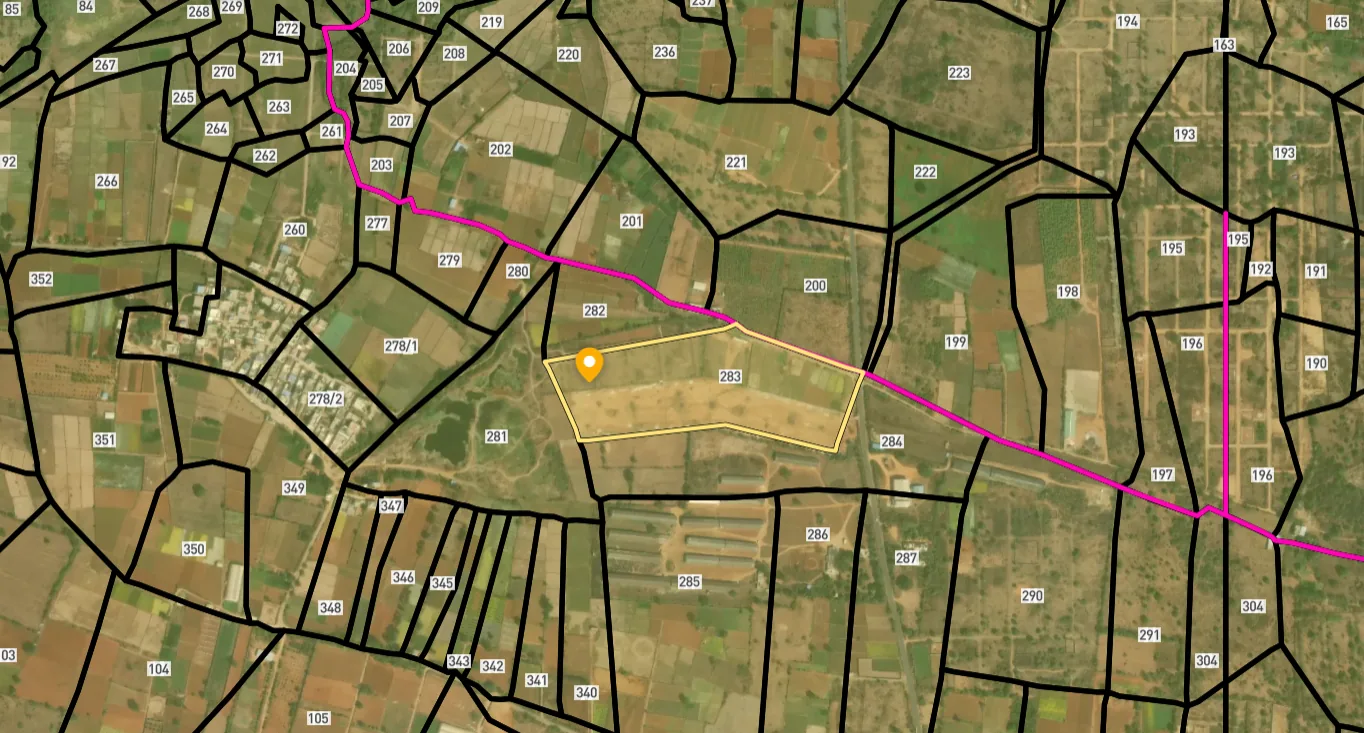
Survey Numbers View on Map Boundaries and numbers come from published state cadastral records. See all map layers.
Looking to sell your land in Odisha?
Browse 200+ verified lands & plots in Odisha
Frequently Asked Questions
How do I check the Bhulekh Odisha RoR online for a plot?
Is the Bhulekh Odisha RoR a legally valid document on its own?
What is Khatiyan in the Odisha land record system?
How do I get a certified RoR copy at the Tahasil in Odisha?
What does Kisam mean inside an Odisha RoR?
What if the Bhulekh Odisha RoR still shows the old owner after a sale?
Other Related Guides
Title Deed Odisha 2026: Mother Deed & Chain Guide
A Title Deed Odisha is the registered parent document in a property's chain of ownership. Verify the Mother Deed via IGRS Odisha for a clean 30-year title trace.
Read guide →Khatiyan Odisha 2026: RS & Settlement Record Guide
Khatiyan Odisha is the settlement record that anchors land title in the state. Read what RS Khatiyan proves, how to obtain one, and why buyers must verify it.
Read guide →Patta Odisha 2026: Hal Patta & Transfer Guide
A Hal Patta Odisha is the current ownership certificate that must be in the seller's name on the day of sale. Read what it proves and how to transfer it.
Read guide →Mutation Odisha 2026: Dasakhata & Patta Update Guide
Mutation Odisha is the Tahasildar's order that updates Patta after sale. Read what Dasakhata records, how to track it, and how to confirm it is final.
Read guide →Encumbrance Certificate Odisha 2026: IGRS OD Guide
The Encumbrance Certificate Odisha lists every registered transaction on a plot. Cover 30 years through IGRS OD before any land purchase in the state.
Read guide →Land Conversion Odisha 2026: Agri to NA Order Guide
Buying agri land in Odisha and planning to build? Get the Land Conversion Order under Section 8(A) of the OLR Act first. Read how, where, and the buyer traps.
Read guide →