
Kisam and restricted land in Odisha: what the classification allows
Before who owns an Odisha plot comes what the plot is. The kisam, the land classification on the RoR, decides whether a plot is ordinary saleable land or one of the restricted classes: government kinds like anabadi and rakhita, communal and service land, or land held by a Scheduled Tribe raiyat. For tribal land, the Odisha Land Reforms Act and Regulation 2 of 1956 restrict or bar transfer, and a wrong-way sale can be void.
What the kisam decides
Definition
The kisam is the classification of a plot on the Odisha RoR, and it decides what the land can be. Ordinary classes, agricultural or gharabari, are privately saleable, subject to conversion for building. Government classes such as anabadi, rakhita and patita, and communal and service land, are not ordinary private land. A Scheduled Tribe raiyat's land is restricted under OLR Section 22 and, in Scheduled Areas, Regulation 2 of 1956. This is a legal overview, not advice; verify the current position with the Tahasil, the Sub-Collector and a lawyer.
The kisam is the class the state has recorded for a plot, and Odisha uses it to mark not merely how land is used but what may be done with it. An agricultural or gharabari kisam is private, saleable land, buildable once its class is changed. A large share of land, though, carries a class that limits or removes that freedom, and it is the classification, not the raiyat's willingness, that governs. Reading the kisam is thus the opening act of diligence, not a detail left to the end.
The government and communal classes trap many buyers. Anabadi is government wasteland, rakhita is reserved, patita is fallow government land, and communal or service kisams, such as land tied to an office, are not the raiyat's to sell as private property. A plot in one of these classes may be occupied, even for years, without being lawfully saleable, and a deed for it can convey nothing. The RoR names the class plainly, which is exactly why it is read before price.
Tribal land is protected most heavily. Under Section 22 of the Odisha Land Reforms Act, a Scheduled Tribe raiyat's transfer is void except to another Scheduled Tribe person, or to a non-tribal with the competent authority's prior written permission. In the Scheduled Areas, Regulation 2 of 1956 restricts transfer of tribal property to non-tribals and provides penalties and restoration for illegal transfers. These rules are technical and have been the subject of proposed change, so confirm them for the exact parcel, parties and location.
Reading the classes, and the tribal-land rules
The kisam and the parties place the plot; read both, then confirm the route with the authority.
Placing the plot
Then, and only then
Odisha kisam and restricted land: the transfer question
The class and the parties set the route. When in doubt, treat the land as restricted until confirmed.
| Situation | Broad position | What it needs |
|---|---|---|
| Agricultural or gharabari | Private, saleable | Ordinary diligence, conversion to build |
| Anabadi, rakhita, patita | Government land | Not the raiyat's to sell |
| Communal or service kisam | Restricted use | Its own limits, often not saleable |
| ST raiyat, outside Sched. Area | OLR Section 22 applies | Sub-Collector permission, or ST buyer |
| ST land in Scheduled Area | Regulation 2 of 1956 | Barred or tightly permitted |
Common Odisha kisam and restricted-land issues, and the fix
Four ways an Odisha restricted-land deal goes wrong.
Why a restricted transfer is void, not merely risky
The hard truth for a buyer is that a restricted-kisam or tribal-land breach is not a risk that time or possession settles. Government and communal classes are simply not private property, and under Section 22 a Scheduled Tribe raiyat's transfer without permission is void, with Regulation 2 of 1956 adding penalties and restoration in the Scheduled Areas. A registered deed, money paid, even long occupation, do not create a title the classification denies. So treat the kisam as the first gate, not a closing formality. Read the class on the RoR before price is discussed, place the parties and the parcel, and, where a transfer is possible, insist the Sub-Collector's written permission exists before any deed is registered or money moves. This is a legal overview, not advice; on any restricted or tribal plot, confirm the current rules and the route with the Tahasil, the Sub-Collector and a lawyer versed in Odisha's land reforms law.
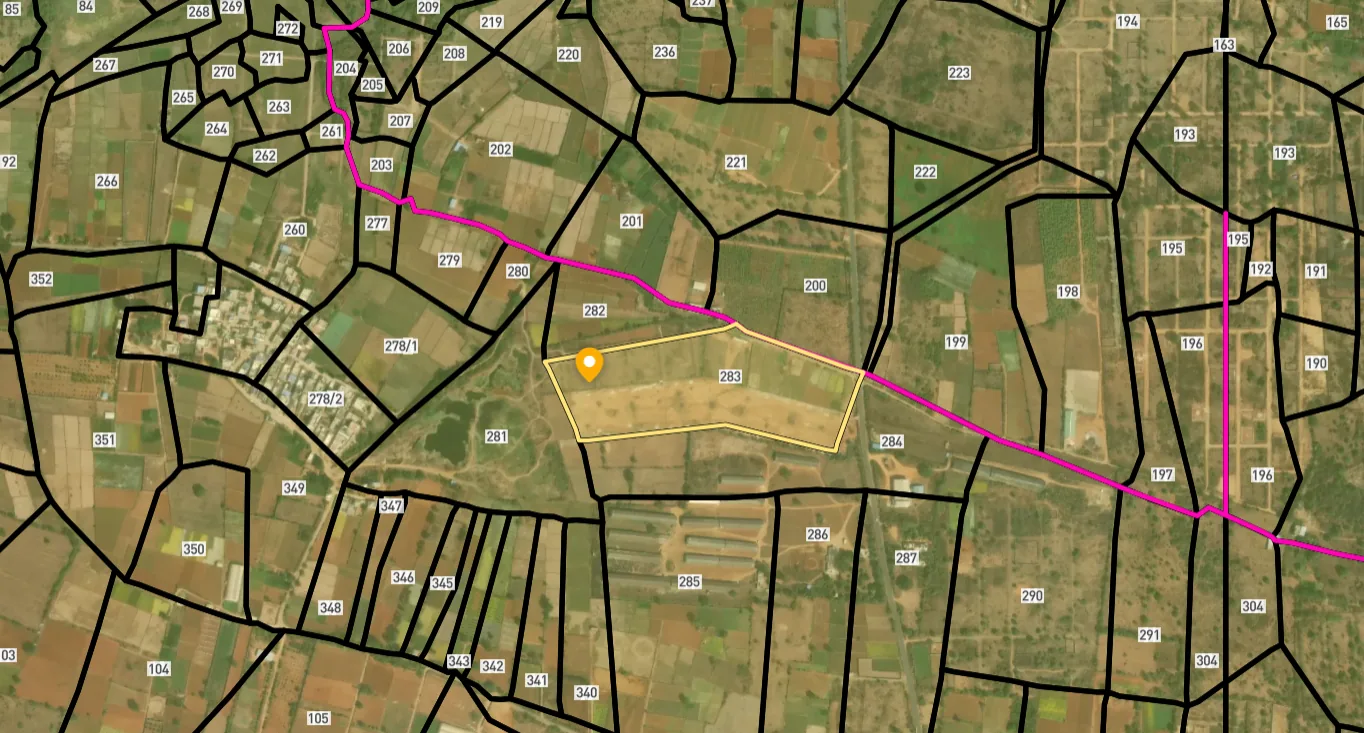
Survey Numbers View on Map Boundaries and numbers come from published state cadastral records. See all map layers.
Looking to sell your land in Odisha?
Browse 200+ verified lands & plots in Odisha
Frequently asked questions
What is the kisam in Odisha?
Which kisams are restricted?
Can a non-tribal buy tribal land in Odisha?
Does registration make a restricted transfer legal?
What is Regulation 2 of 1956?
How do I check if a plot is restricted?
Other Related Guides
Title Deed Odisha 2026: Mother Deed & Chain Guide
A Title Deed Odisha is the registered parent document in a property's chain of ownership. Verify the Mother Deed via IGRS Odisha for a clean 30-year title trace.
Read guide →RoR / Plot Extract Odisha: Bhulekh Guide 2026
Download your RoR / Plot Extract from Bhulekh Odisha, decode Khatiyan and Kisam fields, and verify Raiyat ownership before any land purchase in Odisha.
Read guide →Khatiyan Odisha 2026: RS & Settlement Record Guide
Khatiyan Odisha is the settlement record that anchors land title in the state. Read what RS Khatiyan proves, how to obtain one, and why buyers must verify it.
Read guide →Patta Odisha 2026: Hal Patta & Transfer Guide
A Hal Patta Odisha is the current ownership certificate that must be in the seller's name on the day of sale. Read what it proves and how to transfer it.
Read guide →Mutation Odisha 2026: Dasakhata & Patta Update Guide
Mutation Odisha is the Tahasildar's order that updates Patta after sale. Read what Dasakhata records, how to track it, and how to confirm it is final.
Read guide →Encumbrance Certificate Odisha 2026: IGRS OD Guide
The Encumbrance Certificate Odisha lists every registered transaction on a plot. Cover 30 years through IGRS OD before any land purchase in the state.
Read guide →