
What is Apna Khata?
Definition
Apna Khata (apnakhata.rajasthan.gov.in) is Rajasthan's land records portal under the revenue department's e-Dharti system, serving the jamabandi, nakal copies, Girdawari reports and online mutation applications, with certified copies e-signed or from tehsil counters. The registered chain, the EC and the DLC rates live on e-Panjiyan; maps on Bhu Naksha Rajasthan; conversion runs through the 90A and revenue machinery.Take the portal's name literally and Rajasthan organises itself: everything is an account. The khata holds the family's land as fractions; the nakal is the account's statement; the Girdawari is its activity log; the Namantaran is a posting to it; and the certified copy is the statement on letterhead. A buyer who thinks in accounts asks the right first question every time: whose account, and what fraction of it is actually for sale?
The system's strength is self-service at distance: the account readable from anywhere, the mutation application filed from a phone and tracked by reference, the certified nakal e-signed without a queue, which matters in a state whose families are scattered from Jaipur to the Gulf.
Its boundaries are clean: deeds, the EC and the DLC rates belong to e-Panjiyan; the drawn khasra to Bhu Naksha; conversion to the 90A and revenue machinery beneath the master plans; and contested entries to the revenue ladder, whose queue is its own weather.
Apna Khata Rajasthan and e-Panjiyan: two counters, one file
Revenue and registration keep separate books that audit each other. Route each question to its counter.
| Question | Counter | Service |
|---|---|---|
| Who holds this khasra, in what fraction? | Apna Khata (revenue) | Jamabandi nakal |
| Who is actually cultivating it? | The Girdawari record | Season-wise report |
| What was signed against it? | e-Panjiyan (registration) | Certified search / EC |
| What floor sits under the price? | e-Panjiyan (valuation) | DLC rates, published |
| How does the account change? | Patwari & Tehsildar machinery | The Namantaran entry |
| Where exactly does the plot lie? | Bhu Naksha Rajasthan | The khasra on its village sheet |
Make it reflexive: the account's questions go to Apna Khata, the money's to e-Panjiyan, possession's to the Girdawari, and the fraction gets asked before any of them.
All Apna Khata services, with a guide for each
Eight guides across the counters. The e-Panjiyan badge marks the registrar's counter; the rest is the revenue side's own machinery.
Records & search
3 guidesThe account, the name route into it, and the field walk that says who is really there.
The account read whole: holders, fractions, khasra numbers, class and remarks.
Search by owner nameA remembered holder resolved to their khata, folklore replaced by arithmetic.
Girdawari reportThe Patwari's field walk: crop, area, water and who was found cultivating.
Registration (e-Panjiyan)
1 guideThe certified chain and the DLC floor, from one portal in one sitting.
Change & conversion
2 guidesThe entry applied from anywhere, and the 90A crossing at the city's edge.
Applied online from anywhere, verified by the Patwari, entered by the Tehsildar's side.
NA / conversion (90A)The city-edge crossing: plan, order, record, in that order.
Maps & copies
2 guidesThe sheets that outlive fences, and the certified grade institutions accept.
Getting started on the portal
Two keys open everything: the khata for the account, the khasra for the ground.
Khata, khasra, and the father's-name pairing
An account answers to its khata number, its plots to their khasra numbers, and where names crowd, the register's holder-and-father pairing does the separating. Old papers may cite pre-settlement or pre-consolidation numbers; the tehsil's records translate generations, and any old nakal or receipt carries enough keys to unlock the rest.
| Step | Online | Offline |
|---|---|---|
| 1. Access | Open Apna Khata; district map, tehsil, village | The Patwari decodes an account's margins at sight |
| 2. Identify the parcel | Search on khata, khasra, or the name pairing | Tehsil counters issue the certified nakal |
| 3. Use the service | Read fractions, class and remarks; save the copy | The Tehsildar's side decides entries after notice |
| 4. Keep evidence | e-Panjiyan for the chain, rates and deed copies | Sub-registrar books hold the older decades |
Offline Rajasthan runs through the village Patwari, the tehsil and the Tehsildar's machinery, e-Mitra service counters for assisted access, and the sub-registrar offices on the e-Panjiyan side.
Which Apna Khata Rajasthan service do you need?
Eight intents, eight guides. Start from what you are trying to do.
| You want to | Use this service | Guide |
|---|---|---|
| Read a khasra's holders and their fractions | Jamabandi nakal | Nakal guide |
| Trace family land from a name | Owner name search | Name search |
| See who actually cultivates | Girdawari seasons | Girdawari guide |
| Check loans and the deed chain | e-Panjiyan certified search | EC guide |
| Post a deed or a death into the account | Namantaran, tracked by reference | Namantaran guide |
| Check the boundary you are pricing | Bhu Naksha sheet | Bhu Naksha |
| Turn a field into a lawful plot | The 90A route | 90A guide |
| Give an institution proof | Certified nakal | Copy guide |
The order a careful buyer runs these in
Rajasthan rewards the account-first order: fractions, field, chain, sheet, class, and only then price, paper and the entry.
- Pull the nakal and read the fractions. The account's holders, shares, khasra numbers and classification, with every remark chased to its file. Guide: Nakal guide
- Read the Girdawari's seasons beside it. Crop, water and the cultivator column, tested against the pitch and the site visit. Guide: Girdawari guide
- Run the e-Panjiyan chain and the DLC rate. The certified span a purchase needs, reconciled with the account, and the duty floor noted early. Guide: EC guide
- Put the sheet against the sand. The khasra located on Bhu Naksha, walked where walkable, measured where it matters. Guide: Bhu Naksha
- Settle class, plan and conversion. Classification consequences at the tehsil, and the 90A position for anything near a city's edge. Guide: 90A guide
- After the deed, track the entry home. The Namantaran by its reference to the amended account, closed with a fresh certified nakal. Guide: Namantaran guide
Common issues across the portal
Most stalled Rajasthan files trace to one of these four.
One heir's share pitched as the whole khata. The column states the arithmetic; count the signatures it requires.
Seasons naming a cultivator the pitch didn't. Resolve in writing with counsel; cultivation history carries weight.
Allotted or restricted categories priced as ordinary land. The class line carries rules; confirm them at the tehsil.
Deeds registered, no Namantaran reference or no fresh nakal. Track the entry home and pull the amended account.
Apna Khata Rajasthan: rules buyers should know
The shares column is the seller's true stake, and undivided khatas are the norm. Every needed signature follows the arithmetic.
Whichever is higher, deed price or the published DLC valuation, is what duty runs on. Pull a dated extract early.
The Girdawari's cultivator entries carry legal weight. A non-seller name across seasons stops the deal until resolved.
At the city's edge, master plans and schemes govern what 90A can serve. Price today's orders and entries, never a rumour.
Looking to sell your land in Rajasthan?
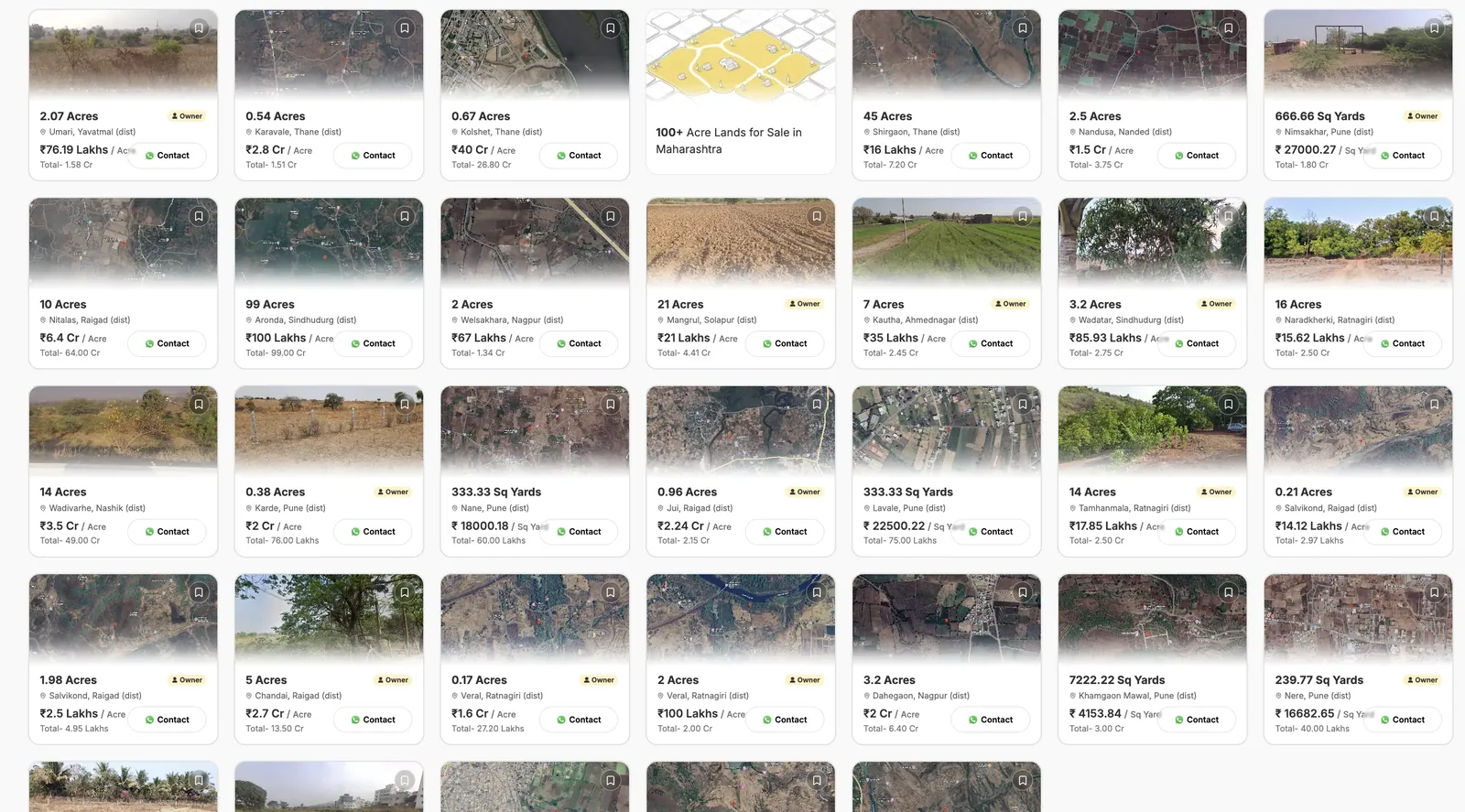
Browse 300+ verified lands & plots in Rajasthan
Frequently asked questions
What is Apna Khata?
Rajasthan's land records portal on the e-Dharti system: the jamabandi, its nakal copies, Girdawari reports and online mutation applications, village by village.
How do I check my jamabandi online?
Open Apna Khata's district map, choose the tehsil and village, and put in a khata, a khasra or a holder's name.
What is a nakal?
The jamabandi's extract: free informational copies for reading, and certified e-signed or tehsil-sealed copies for official use.
How does mutation work in Rajasthan?
As the Namantaran: applied online or at the tehsil, verified by the Patwari, decided after notice, and entered in the account.
Does Rajasthan issue an encumbrance certificate?
Yes, through e-Panjiyan: the certified search of registered documents for the span applied, with DLC rates published alongside.
What is the Girdawari?
The Patwari's seasonal crop record per khasra: crop, area sown, irrigation and the cultivator found, each kharif and rabi.
How does farmland become plots?
Through conversion, the 90A route in urban and authority areas, governed by master plans and carried into the jamabandi's class.
Is the online record legally valid?
Views and informational nakals inform. Institutions act on certified copies, e-signed or from the tehsil.