Document Guide · Tamil Nadu

How to Check Chitta in Tamil Nadu — Complete Guide 2026

Quick Reference
Also calledPatta Chitta (after 2015), Land Classification Record, Adangal-linked record
Issued byVillage Administrative Officer and Taluk Office, Revenue Department, Tamil Nadu
Valid forLifetime, updated when classification or ownership changes
CostFree to view online; ₹100 counter fee for offline extracts; ₹1,000 scrutiny + 3% of market value for land-use conversion
Time takenInstant for digitised records; 15 to 30 days for classification correction
Online portaleservices.tn.gov.in
1

What is Chitta in Tamil Nadu?

Definition

A Chitta in Tamil Nadu is the official land classification record maintained by the Village Administrative Officer (VAO) and the Taluk office. It records whether a parcel is Nanjai (wetland), Punjai (dryland), Manavari (rainfed), or urban, along with extent and tax assessment, under the Tamil Nadu Patta Pass Book Act, 1983 framework, since 2015 issued as part of the unified Patta Chitta extract.

Tamil Nadu has long classified land by water access, not by zoning. Nanjai land sits next to rivers, canals, ponds, or tanks and is state-protected for paddy and irrigated crops. Punjai land has limited water and supports cotton, groundnut, or non-irrigated cultivation. The Chitta entry decides which category your survey number falls into, and that single line decides whether you can build a house on it. The Madras High Court in The Tahsildar v. T. Elumalai (2025 MHC 1238) confirmed that forged Chitta entries are a recurring fraud pattern.

Banks, the Sub-Registrar, and DTCP all read the Chitta before approving anything. A buyer who pays for Nanjai land thinking it can host a residential layout will hit a wall: construction without a Change of Land Use order under the Tamil Nadu Change of Land Use Rules, 2017 risks demolition. The conversion process needs Collector concurrence for wetland, a 3% conversion fee on market value, and DTCP or local body approval for the layout. Land classification Tamil Nadu rules treat misclassification as the seller's risk to fix, not the buyer's.

State-specific note: A Chitta classification that does not match the Patta blocks both registration and home loan. Nanjai sold as Punjai is the most common pre-purchase fraud pattern in Tamil Nadu.
2

How to Get Chitta in Tamil Nadu: Step-by-Step on eservices.tn.gov.in

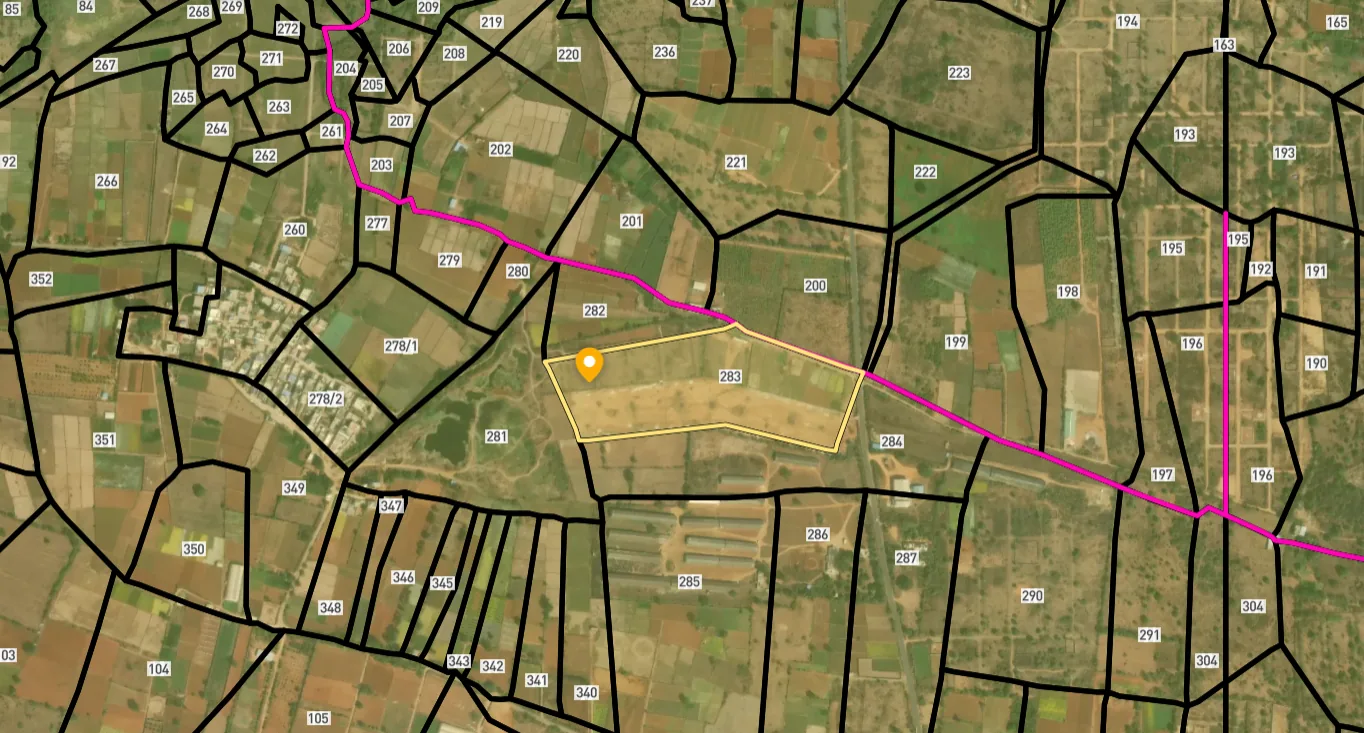
Two routes get you a Chitta extract in Tamil Nadu. The eservices.tn.gov.in portal serves digitised classification data instantly. Older or unmapped survey numbers need a VAO Taluk office visit. Have your district, taluk, village, survey number, and sub-division ready before starting.

Online method (recommended)

1
Open the e-Services portal Visit [eservices
tn.gov.in](http://eservices.tn.gov.in). Log in or register with name, mobile, email, and Aadhaar or PAN. The Tamil Nadu e-Services portal is bilingual in English and Tamil.
2
Choose the area type Click View Patta and FMB / Chitta / TSLR Extract
Select Rural for agricultural land, Natham for residential village land, or Urban for town and municipal areas. The classification fields differ for each area type.
3
Search by survey number Choose your district, taluk, and village from the dropdowns
Enter the survey number with sub-division. The Patta number works as an alternate input. Solve the captcha and submit.
4
Read the classification fields The portal returns the unified Patta Chitta extract
Look for Nanjai, Punjai, Manavari, or urban category, the total extent, soil type, and tax assessment. View Chitta online preview, then download the PDF. * ###
* Run Verify Patta on the same record using the reference number printed on the extract. The OTP-based check confirms the Chitta entry has not been altered locally.

Offline method (Sub-Registrar Office)

1
Visit the VAO Taluk office Find the VAO who covers the village, or the Tahsildar's Taluk office for the parcel
Carry the survey number, sub-division, prior Patta, and the sale deed if available.
2
Submit the request Ask for the Patta Chitta extract or the A-Register extract for the survey number
Both record the classification. Pay the counter fee, around ₹100 per extract.
3
Field verification For corrections to the Chitta classification, the VAO or assistant surveyor visits the parcel
Soil type, water source, and current cultivation are checked against the existing record before any change is approved.
4
Collect the signed extract The Tahsildar signs the extract showing the verified classification
For correction or reclassification, the order copy is issued separately and entered in the patta pass book register. *
* Pull the Adangal extract alongside the Chitta. Adangal records cultivation history and helps confirm whether Nanjai land has actually been farmed as wetland over recent seasons.
3

What Does Chitta Contain in Tamil Nadu?

Each Chitta extract carries the same set of fields. Mismatch on any one against the Patta is a transfer-blocking defect.

Field What it means What to check
Survey Number and Sub-divisionLand parcel identifierMatch exactly with Patta and FMB sketch
Land ClassificationNanjai (wet), Punjai (dry), Manavari (rainfed), or urbanVerify against intended use; conversion needed for non-agri build
Total ExtentLand area in hectares or square metresCross-check with sale deed schedule and on-ground measurement
Soil TypeBlack, red, alluvial, or otherConfirms classification accuracy
Tax AssessmentLand revenue payablePending dues block transfer applications
Owner NameSame as Patta after the 2015 mergerMust match the seller's Aadhaar and Sale Deed
Adangal ReferenceLinked cultivation registerConfirms actual farming use over recent seasons
Good sign: A clean Chitta shows the same survey number, owner, and extent as the Patta, classification matching the actual on-ground use, and a valid eservices.tn.gov.in reference number for OTP verification.
4

Common Issues With Chitta in Tamil Nadu

Each Chitta extract carries the same set of fields. Mismatch on any one against the Patta is a transfer-blocking defect.

Chitta does not match the Patta
The Buyer Warning is explicit: the Chitta must match the Patta exactly. After the 2015 merger this looks automatic, but legacy records often show different extent, classification, or owner-name fields. A mismatch sends the registration back from the Sub-Registrar's desk. *
Fix: * Pull the unified Patta Chitta extract from eservices.tn.gov.in. If the legacy fields conflict, file a correction at the VAO with the sale deed and previous extracts before paying any advance.
Nanjai land sold as Punjai or residential
Sellers downplay the wetland classification to push sales to homebuyers. The buyer pays Punjai prices, builds a house, and faces demolition under the Tamil Nadu Change of Land Use Rules, 2017. The Madras HC has confirmed forged Chitta entries are a known fraud channel. *
Fix: * Verify classification on the portal in front of the seller. For non-agri use, demand a Conversion Order copy showing CLU approval before signing.
Survey number returns "no record found"
The portal occasionally returns a blank or invalid survey number response. Common causes are undigitised manual records, sub-division updates not yet reflected, or village dropdown gaps in remote taluks. *
Fix: * Visit the VAO and request a manual Chitta extract. File a written digitisation request along with the sale deed and previous patta.
Stale classification after sub-division
Land that was sub-divided years ago may still show the parent survey number's classification on the portal. A buyer assumes the entire 5 acres is Punjai, only to find one sub-division is Nanjai with restricted use. *
Fix: * Pull the Chitta and FMB sketch for each sub-division separately. Confirm the classification for the exact parcel being purchased.
Conversion order missing on layout plot
Plots in residential layouts on former agricultural land must show a Conversion Order under the 2017 Rules. Without it, the layout is unauthorised, DTCP rejects building plan applications, and resale becomes nearly impossible. *
Fix: * Demand the Conversion Order copy and DTCP layout approval. Cross-check the plot number against the sanctioned plan.
Wetland classification on a paid-development plot
Some "ready to build" plots remain classified Nanjai on the Chitta even after the sale deed is registered. Buyers cannot get DTCP plan approval until reclassified, which forces them to fund the conversion themselves. *
Fix: * Confirm the seller has completed CLU before purchase. Pre-conversion plots are negotiable on price; post-conversion plots are not.
5

Why Chitta Matters for Land Buyers in Tamil Nadu

The Chitta is the single document that decides what you can legally build on the parcel after the sale closes.
📋
Decides what you can legally build The Chitta classification is the gatekeeper for construction, layout approval, and DTCP permits
Nanjai or Punjai status decides whether your home, factory, or layout can stand on the land.
Mismatch with the Patta blocks transfer The Buyer Warning is explicit
A mismatch on owner name, survey number, extent, or classification stalls mutation and triggers Tahsildar correction loops that take weeks to clear.
🏦
Required for home loan and crop loan disbursement Banks pull the unified Patta Chitta to confirm collateral type
Agricultural classification routes the file to a different desk and a different LTV ratio. A misclassified record delays disbursement by months.
🔍
Tamil Nadu-specific: Triggers the Change of Land Use process Conversion of Nanjai or Punjai land to residential or commercial use under the Tamil Nadu Change of Land Use Rules, 2017 needs Collector concurrence for wetland and a 3% conversion fee on market value
The Chitta classification decides the route and the cost.
Red flag: If a seller in Tamil Nadu calls the land "convertible without paperwork", refuses to download a fresh Chitta extract on eservices.tn.gov.in, or shows a layout plot without a Conversion Order copy, walk away.
For Land Buyers

Browse 1,100+ verified lands & plots in Tamil Nadu

Every listing goes through our Preliminary Verification Process.

Frequently Asked Questions

What is Chitta Tamil Nadu?
Chitta Tamil Nadu is the land classification record maintained by the Village Administrative Officer and Taluk office. It marks every parcel as Nanjai (wet), Punjai (dry), Manavari (rainfed), or urban. Since 2015 it is integrated with the Patta into a single Patta Chitta extract.
What is the difference between Nanjai and Punjai land?
Nanjai is wetland with consistent water from rivers, canals, ponds, or tanks, used for paddy and irrigated crops. Punjai is dry land that depends on rainfall or borewells, used for cotton, groundnut, or non-irrigated farming. Each carries different tax and use restrictions.
Is Chitta still issued separately in Tamil Nadu?
No. Tamil Nadu merged Patta and Chitta in 2015 into a single digital Patta Chitta record. The classification field that was the heart of the Chitta now appears within the unified extract from eservices.tn.gov.in. Pre-2015 standalone Chitta extracts still hold legal value.
How do I view Chitta online in Tamil Nadu?
Visit eservices.tn.gov.in, click View Patta and FMB / Chitta / TSLR Extract, select Rural, Natham, or Urban, choose district, taluk, and village, then enter the survey number with sub-division. The classification, extent, and ownership fields display together.
Can agricultural Chitta land be converted to residential in Tamil Nadu?
Yes, under the Tamil Nadu Change of Land Use Rules, 2017. Apply to the local authority with the FMB sketch, Patta Chitta, and EC. Pay the ₹1,000 scrutiny fee plus 3% of market value as conversion charge. Wetland conversions need Collector concurrence.
What if Patta and Chitta details do not match?
The Sub-Registrar will refuse to register the sale until the records reconcile. File a correction at the VAO with the sale deed, previous extracts, and a written request. The Tahsildar issues an updated Patta Chitta after field verification.
Does building on Nanjai land without conversion approval DTCP risk demolition?
Yes. Construction on Nanjai-classified land without a Change of Land Use order and DTCP layout approval is unauthorised. Local authorities can issue stop-work notices, levy penalties, or order demolition. The seller's verbal "convertible later" assurance carries no legal weight.
How was the Patta Chitta merger 2015 handled by the government?
The Tamil Nadu government integrated Chitta classification fields into the Patta record from 2015 onwards. Standalone Chitta is no longer issued. The Adangal continues to record cultivation history separately. Pre-2015 records remain valid and can be pulled from the Taluk office on request.

Other Related Guides

© 2026 - 1acre.in - All Rights Reserved

LinkedIn iconYoutube iconInstagram icon