Document Guide · Tamil Nadu

How to Check Guideline Value in Tamil Nadu — Complete Guide 2026

Guideline Value Tamil Nadu is the government-fixed minimum property registration value set by the Registration Department on tnreginet.gov.in. Stamp duty and registration charges are paid on the higher of sale consideration or guideline value, so verifying this value before registration prevents underpayment and Section 47A referrals. This guide covers the check, fields, and red flags.

Quick Reference
Also calledGuidance Value, TNREGINET Guideline Value, Composite Value (for flats), Minimum Registration Value
Issued byRegistration Department, Government of Tamil Nadu (Inspector General of Registration, Chennai)
Valid forUntil next government revision; last revised on 01.07.2024
CostFree to check online on tnreginet.gov.in; no login or OTP required
Time takenInstant on the portal
Online portaltnreginet.gov.in (Guideline Value tab) -
1

What is Guideline Value in Tamil Nadu?

Definition

Guideline Value Tamil Nadu is the minimum property registration value fixed by the Tamil Nadu Registration Department under the Tamil Nadu Registration Act and the Indian Stamp Act, 1899. Properties cannot be registered below this value. Stamp duty (7%) and registration fee (4%) are computed on the higher of the sale consideration or the TNREGINET guideline value.

The Tamil Nadu government fixes guideline values for each area. Well-developed residential areas are valued by street name. Lands and properties not formed into streets are valued by survey number with village-wise or land-classification-board lookup. The last state-wide revision came into effect on 01.07.2024. The Tamil Nadu Budget 2025 empowered local bodies to revise these values more frequently. A January 2024 Madras HC ruling struck down an earlier across-the-board increase; the current system uses composite values.

The minimum property registration value is not the market value. Market value is the price agreed between buyer and seller. The guideline value is the State's floor price for taxation. If the seller and buyer agree on a price below the guideline value, the document still attracts stamp duty on the guideline value. Sub-Registrars verify the declared consideration against the portal at the time of registration. Underpayment triggers a Section 47A referral. Stamp duty 7% registration 4% is the standard formula on the higher of the two.

State-specific note: Verify the latest Guideline Value Tamil Nadu on tnreginet.gov.in before registration. Underpayment triggers a Section 47A referral to the Special Deputy Collector (Stamps), differential duty, and penalty under the Indian Stamp Act, 1899.
2

How to Check Guideline Value in Tamil Nadu: Step-by-Step on tnreginet.gov.in

Two routes return the official guideline value for any Tamil Nadu parcel. The tnreginet.gov.in guideline value search runs free and instantly. The Sub-Registrar Office is the authoritative offline check before document presentation. Have the district, sub-registrar office, registration village, and either the street name or the survey number ready.

Online method (recommended)

1
Open the Guideline Value page Visit [tnreginet
gov.in](http://tnreginet.gov.in). Click the Guideline Value tab on the homepage. No login or OTP is required for this lookup.
2
Select the date range Choose the date range starting From 01-07-2024 to pull the latest published values
Older date ranges show historical values for back-dated transactions or Section 47A challenges.
3
Enter location and search type Pick the search type: street-wise village-wise for developed residential streets, or land classification board with survey number for unstreeted lands
Enter the zone, district, sub-registrar office, registration village, and street or survey number along with land classification.
4
Read the result The portal returns the guideline value per square foot or per square metre for the chosen location
For apartments, the composite value covers undivided land share plus construction. Use this to compute 7% stamp duty and 4% registration on the higher of sale price or guideline value. * ###
* Verify the value within seven days of registration. Local bodies are now empowered to revise values more frequently. A stale check from a month ago can produce a Section 47A referral if the value has been revised in the interim.

Offline method (Sub-Registrar Office)

1
Identify the right SRO Use the Know Your Jurisdiction tool on tnreginet
gov.in to find the Sub-Registrar Office covering the property by street, village, or survey number. Wrong SRO selection delays registration.
2
Visit the SRO with property details Carry the Patta, Sale Deed draft, EC, FMB sketch, and the seller's identity proof
Request the current guideline value for the survey number or street. The SRO clerk pulls the same internal database that powers the portal.
3
Cross-check with the IGR Office For high-value transactions, cross-verify with the Inspector General of Registration office at No
100, Santhome High Road, Chennai 600028. Phone 1800-102-5174 (toll-free) or 9498452110.
4
Pay stamp duty and register Compute 7% stamp duty plus 4% registration fee on the higher of sale price or guideline value
Pay via the e-stamping gateway on the portal. Present the document for registration within the validity window. *
* Women buyers get a 1% reduction in registration fee for properties up to ₹10 lakh, effective from 01.04.2025 under the Tamil Nadu Budget 2025. Confirm the concession is applied before payment.
3

What Does the Guideline Value Result Show in Tamil Nadu?

Each guideline value lookup returns a structured result. Mismatch on any field against the registered Sale Deed becomes a Section 47A risk.

Field What it means What to check
Zone and DistrictRevenue zone covering the parcelMatch against the parcel address
Sub-Registrar OfficeSRO with jurisdiction over the parcelConfirm via Know Your Jurisdiction tool
Registration VillageVillage name as recognised by the Registration DepartmentMatch against Patta and EC
Street Name or Survey NumberLookup key for valuationUse street for developed areas; survey number for unstreeted lands
Land ClassificationResidential, commercial, agricultural, or industrialCross-check against Patta Chitta and DTCP/CMDA layout approval
Guideline Value RatePer square foot or per square metreMultiply by extent for total minimum value
Composite Value (apartments)Combined construction plus undivided land shareApartment buyers must pay duty on this composite value
Effective DateDate from which the rate appliesUse latest published date (currently 01.07.2024)
Good sign: A clean lookup shows the right SRO, current effective date, a per-sqft rate matching the locality, and a result downloadable as a valuation reference for the registration appointment.
4

Common Issues With Guideline Value in Tamil Nadu

Most Tamil Nadu registration disputes trace back to one of six recurring guideline value defects.

Sale value declared below guideline value
The Buyer Warning is direct: verify the guideline value to avoid underpayment of stamp duty. The Sub-Registrar refuses to register the deed until duty is paid on the guideline value. Section 47A referrals to the Special Deputy Collector (Stamps) trigger differential duty plus penalty under the Indian Stamp Act, 1899. *
Fix: * Compute stamp duty 7% registration 4% on the higher of sale price or guideline value before drafting the Sale Deed. Pay differential duty if the agreed price is lower.
Stale guideline value used for registration
Local bodies are now empowered to revise guideline values more frequently under the Tamil Nadu Budget 2025. A check from weeks earlier may understate the current rate. Registering on the stale value triggers Section 47A referral and penalty. *
Fix: * Verify the guideline value within seven days of registration. Always start the date range From 01-07-2024 unless a fresher revision has been published for that locality.
Wrong SRO selected for the parcel
Each survey number falls under a specific Sub-Registrar Office. Owners occasionally pick a neighbouring SRO with a lower guideline value. The deed presented to the wrong SRO is rejected, and the right SRO charges the correct rate. *
Fix: * Use the Know Your Jurisdiction tool on tnreginet.gov.in to identify the correct SRO before drafting. Confirm by street name and registration village, not by district alone.
Composite value not applied to apartments
Apartment buyers occasionally pay duty only on the construction value or only on the undivided land share. The Tamil Nadu Budget 2025 confirmed that apartments use Composite Value (combined construction plus UDS). *
Fix: * Calculate the composite value flats apartments rate from the portal. Pay 7% stamp duty plus 4% registration on the composite total. Refuse builder-prepared duty receipts that exclude either component.
Land classification mismatch
The portal returns different rates for residential, commercial, agricultural, and industrial classifications of the same survey number. Sellers occasionally show a residential rate for parcels actually classified agricultural or vice versa. *
Fix: * Pull Patta Chitta classification first. Use the same classification on the guideline value lookup. Mismatched classification on the deed and the portal triggers a clarification request from the SRO.
Women buyer concession not claimed
Women buyers get a 1% reduction in registration fee for property purchases up to ₹10 lakh, effective 01.04.2025. Some SROs and document writers fail to apply the concession at draft stage. *
Fix: * Demand the concession be applied during e-stamping. The 1% women buyer benefit is a statutory entitlement under the Tamil Nadu Budget 2025, not a discretionary discount.
5

Why Guideline Value Matters for Land Buyers in Tamil Nadu

The guideline value is the single number that decides what stamp duty and registration fees are paid on a Tamil Nadu deed.
📋
Sets the minimum registration value of the property Properties cannot be registered below the TNREGINET guideline value
The Sub-Registrar verifies the declared sale consideration against the portal at the time of presentation. Below-guideline transactions are rejected outright unless duty is paid on the higher value.
Wrong value triggers stamp duty underpayment The Buyer Warning is explicit: verify the guideline value to avoid underpayment of stamp duty
Section 47A of the Indian Stamp Act, 1899 lets the Sub-Registrar refer the deed to the Special Deputy Collector (Stamps) for revaluation. Differential duty and penalty follow within months of registration.
🏦
Required for bank loan and tax planning Banks and housing finance companies pull the guideline value to verify the loan-to-value ratio before sanctioning home loans
Capital gains computation on resale also references the historical guideline value. A documented lookup at the time of purchase protects both stamps and tax planning.
🔍
Tamil Nadu-specific: Composite value for apartments since 2025 The Tamil Nadu Budget 2025 confirmed that flats and apartments are valued on the composite of undivided land share plus construction
Earlier ambiguities on how to compute UDS plus construction separately are now resolved into a single composite figure on the portal.
Red flag: If a seller in Tamil Nadu pushes you to register at a price below the TNREGINET guideline value to "save stamp duty", refuses to apply the women buyer concession, or shows a guideline value printout older than a week, walk away.

Browse verified land in Tamil Nadu

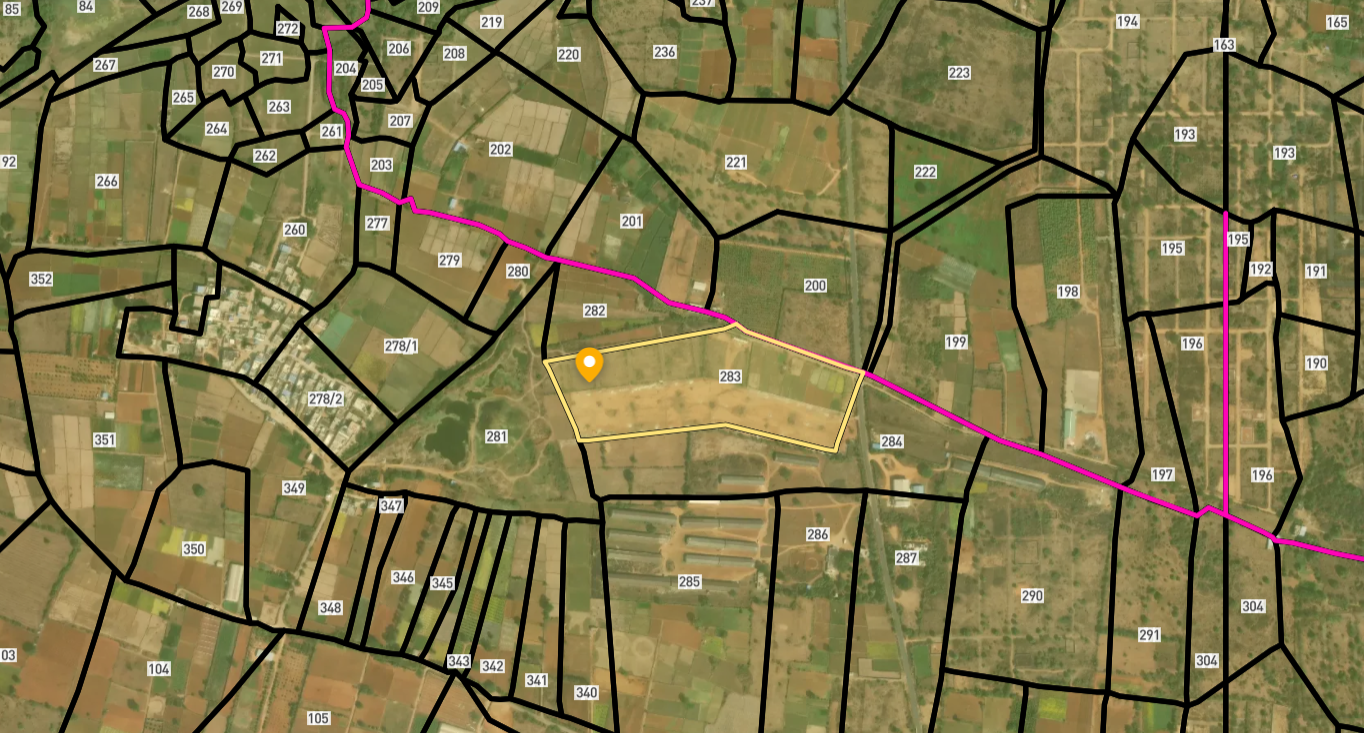
Every land listing on 1acre.in is mapped to its survey number with current guideline value, EC, Patta, FMB, and zoning layers ready for review. Skip the underpayment risk and start with verified parcels.

Browse Verified Tamil Nadu Lands

Frequently Asked Questions

What is Guideline Value Tamil Nadu?
Guideline Value Tamil Nadu is the minimum property registration value fixed by the Registration Department on tnreginet.gov.in. Stamp duty (7%) and registration fee (4%) are calculated on the higher of the sale consideration or the guideline value. Properties cannot be registered below this floor.
How do I check guideline value on TNREGINET portal?
Visit tnreginet.gov.in, click the Guideline Value tab, select the date range from 01-07-2024 for the latest values, choose street-wise or survey number search, enter zone, SRO, registration village, and street or survey number. The result loads instantly without login.
When was the guideline value last revised in Tamil Nadu?
The Tamil Nadu Registration Department last revised guideline values on 01.07.2024. The Tamil Nadu Budget 2025 empowered local bodies to revise these values more frequently, so always pull a fresh lookup within seven days of any registration.
Can I register property below the guideline value in Tamil Nadu?
No. The Sub-Registrar refuses to register documents at a sale price below the TNREGINET guideline value. Stamp duty is computed on the higher of sale consideration or the guideline value. Underpayment triggers Section 47A referral to the Special Deputy Collector (Stamps).
How is stamp duty 7% registration 4% calculated using guideline value?
Multiply the guideline value rate per square foot by the extent to get the total minimum value. Compare with the sale consideration. Apply 7% stamp duty plus 4% registration fee on whichever is higher. The total is approximately 11% of the property value.
What is composite value for flats and apartments in Tamil Nadu?
The Tamil Nadu Budget 2025 confirmed that flats and apartments use Composite Value: combined construction value plus undivided land share. Apartment buyers pay 7% stamp duty and 4% registration on this composite total, not on either component separately.
Is there a women buyer concession on registration in Tamil Nadu?
Yes. Women buyers get a 1% reduction in registration fee on properties up to ₹10 lakh, effective 01.04.2025 under the Tamil Nadu Budget 2025. The concession is applied during e-stamping at the Sub-Registrar Office.
What is the difference between guideline value and market value?
Guideline value is the government-fixed minimum registration value set by the Tamil Nadu Registration Department on tnreginet.gov.in. Market value is the actual price agreed between buyer and seller. Market value can be higher or lower; stamp duty applies on the higher of the two.