Document Guide · Andhra Pradesh

How to Check Land Conversion NA Order in Andhra Pradesh — Complete Guide 2026

The Land Conversion NA Order in Andhra Pradesh is the formal permission to use agricultural land for residential, commercial, or industrial purposes under the AP Agricultural Land (Conversion for Non-Agricultural Purposes) Act, 2006. No building permission, bank loan, or CLU approval is possible without it. This guide covers the OTC tax calculation, MeeSeva application steps, and the 50% penalty for building without conversion.

Quick Reference
Also calledNA Order / CLU / OTC Certificate / Land Conversion Order
Issued byRevenue Divisional Officer (Competent Authority); appeal to District Collector
Valid forPermanent once granted; use reviewed by Collector quarterly
CostOTC tax: 3% of basic land value (most areas); 2% in Greater Visakhapatnam and Vijayawada Municipal Corporation areas; MeeSeva user charge: ₹25
Time takenVerify with local authority
Online portaldtcp.ap.gov.in; OTC application through MeeSeva centres AP
noteconfirm current processing timeline with Revenue Divisional Officer or MeeSeva
1

What is Land Conversion NA Order in Andhra Pradesh?

Definition

A Land Conversion NA Order in Andhra Pradesh is the formal permission issued by the Revenue Divisional Officer to convert agricultural land to non-agricultural use. It is governed by the AP Agricultural Land (Conversion for Non-Agricultural Purposes) Act, 2006 (Act No. 3 of 2006).

Every plot classified as agricultural in the Adangal stays agricultural until a valid conversion order is obtained. A plot measured and sold in square yards does not automatically become non-agricultural. Sellers sometimes use this confusion to skip the conversion step. The official test is simple: check the land type field in the Adangal on meebhoomi.ap.gov.in. If it still reads agricultural, the land has not been converted, regardless of the sale price, boundary wall, or unit of measurement in the Sale Deed.

Four categories of land cannot be converted under the Act: government-owned land, land used for religious or charitable purposes, land owned by a local authority for communal use (so long as it is not used commercially), and land used by the owner for traditional household industries not exceeding one acre. For every other agricultural parcel, conversion is a One-Time Conversion (OTC) tax process. Pay the tax, submit the MeeSeva intimation, and the Revenue Divisional Officer issues the order. After that, the District Collector reviews quarterly whether converted land is actually being used for the declared purpose.

State-specific note: In Andhra Pradesh, no building plan approval, bank mortgage, or RERA project registration is possible on agricultural land without a valid NA Order. The OTC tax is 3% of basic land value in most areas, dropping to 2% in Greater Visakhapatnam and Vijayawada Municipal Corporation limits.
2

How to Get Land Conversion CLU in Andhra Pradesh

The conversion process runs through MeeSeva centres after paying the OTC tax. Have the survey number, Adangal, ROR 1B, Pattadar Passbook, and the basic land value figure from the AP Registration Department ready before starting.

Online method (recommended)

1
Calculate the OTC tax Check the basic land value on the AP Registration Department portal
Multiply by 3% for most areas, or 2% for Greater Visakhapatnam and Vijayawada Municipal Corporation areas. This is your One-Time Conversion Tax.
On the AP Registration portal, use the Market Value option, select Agricultural rate, then District, Mandal, and Village to get the current basic value per acre.
2
Pay the OTC tax Pay by challan at the government treasury or via e-payment to OTC head of account 0035-101-01-001
Save the challan or e-payment receipt. This receipt is the core document in the conversion application.
3
Submit intimation at MeeSeva Visit a MeeSeva centre
Fill the land conversion form with survey number, conversion purpose (residential, commercial, or industrial), and land extent. Attach OTC challan, ROR 1B, Pattadar Passbook, and Adangal. Pay ₹25 user charge. The application forwards online to the Tahsildar and Revenue Divisional Officer.
4
Receive the conversion order The RDO inspects the land and issues the conversion intimation
The Adangal is updated to non-agricultural. Keep this order permanently , it is needed for every building permit, bank loan, and RERA registration.
Check meebhoomi.ap.gov.in within 30 days of receiving the order. The Adangal must show non-agricultural status. If it still shows agricultural, follow up with the Tahsildar.

Offline method (Sub-Registrar Office)

1
Identify the correct RDO office The Revenue Divisional Officer for the district covering the land's mandal is the competent authority
Bring the OTC challan, all land documents, and a site map.
2
Submit the conversion application form Fill the prescribed form with survey number, extent, and purpose
Attach ROR 1B, Adangal, Pattadar Passbook, Aadhaar, OTC challan, and site sketch.
3
RDO inspection and processing The RDO inspects the land and verifies against the local Master Plan zoning
Address any objections within the notice period.
4
Collect the order and update Adangal Receive the conversion order from the RDO
File the intimation with the Tahsildar to update the Adangal. Appeal against any RDO rejection to the Collector within 60 days under Section 8 of the Act.
If converting for a RERA project, the CLU order must be obtained before submitting the project to RERA AP.
3

What Does Land Conversion NA Order Contain in Andhra Pradesh?

The AP conversion order records five fields that confirm the conversion is legally valid and matches the physical land.

Field What it means What to check
Specific parcel and total area approved for conversionMust match the ROR 1B and Adangal exactly; any discrepancy voids the conversion for the mismatched area Conversion PurposeDeclared use: residential, commercial, or industrial
One-Time Conversion Tax paid and government receipt numberCross-check the challan amount against the correct rate (3% or 2%) on the basic land value at the time of conversion RDO Order Reference NumberRevenue Divisional Officer's approval reference and date
Good sign: RDO order reference present, OTC challan matches the correct percentage rate, conversion purpose stated clearly, Adangal on Meebhoomi shows non-agricultural status, and survey number matches the Sale Deed.
4

Common Issues With Land Conversion NA Order in Andhra Pradesh

The AP conversion order records five fields that confirm the conversion is legally valid and matches the physical land.

Construction started before NA Order
Building on agricultural land without conversion violates Section 3 of the Act. The land is deemed converted and the owner faces a 50% penalty on top of the regular OTC tax, plus recovery under the AP Revenue Recovery Act, 1864.
Fix: Stop construction, pay the OTC tax plus the 50% penalty to regularise, and submit the MeeSeva intimation before any further work.
Seller claims sq-yard plot is already converted
A plot measured in square yards is not automatically non-agricultural. The Adangal land type is the only official record. Sellers use square-yard pricing to imply conversion has already happened.
Fix: Check the Adangal on meebhoomi.ap.gov.in before any advance payment. If the land type shows agricultural, the land is not converted regardless of how the Sale Deed is worded.
OTC tax underpaid due to outdated basic value
The OTC tax is calculated on the basic land value at the time of conversion. If that value was revised since an older conversion document was issued, the tax may be deficient, triggering a demand notice from the RDO.
Fix: Always verify the current basic land value on the AP Registration portal for the specific village and mandal before calculating OTC tax.
Converted land used for a different purpose
The Collector reviews converted land every quarter. Land approved for residential use but used commercially , or vice versa , attracts fresh proceedings and penalty.
Fix: Read the conversion purpose in the NA Order before purchase. If the intended use differs from the approved purpose, budget for and apply for a fresh conversion before finalising.
Land in categories exempt from conversion
Certain land categories cannot be converted under Section 7 of the Act: government land, religious and charitable land, and local authority communal land. Sellers sometimes misrepresent these as convertible.
Fix: Check the ROR 1B ownership column and Adangal remarks before any advance. If either shows government, endowment, or assigned status, the land cannot be converted.
5

Why Land Conversion NA Order Matters for Land Buyers in Andhra Pradesh

Buying agricultural land to build on without first verifying the NA Order is the single most common and most expensive mistake in AP real estate.
📋
No construction is possible without it The AP Agricultural Land Conversion Act, 2006 requires prior permission before any non-agricultural use
Building plan approval bodies and municipal corporations will not accept applications on land still classified as agricultural. No NA Order means no legal structure, period.
No construction without NA Order means no bank loan either Banks in AP will not mortgage agricultural land for construction or commercial loans
The land must show non-agricultural status in the Adangal and carry a valid conversion order for any banker's legal team to approve the file. A clean NA Order opens financing options that agricultural land cannot access.
🏦
RERA projects cannot be registered without conversion Any residential or commercial project in AP that requires RERA registration must submit the CLU or NA Order as part of the application
RERA AP rejects projects on agricultural land without this document. Buyers of plots in layouts should verify the developer's conversion order, not just the RERA registration number.
🔍
AP-specific: 50% penalty plus conversion tax on unauthorised use The Act is specific about the penalty: 50% of the OTC tax on top of the regular tax, recoverable under the AP Revenue Recovery Act, 1864
This is not a minor fine. On a high-value plot, the penalty amount is significant. The Collector also conducts quarterly reviews of converted land use, meaning ongoing monitoring continues even after the order is issued.
Red flag: Any seller who says "the land is ready for construction, just need to do the formality" without showing you a valid RDO conversion order and an Adangal printout showing non-agricultural status is asking you to build illegally.

Browse verified land in Andhra Pradesh

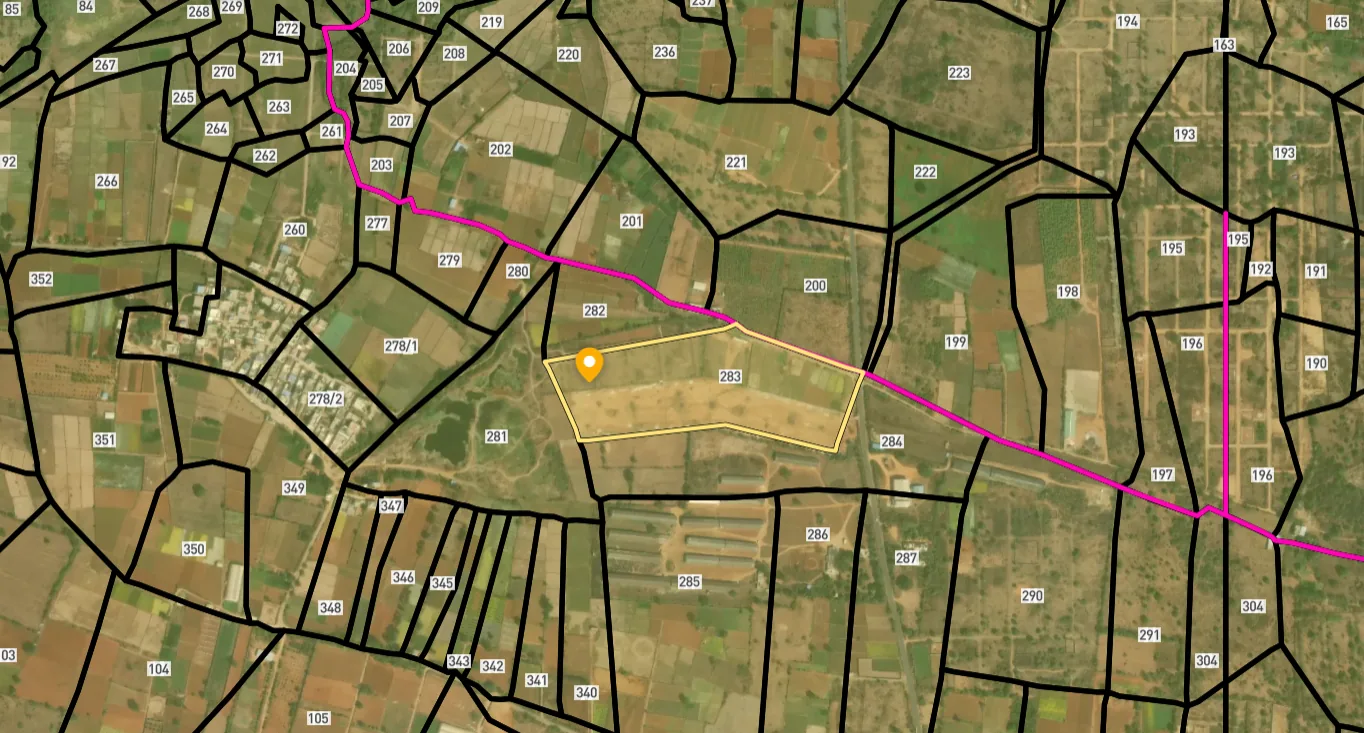
1acre.in lists verified land parcels across Andhra Pradesh with APCRDA zone overlays and survey number references, so buyers can check conversion status before calling any seller.

Browse Verified Andhra Pradesh Lands

Frequently Asked Questions

What is land conversion or NA Order in Andhra Pradesh?
It is the formal permission to use agricultural land for residential, commercial, or industrial purposes under the AP Agricultural Land Conversion Act, 2006. Without it, no building plan, bank loan, or RERA registration is possible. The Revenue Divisional Officer issues the order after OTC tax payment.
How do I apply for land conversion in AP?
Pay the OTC tax by challan or e-payment, then submit the conversion intimation form at any MeeSeva centre with the challan, ROR 1B, Adangal, and Pattadar Passbook. Pay ₹25 user charge. The application is forwarded online to the Tahsildar and Revenue Divisional Officer.
What is the OTC tax for land conversion in Andhra Pradesh?
3% of the basic land value for most areas in AP. The basic value is the government-notified rate maintained by the Sub-Registrar for your specific village. Check the current rate using the Market Value tool on the AP Registration Department portal before calculating.
Can I build on agricultural land in AP without an NA Order?
No. Building without conversion violates Section 3 of the Act and triggers a show-cause notice. The penalty is 50% of the OTC tax on top of the regular conversion tax, and the amount is recoverable as a government dues under the AP Revenue Recovery Act, 1864.
What is the penalty for unauthorized land conversion in AP?
A 50% penalty on top of the regular OTC tax, as per Section 6(1) of the Act. If unpaid within the notice period, the total amount is recovered under the AP Revenue Recovery Act, 1864. The Collector may also initiate proceedings against the owner.
Which types of land cannot be converted in Andhra Pradesh?
Government-owned land, land used for religious or charitable purposes, local authority communal land, and land used for traditional household industries not exceeding one acre are exempt from conversion under Section 7 of the Act. These categories cannot be purchased for construction regardless of price.
How long does land conversion take in AP?
After OTC payment and MeeSeva submission, the application goes to the Tahsildar and RDO. Timelines vary by district and workload.
What is the OTC tax rate in Vijayawada and Visakhapatnam?
2% of the basic land value for areas within Greater Visakhapatnam Municipal Corporation and Vijayawada Municipal Corporation limits, compared to the standard 3% applicable in the rest of Andhra Pradesh. Confirm the boundary of the municipal corporation area before calculating.