
Check the Adangal and 1B on Meebhoomi
Two documents carry Andhra Pradesh land diligence. The 1B settles who owns; the Adangal reports what is happening on the soil, crop, occupant, water source, season by season. A deal is only as sound as the agreement between them. This guide covers pulling both from Meebhoomi and reading them the way a village revenue officer would.
What the Adangal and 1B each prove
Definition
The Adangal is Andhra Pradesh's cultivation account for every survey number: occupant, crop, water source and season entries alongside the holder's details. The 1B is the ownership register extract. Meebhoomi, the AP revenue department's portal, serves both online at no cost.
Start with the division of labour. When a bank asks who holds title, it reads the 1B. When a revenue enquiry asks who is farming the plot, it reads the Adangal. A buyer needs both answers to be the same person, or a documented reason why not.
The Adangal earns its keep in the columns nobody reads aloud: magani and metta entries separating irrigated from rain-fed land, the water-source note that backs the classification, and the nature of possession, where tenancies and government assignments leave their trace.
The 1B's khata number is the quiet workhorse. It strings every parcel of one holder together, so a single lookup can reveal holdings the seller never mentioned, including restricted ones.
How to pull the Adangal and 1B online
No login is needed to view. Have the survey number ready, or the khata, or a linked Aadhaar.
On Meebhoomi
At the revenue office
Column by column: reading both records
What each field settles, and the mismatch that should stop a deal.
| Column | Which record | Deal impact |
|---|---|---|
| Pattadar & father's name | 1B | Seller identity; spelling must equal the deed |
| Khata number | 1B | Reveals the holder's full village portfolio |
| Occupant / possession | Adangal | Someone else farming = unresolved rights |
| Magani / metta class | Adangal | Value, water rights, conversion route |
| Water source | Adangal | Substantiates the wet classification |
| Acquisition trail | Both | Assignment origins mean transfer limits |
Common Adangal and 1B issues, and the fix
Where Adangal and 1B checks go wrong, and how to recover.
Why the Adangal comes first in AP diligence
Sequence matters.
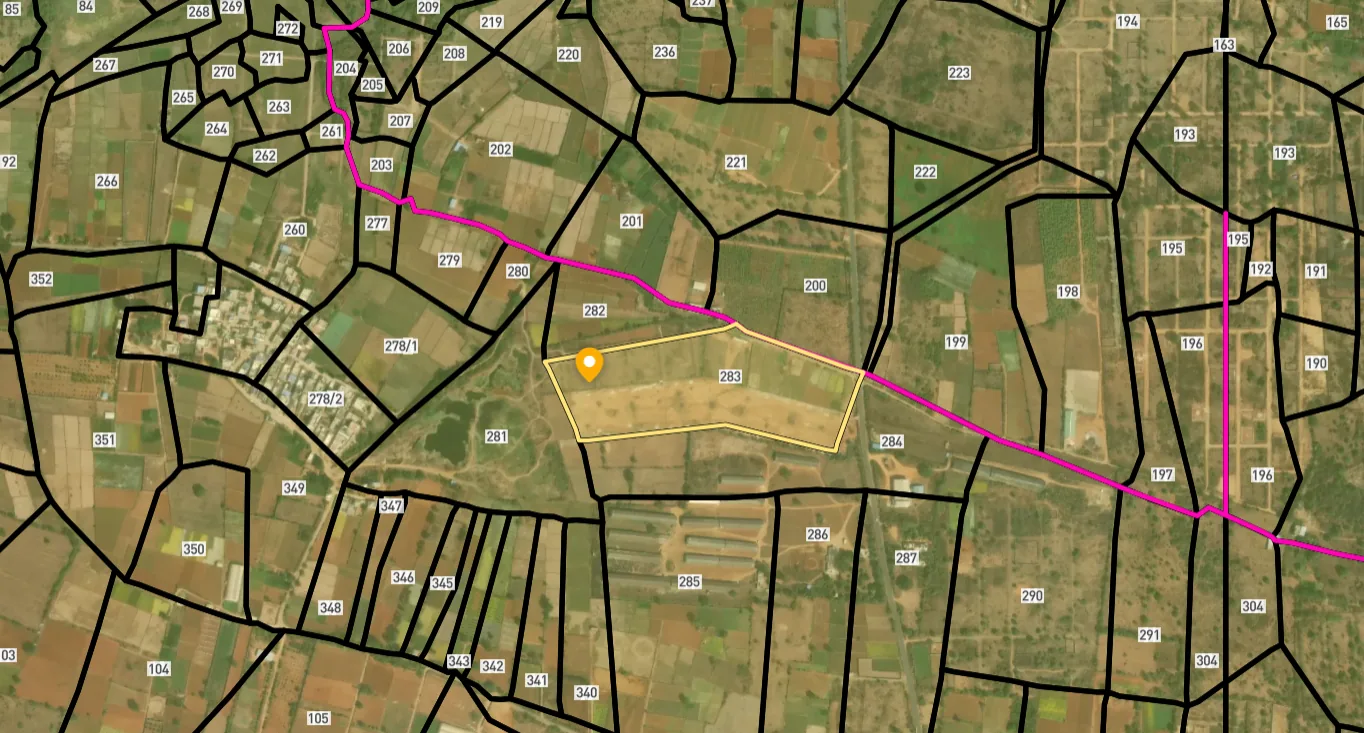
Survey Numbers View on Map Boundaries and numbers come from published state cadastral records. See all map layers.
Looking to sell your land in Andhra Pradesh?
Browse 1,300+ verified lands & plots in Andhra Pradesh
Frequently asked questions
How do I see my Adangal on Meebhoomi?
What does the 1B tell me that the Adangal does not?
What are magani and metta?
The occupant is not the owner. Problem?
Can one search show everything a seller owns?
Which copy do banks want?
Other Related Guides
Mutation Andhra Pradesh Land Records: Complete Guide 2026
How mutation Andhra Pradesh land records works, why buyers must verify within 90 days, how auto mutation updates 1B, and what to do when mutation is pending or rejected.
Read guide →Land Conversion NA Order Andhra Pradesh: 2026 Guide
How to get land conversion NA Order in Andhra Pradesh, OTC tax rates, what documents are needed, and why building without conversion brings a 50% penalty and demolition.
Read guide →Deed Mother Deed Andhra Pradesh: 2026 Guide
Understand Title Deed and Mother Deed in Andhra Pradesh, how to verify the 30-year chain on IGRS AP, and why a missing link costs you the deal.
Read guide →Meebhoomi
Every AP land record service in one place, with a guide for each.
Read guide →Pahani ROR 1B Andhra Pradesh: Complete Guide 2026
Check Pahani ROR 1B Andhra Pradesh free on Meebhoomi. Learn what it contains, why it must match the Pattadar Passbook, and how to fix errors before buying land.
Read guide →Adangal Andhra Pradesh Land Records: 2026 Guide
Check Adangal Andhra Pradesh free on Meebhoomi. Learn what wet, dry and waste classification means, how it affects your purchase, and how to spot land use problems.
Read guide →