
What is Dharitree?
Definition
Dharitree, the citizen face of ILRMS run by the Revenue Department, serves the Assam Jamabandi, by district, circle, mouza and village. A Patta is the holding account, carrying several Dags and co-pattadars; the Chitha tracks each Dag; deeds sit at the Sub-Registrar and the map on Bhunaksha. Because ownership is kept per Patta but land is sold per Dag, verify the Dag and share on dharitree.assam.gov.in before relying on the record.Carry one idea into every Assam file: the record is kept by Patta, but land is sold by Dag. A Patta is an account that can gather several Dags and several co-pattadars, each with an undivided share, so a buyer takes one Dag, and usually one share of it, out of a shared holding. The real work is not reading the Patta but isolating the Dag and the share you are actually buying.
What Dharitree gives you is early sight of that account. The Jamabandi opens from any handset, keyed down through district, circle, mouza and village, and it names the pattadars and lists the Dags under a Patta, so a buyer can see the co-pattadars and the plots before a single meeting. Search by Dag rather than Patta, since Patta numbers change on partition, and enter names on the Assamese keyboard the portal requires.
What the portal cannot do is prove title or resolve the share. The Jamabandi shows possession, while the registered deed carries title and lives at the Sub-Registrar; the map draws the whole Dag but never the undivided shares within it; and the downloaded copy is view-only, so a formal step needs the certified grade. The record opens the enquiry; the deed, the partition and the office close it.
Dharitree Assam: what sits where, from Patta to Dag
Eight services across the record, the deeds, the map and the transfer rules, each shaped by the gap between the Patta and the Dag. This is how they fit together.
| You need | It lives at | The Assam catch |
|---|---|---|
| The account and holders | The Jamabandi (Patta) | Holds several Dags and co-pattadars |
| The plot and share | The Dag, the pattadars' shares | You buy a Dag, and one share |
| Deeds and charges | The Sub-Registrar | Off Dharitree, part paper for old years |
| The plot map | Bhunaksha | Draws the Dag, never the shares |
| A usable copy | Sewa Setu | Download is view-only; khajna needed |
| Tenure or tribal transfer | The Circle Officer, the DC | Annual patta and Chapter X restrict |
In practice, read the Jamabandi on Dharitree and isolate the Dag and share, trace the deeds at the Sub-Registrar, place the Dag on Bhunaksha, and take conversion or a tribal transfer to the Circle Officer or Deputy Commissioner. The screen shows an account; whether the land is yours to buy is settled once the Dag and share resolve against the deed, the office and the ground.
All Dharitree services, with a guide for each
Eight services, sorted into four families below. The P1 tag marks the reads a purchase turns on; Confirm marks where the rule should be checked afresh for the parcel.
The record and its holders
3 guidesThe Jamabandi and how to reach it by name, and the certified copy a formal step needs.
The record: how a Patta gathers Dags and co-pattadars.
Search by nameA pattadar name reaches a Patta; the Assamese keyboard is required.
Certified JamabandiThe attested copy a bank or court needs, with the khajna receipt.
Deeds, off Dharitree
1 guidesThe registered deed chain that carries title over the share, searched at the Sub-Registrar.
Placing the Dag
1 guidesThe cadastral map that locates a Dag, and cannot show the shares within it.
Transfer, tenure and tribal
3 guidesHow a purchase is mutated, why annual patta must be converted to be sold, and when tribal land may pass.
Getting started on the portal
Every service also has an offline path, at the Circle Office, the Sub-Registrar or the Deputy Commissioner.
What identifies an Assam holding
A district, circle, mouza and village place the record, the Dag pins one plot, and the Patta gathers a holding; a pattadar name, entered in Assamese script, is the loose fallback. Whichever key you use, search by Dag rather than Patta, since Patta numbers change on partition, and then isolate the co-pattadars and the seller's share.
| Step | Online | Offline |
|---|---|---|
| 1. Access | Open Dharitree, pick a service | Go to the Circle Office in person |
| 2. Identify the parcel | Narrow to district, circle, mouza | Ask the Lot Mandal for the record |
| 3. Use the service | Search by Dag, Patta or name | File it at the Circle Office window |
| 4. Keep evidence | Save the Jamabandi and map | Take the certified copy from Sewa Setu |
Two authorities settle an Assam deal the screen cannot. The Circle Office, with its Circle Officer and Lot Mandal, holds the Jamabandi, decides Namjari and orders patta conversion; the Deputy Commissioner governs the permission a tribal belt or block transfer may need. The portal shows the account; these offices decide what may lawfully be done with the Dag.
Which Dharitree service do you need?
Begin with the task in front of you; most routes end by isolating the Dag and the share, since that is where an Assam file is decided.
| You want to | Use this service | Guide |
|---|---|---|
| Read the Patta, Dag and pattadars | The Jamabandi on Dharitree | Jamabandi guide |
| Find a holding by a name | The pattadar name search | Name search guide |
| Get a copy an office will accept | The certified Jamabandi | Certified copy guide |
| Trace the deeds and charges | The Sub-Registrar deed search | EC guide |
| Place the Dag on the map | Bhunaksha, against the Chitha | Dag map guide |
| Put a purchase into your name | Namjari, with the Dag and share | Mutation guide |
| Turn annual patta into saleable land | Annual to periodic conversion | Conversion guide |
| Test whether tribal land can pass | The Chapter X belt and block rules | Tribal-land guide |
The order a careful buyer runs these in
An Assam purchase runs in order: read the Patta, isolate the Dag and share, check the tenure, search the deeds, place the Dag, clear the belt check, then register and mutate.
- Read the record, then isolate the Dag. Pull the Jamabandi for the Patta, then fix the one Dag being sold, its co-pattadars and the seller's share. Guide: Jamabandi guide
- Check the patta tenure. Confirm the land is periodic patta, since annual patta cannot be sold, only converted or inherited. Guide: Conversion guide
- Search the deeds against the share. At the Sub-Registrar, trace the deed chain back many years over the specific Dag and share. Guide: EC guide
- Place the Dag and read the shares. Locate the Dag on Bhunaksha, tally it with the Chitha area, and read the shares from the Jamabandi. Guide: Dag map guide
- Clear the belt and block check. Establish whether the Dag lies in a tribal belt, block or Sixth Schedule area before you commit. Guide: Tribal-land guide
- Register, then mutate with the Dag and share. Register the deed, then get the Namjari to carry the exact Dag and share into the Jamabandi. Guide: Mutation guide
Common issues across the portal
Four snags account for most failed Assam deals.
A clean Patta is acted on before the Dag and co-pattadars are isolated. Read down to the one Dag being sold and the seller's share.
A single Dag is held by several co-pattadars, none owning a marked piece. Establish the seller's share and whether it is partitioned.
Annual patta land is bought as if transferable, but its sale cannot be mutated. Read the patta header, and treat annual or khas land as not for sale.
Belt, block or Sixth Schedule land is bought without the DC's permission. Place the parcel before you commit; a breach is void.
Dharitree Assam: rules a buyer should know
Ownership is recorded per Patta; a purchase is one Dag, and one share. Isolate the Dag and the share before treating the land as available.
It is evidence of possession, and the download is view-only. The registered deed carries title, so verify it and use the certified grade.
Annual patta passes only by inheritance, and its sale cannot be mutated. Read the patta header, and convert before you buy.
Under Chapter X, protected-class belt land needs the DC's permission to pass to an outsider. A breach is void, and occupants face eviction.
Looking to sell your land in Assam?
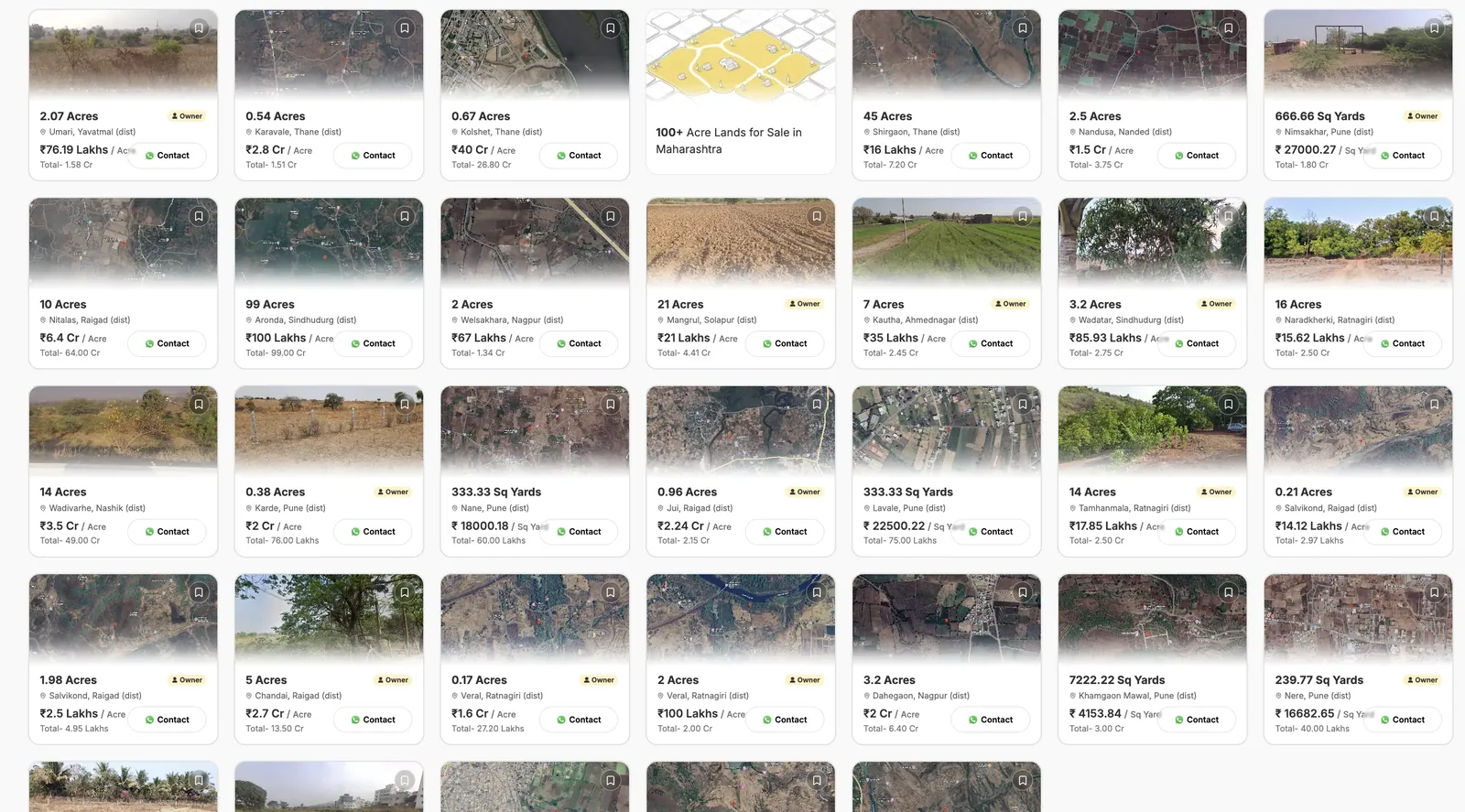
Browse 25+ verified lands & plots in Assam
Frequently asked questions
What is Dharitree?
Dharitree, the citizen face of ILRMS run by the Revenue Department, is the Assam portal to view the Jamabandi, the record of rights, by district, circle, mouza and village.
What is the difference between a Patta and a Dag?
A Patta is the landholding account, which can carry several Dags and co-pattadars. A Dag is one survey plot under it. You buy a Dag, not the whole Patta.
Does the Jamabandi prove ownership?
No. It shows possession and revenue, not conclusive title. The registered deed at the Sub-Registrar carries title over the specific Dag and share you are buying.
Can I buy annual patta land in Assam?
Not as annual patta. Its sale cannot be mutated, so the record will never name you. It must be converted to periodic patta by order first.
Can an outsider buy in a tribal belt or block?
Protected-class belt or block land cannot pass to an outsider without the Deputy Commissioner's permission, rarely granted. Sixth Schedule areas run on council law, generally closed to outsiders.
Where do I check deeds in Assam?
At the Sub-Registrar, on the registration side, off the Jamabandi. Older deeds may sit only in the bound volumes, so search back many years against the Dag.
Why search by Dag rather than Patta?
Because Patta numbers can change on partition or mutation, while the Dag is stable. Search by Dag, then isolate the co-pattadars and the seller's share.
Is the online record enough to buy on?
No. It shows an account, not the title, the tenure or the belt position. Isolate the Dag and share, check the deed, the patta type and Chapter X first.