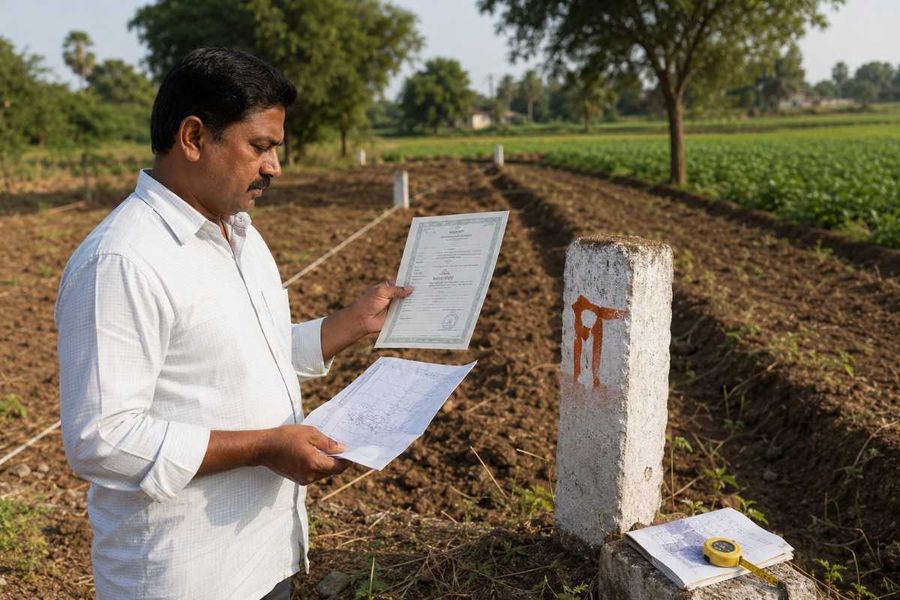
Assigned Patta: Why Buyers Get Pulled Into CB-CID Cases
Understand assigned patta rules, 2C patta differences, CID risks, and essential land verification steps before buying property.

- Assigned patta is government welfare land with strings attached that survives every deed registered after the original allotment.
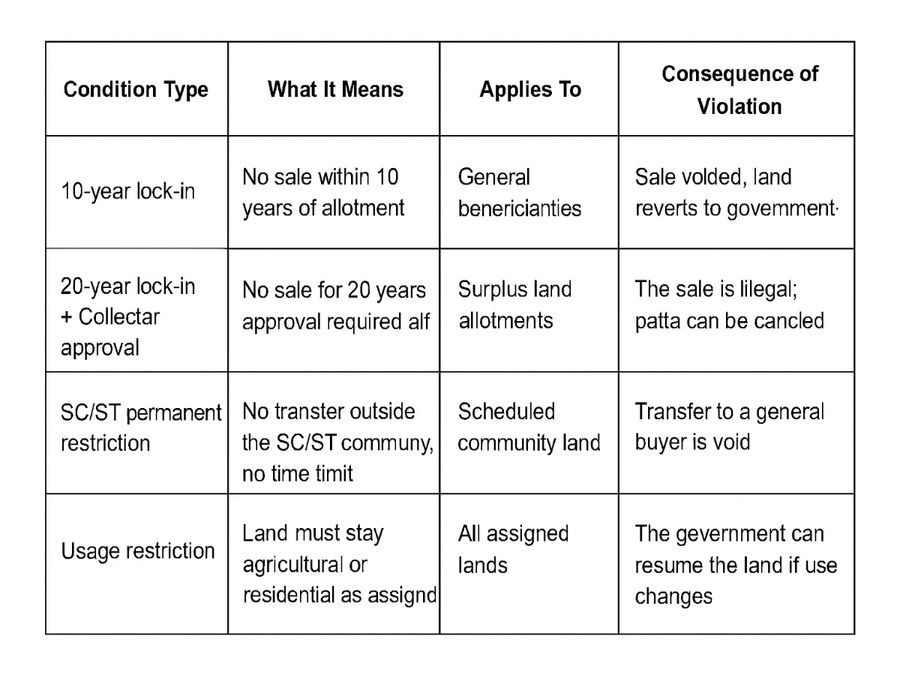
- The restriction period usually runs from 10 to 20 years, depending on the scheme. SC/ST-assigned land can only ever be sold to another SC or ST member.
- Buyers get pulled into CB-CID cases along with sellers; registering a deed on restricted land counts as participation, intent or not.
- IPC 420, 465, 468, and 471 show up repeatedly in these charge sheets. IPC 420 is non-bailable, so arrest can precede a magistrate's order. (The IPC was replaced by the Bharatiya Nyaya Sanhita on 1 July 2024; the BNS equivalents are given below.)
- 2C patta and assigned patta get lumped together by agents, and that mix-up alone has put buyers in front of investigators.
- The patta and the A-Register hold everything you need, so read both before an advance changes hands.
What Assigned Patta Actually Is
Survey number, owner's name, extent, classification, it reads like any other patta you'd come across. The difference is buried in a clause in the remarks section, or in the assignment order that sits behind the patta but isn't always shown to a buyer.
Across India, state governments have allotted land to landless families, Scheduled Caste (SC) and Scheduled Tribe (ST) beneficiaries, ex-servicemen, and other eligible groups under various welfare schemes. Although the patta may look like any other ownership record, the original assignment order often contains conditions governing how and when the land can be transferred.
The patta that comes out of this process looks routine on paper. But the assignment order behind it carries the real terms: how long the beneficiary has to hold the land, what it can be used for, and whether government approval is needed before it's sold.
The records and offices named in this article (the VAO, the A-Register, the CB-CID) are those of Tamil Nadu. Other states use different record names, restriction periods and agencies, so read the rules of the state where the land lies.
What the Conditions on Assigned Land Mean in Practice
The most common restrictions on assigned land are a minimum holding period, limits on how the land can be used, and a need for government approval before any sale. The holding period is counted from the date of the original allotment, not from whenever the current seller happened to acquire it.
The government cancels the patta and takes the land back, no warning, no compensation. The person who paid the full market price is left with nothing. On record, the sale is treated as if it never legally happened.
Why Land Purchases Turn Into CID Cases
A seller holds assigned land that's still inside its restriction period. The buyer is told the patta is clean, or that the condition doesn't apply anymore. Money changes hands, the sale deed gets registered.
Then, sometimes years later, a neighbour raises a complaint, or a revenue officer notices something during a routine inspection. The Tahsildar orders an inquiry, confirms the condition was violated, and the case moves to the police, often to the CB-CID.

The Criminal Sections That Get Invoked
When an assigned patta deal falls apart, four sections of the Indian Penal Code (IPC) tend to appear in the complaint. The IPC was replaced by the Bharatiya Nyaya Sanhita (BNS) on 1 July 2024, so a complaint over conduct after that date cites the BNS equivalents: Section 318(4) for cheating, 336(2) for forgery, 336(3) for forgery for the purpose of cheating, and 340(2) for using a forged document as genuine. Offences committed before that date are still dealt with under the IPC, so the IPC numbers are used below.
IPC 420 covers cheating through dishonest inducement and carries up to seven years. What matters more for a buyer is that it's non-bailable.
IPC 465 covers forgery, which is relevant where patta records were altered or a condition was quietly left out. IPC 468 is forgery specifically aimed at cheating. IPC 471 covers using a forged document as if it were genuine, which can apply to a buyer who registered a deed without ever checking its underlying conditions.
2C Patta and Assigned Patta Aren't the Same Thing
2C patta is a different thing altogether. It is a right to use the trees standing on government land, granted under Board Standing Order 18(2)(c), and it gives no ownership of the land under them. The Madras High Court has described it as a right to harvest the produce, not a right over the land. It is not a conversion order, and it is not a welfare allotment of land either.
Assigned patta comes from an entirely different place: welfare redistribution, with conditions attached to who can own the land, how long they have to hold it, and under what circumstances it can be sold at all.
The confusion between 2C and Assigned Patta is often fueled by agents in a hurry to close a deal. 1acre.in operates on a direct buyer-seller model. We don't charge commissions on direct deals, and we don't allow paid promotions to boost listings.
This ensures that discovery is merit-based and information is transparent, allowing you to speak directly to the owner without the 'broker filter' that often hides land restrictions

When and How to Verify Assigned Patta Before You Pay
Start by obtaining the latest patta or land ownership record from the relevant state revenue department or official online land records portal.
Visit the local revenue office or the concerned land records authority to obtain the original assignment records or equivalent land register. In Tamil Nadu, ask the VAO for the A-Register extract, which shows the original allotment date and the scheme it came under. Work out whether the restriction period has actually run out from that allotment date, not from when the current seller took over the land.
If the land was assigned to an SC/ST beneficiary, the limit on who can buy never expires; check buyer eligibility before going any further. And even past the restriction window, some schemes still require written collector permission before registration.
Review the property's ownership history through the official land records portal or registration department available in your state. A pattern of quick, repeated transfers is something CB-CID investigations tend to flag.
Conclusion
A patta that reads clean at first glance can still carry a restriction that voids the sale years later, and by then it's the buyer, not just the seller, who ends up answering to CB-CID.
Obtain the latest patta, review the original assignment order, verify the land records maintained by the local revenue authority, and confirm whether any transfer restrictions remain in force before completing the purchase.
Before any advance changes hands, use the tools available on the 1acre.in platform to secure your interest:
Browse Verified Listings: Start your search with parcels that have already passed our preliminary document check.
Use Premium Map Layers: Overlay survey numbers and masterplans to verify the land’s positioning.
Direct Contact: Speaking to sellers directly on 1acre.in facilitates these connections with zero commission on direct deals.
Final Step: Always take the 1-acre-verified documents to a qualified lawyer for full legal due diligence before signing.
Explore land data using 1acre Premium to access the most transparent land marketplace in India.

-900x600.jpg)
-900x600.jpg)