
Dharani Portal Telangana: Replaced by Bhu Bharati
The Dharani portal has closed, and Bhu Bharati now handles Telangana land records. Here is how to search it, and what to do if an old error remains.
If you are looking for Dharani, the short answer is that it no longer exists. Telangana replaced it with Bhu Bharati at bhubharati.telangana.gov.in in April 2025, under the Telangana Bhu Bharati (Record of Rights in Land) Act, 2025. The longer answer matters more, because Dharani's errors did not disappear with the portal, and the window to correct them has now closed.

- Dharani was Telangana's digital land records portal and has been shut down
- The active portal is Bhu Bharati, operating under the 2025 Act
- Dharani handled Pahani, Record of Rights, mutation, and EC access
- Bhu Bharati restored a fuller Pahani and moved corrections to the local level
- Dharani-era data errors were carried across, not cleaned
- The one-year RoR correction window lapsed on 13 April 2026
What Was the Dharani Portal
Dharani was Telangana's official digital land records system, built to bring Pahani, Record of Rights, and related property data onto a single online platform. It let landowners, buyers, and officials check land details, verify ownership, and process mutations without depending entirely on revenue office visits.
For several years, it was the reference point for anyone dealing with Telangana land, whether buying agricultural land, checking a Pahani entry, or applying for a change in ownership. If you have handled Telangana land documents in recent years, your record has almost certainly passed through it.
Important Update: Dharani Has Been Replaced
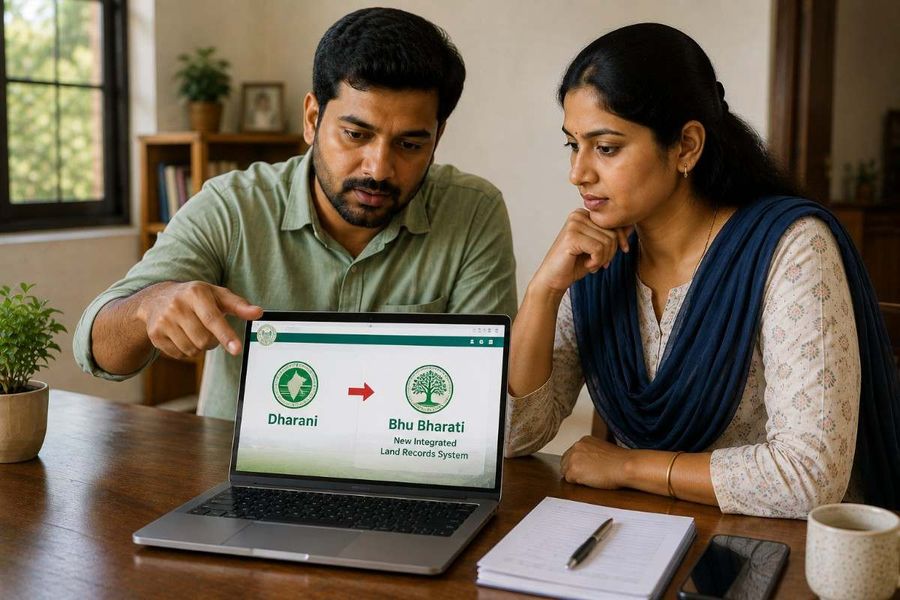
Dharani has been shut down and replaced by Bhu Bharati, notified under the Telangana Bhu Bharati (Record of Rights in Land) Act, 2025. The portal is at bhubharati.telangana.gov.in, and it is now the correct destination for Telangana land records.
The rules came into force on 14 April 2025. Records that existed under Dharani were migrated to the new system, and searching Bhu Bharati by survey number or passbook number is the right approach today.
One thing to be clear about. Bhu Bharati is not a new dataset. It inherited Dharani's survey numbers, owner names, and, crucially, its errors.
What Dharani Used to Cover
Dharani was the single access point for several core functions. It handled the Pahani, recording crop and cultivation details. It carried the Record of Rights, capturing ownership. It processed mutation applications, meaning the updating of ownership records after a sale, inheritance, or transfer. And it provided Encumbrance Certificate access for checking a property's registered transaction history.
Why Dharani Faced Criticism
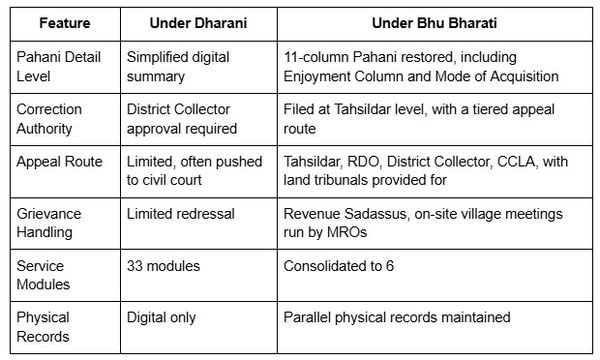
Digital records under Dharani were thin, missing field-level detail that the older physical registers carried. Farmers and landowners reported parcels marked prohibited for unclear reasons, which locked them out of selling or mortgaging their own land. And correcting an error generally meant approaching the District Collector, a process that stretched across months and left a substantial backlog unresolved by the time the system was replaced.
What Changed Under Bhu Bharati
The Enjoyment Column matters more than its dull name suggests. It records who is actually occupying and cultivating the land, which is the field that reveals a possession dispute before you buy into one. Mode of Acquisition tells you whether the current holder inherited or purchased.
How to Access Your Land Records Now
Go to bhubharati.telangana.gov.in rather than searching for a Dharani login.
Open Information Services, then Land Records
Select district, mandal and village
Enter your survey number or passbook number
View the Pahani, Record of Rights, pattadar passbook or, for agricultural land, the encumbrance details
No login is needed for a basic record view. Transactional services, including mutation and RoR correction, require signing up as a Citizen, with a separate route for NRIs. Mutation runs through the transactional section: select the mutation type, upload documents, submit, and track under Information Services.
If a survey number returns nothing, that usually means a migration lag rather than a deleted record, and it is worth checking with the Mandal Revenue Office. Converted land can also sit in a sync gap between Bhu Bharati and the IGRS registration system. If you are working from a location rather than a number, you can find the survey number from the map and search again.
What to Do If You Still Have Old Dharani Data
Search Bhu Bharati first using your survey number or khata number, since most records carried over.
If the record does not appear or the details look wrong, this is where the timing matters. Under the Act, RoR corrections had to be filed within one year of commencement, a window that lapsed on 13 April 2026. Under the finality clause, entries not challenged in that period are now treated as final.
That does not leave you without options, but it changes them. Start with your local Tahsildar or MRO, who can trace the record and advise whether your situation falls within any remaining administrative route. Revenue Sadassulu, the on-site village meetings MROs conduct, handle boundary disputes, Part-B cases, and record corrections in person. Where administrative routes are exhausted, the remaining path may be civil court, which is slower and more expensive than the window that has closed.
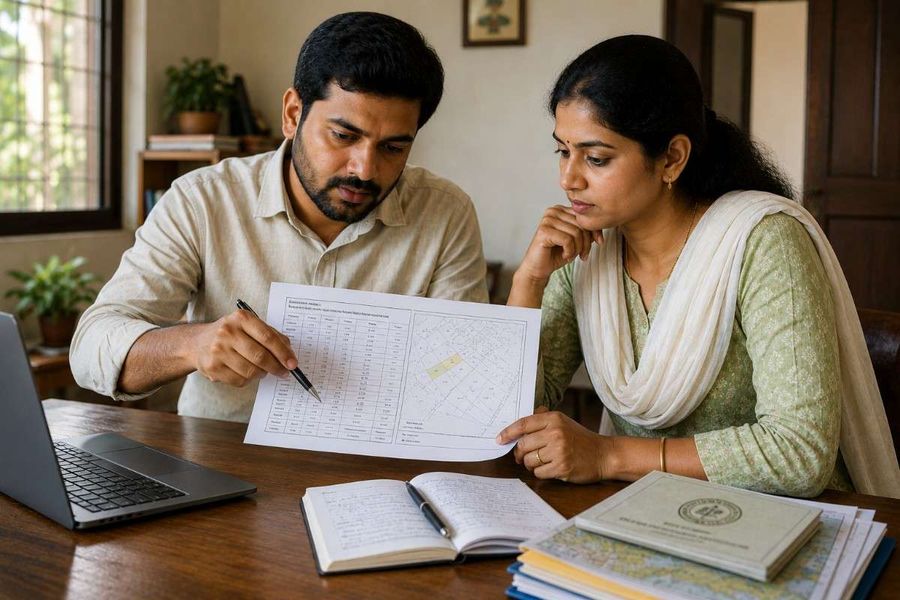
For a buyer rather than an owner, the implication is different and immediate. A Bhu Bharati entry showing a Dharani-era error that was never corrected is now, under the Act, a final entry. Verify what the record says before you pay, not after. Read it alongside the encumbrance certificate, which covers registered transfers rather than revenue entries.
Reading the Record Before You Rely On It
The Dharani to Bhu Bharati transition changed the portal, the law and the appeal structure. What it did not change is the underlying data, and the finality clause means an uncorrected error now carries more weight than it did a year ago rather than less.
1acre maintains Telangana guides covering both verification tracks, agricultural records on Bhu Bharati, and urban property through IGRS, alongside the encumbrance certificate and the restricted land categories that appear in ordinary revenue records but cannot be sold. The Telangana buyer's guide sets out which track applies to which property type.
The honest limits. Mapped survey-number layers draw on revenue records and cover agricultural and peri-urban land better than dense municipal areas. And nothing on any private platform substitutes for the portal entry itself. Under the Act, the Bhu Bharati record is the record.
Conclusion
Dharani was Telangana's land records system for several years and is now closed. Bhu Bharati at bhubharati.telangana.gov.in is the active portal, operating under a dedicated 2025 law that restored the full Pahani, moved corrections to the local level, and built a proper appeal ladder.
The practical advice depends on who you are. If you own land, pull your record now and read it carefully, particularly the prohibited status and the Enjoyment Column, and take any discrepancy to your MRO promptly, given that the general correction window has closed.
If you are buying, treat the Bhu Bharati entry as the operative record, verify it against the encumbrance certificate and the deed chain, and resolve anything odd before money moves rather than assuming it can be fixed afterwards.
-900x600.jpg)
-900x600.jpg)
-900x600.jpg)