
Buying Farm Land Near a City: An Investment Guide
Discover realistic returns, risks, and eligibility rules for buying farmland near a growing city before you commit to investing.
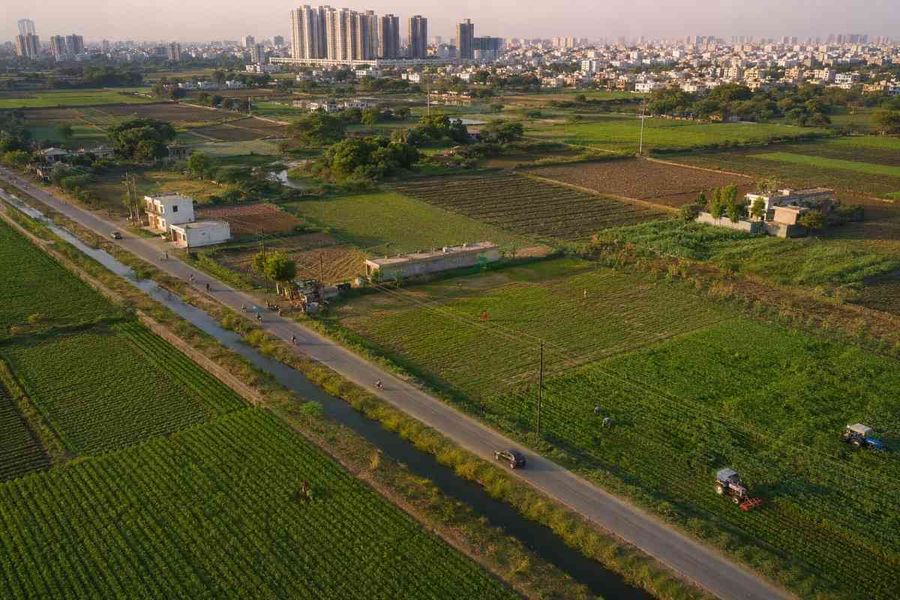
- Farmland near expanding cities has become a genuine diversification asset, not just a lifestyle purchase for weekend getaways.
- Appreciation and crop income are two very different things, and conflating them is where most farmland pitches go wrong.
- Compared with apartments, gold, or index funds, farmland offers a tangible long-term asset with different liquidity and risk characteristics.
- Eligibility to buy agricultural land still depends heavily on the state, some have relaxed rules, others haven't.
- Water availability, title clarity, and zoning status matter more than the glossy brochure's return projections.
- Verify title, ownership history, survey details, land classification, encumbrance status, and water availability before investing in farmland near a city.
Why Farmland Near Cities Has Become an Investment Category?
Buying farmland used to mean buying into agriculture. Near a growing city, it increasingly means buying into the city's own expansion, as urban areas push outward and rural land close to them appreciates in step.
Farmland near rapidly expanding cities has become an investment hotspot, driven by infrastructure development, improved road connectivity, industrial corridors, and urban expansion that increase long-term land demand.
What Kind of Returns to Realistically Expect?
Returns from farmland come from two genuinely separate sources, and treating them as one is where a lot of buyers get misled. Land appreciation and agricultural income need to be evaluated independently, since one is far more reliable than the other.
In some growth corridors, farmland values have appreciated steadily over long periods, although returns vary significantly by location, infrastructure development, and market conditions.
The safest way to think about farmland returns is to treat appreciation as the primary thesis and crop income as a bonus, not the other way around.
Farmland pitches built primarily on projected agricultural yields have a long history of underdelivering in India, and treating those projections as guaranteed income is a common mistake.
Who Can Legally Buy Farmland?
This matters before getting attached to a particular plot. In many states, purchasing agricultural land is restricted to registered farmers or people meeting certain income or agricultural background criteria, while other states have relaxed these rules considerably.
Some states have relaxed eligibility rules, while others continue to restrict purchases by non-agriculturists. Buyers should verify the current law in the state where the land is located.
Evaluating Location Before Buying
A freehold purchase offers maximum control, but you're responsible for labour, crop planning, and marketing produce yourself, suiting buyers with agricultural knowledge or a local partner.
A fractional model has a small group pool funds for a larger parcel, sharing costs and risk, though decisions need agreement among partners. A fully managed model lets a company handle everything from soil preparation to harvest while sending revenue back, suiting busy professionals who want exposure without hands-on involvement, for a management fee.

What to Check Before You Commit?
The plot's location and papers matter more than any projected yield chart. Water availability, road access, and soil quality are what actually determine whether land holds or grows in value, and these get overlooked far too often in the excitement of a good price.
A cheap plot with no reliable water source isn't a bargain, it's a liability. Borewells can run dry in certain rocky belts, and land without water security carries a fundamentally different risk profile than land with it, even at similar prices.
Beyond water availability, verify the title deed, ownership history, survey boundaries, Encumbrance Certificate, land classification, zoning status, and supporting property documents before paying any advance.
Regulatory Red Flags
Ownership disputes, unclear title history, incorrect survey boundaries, missing encumbrance certificates, land classification issues, water scarcity, zoning restrictions, and unrealistic return projections are among the biggest risks when investing in farmland.
How Farmland Compares to Other Investments?
Seeing farmland next to more familiar asset classes makes its actual position clearer.
Managed farmland: Returns vary depending on appreciation, crop income, management quality, and location; typically suited for long-term diversification rather than short-term gains.
Urban apartment: returns vary by city and locality, medium volatility, medium liquidity, best suited for rental income plus appreciation.
Gold ETF: returns track the price of gold, low volatility, high liquidity, best suited as a liquid store of value.
NIFTY index fund: returns follow the index, high volatility, high daily liquidity, best suited for long-term growth and risk-tolerant investors.
Farmland doesn't compete on liquidity or explosive upside; it competes on stability and being a tangible, inflation-resistant asset that can be visited, gifted, or held across generations.

Is Farmland a Reliable Investment
The structure itself is sound, and plenty of investors have done well holding farmland near growing corridors long term.
Where it goes wrong is almost always the same pattern, a title that wasn't properly checked, an unreliable water source, or a projected crop income that never materialised.
None of these are hidden risks, and checking each one before committing is standard practice, not excessive caution.
How 1acre.in Supports Farmland Investors?
Most farmland disputes trace back to something a buyer could have verified before paying an advance. 1acre.in's verified listings help buyers review title ownership, ownership history, survey details, Encumbrance Certificate status, land classification, and supporting property documents before investing. Its growth corridor insights and infrastructure data help buyers evaluate long-term investment potential beyond marketing claims.
Pre-Purchase Checklist
Confirm eligibility under your state's agricultural land purchase rules.
Verify the title deed and ownership history.
Obtain the latest Encumbrance Certificate.
Confirm survey boundaries and land extent.
Verify land classification and zoning status.
Check year-round water availability.
Assess road connectivity and infrastructure access.
Decide whether a freehold, fractional, or managed investment model suits your goals.
Treat projected crop income cautiously and evaluate appreciation potential separately.
Conclusion
Farmland near a growing city can be a genuinely useful diversification asset, but only when appreciation, not a projected crop yield, is the reason for buying it. Water, title, and zoning checks decide whether a plot holds value over a decade, far more than any return projection in a sales brochure.
-900x600.jpg)
-900x600.jpg)
-900x600.jpg)
-900x600.jpg)
-900x600.jpg)
-900x600.jpg)