
How to check land disputes and litigation before buying
Learn how to check land disputes, litigation, encumbrance records, court cases, and ownership risks before buying property in India safely.
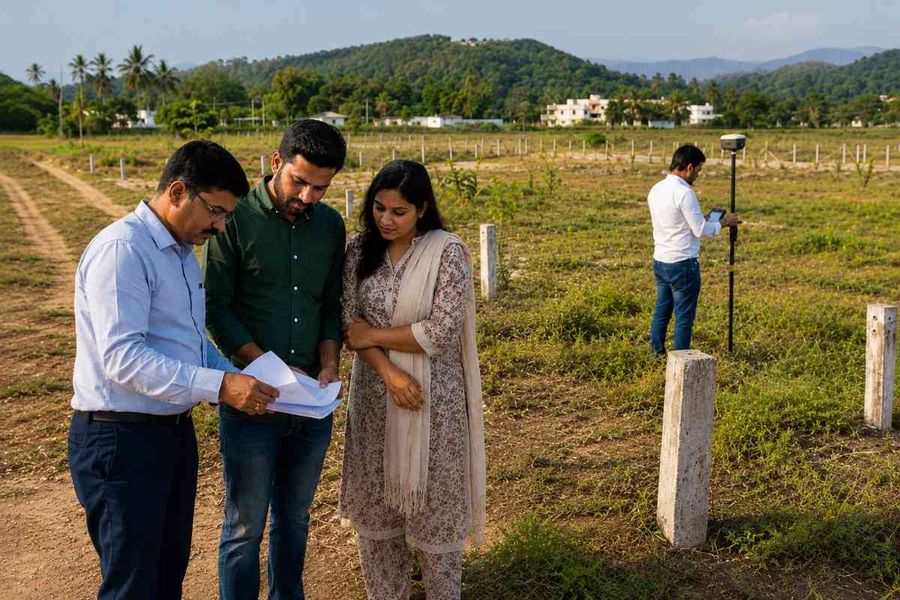
- A clean-looking sale deed proves little; sellers rarely volunteer pending cases.
- The Encumbrance Certificate, pulled for 15–30 years, is the first real filter for hidden loans or old litigation.
- eCourts and the NJDG let you search pending cases for free, but the wrong name spelling can miss the exact case.
- Lis pendens bind a new buyer to a case's outcome even if nobody told them it existed.
- Revenue court disputes and old local claims often aren't online, so a physical visit still counts.
What Checking Land for Disputes Actually Means?
There's a difference between a title that looks fine and one that's actually been checked. Before you buy land, know that plenty of it carries a history the sale deed won't reveal: an old inheritance dispute, a boundary shifted after a family split, a loan never cleared.
A litigation check confirms, through independent sources rather than the seller's word, that none of this is unresolved. It's easy to confuse two pieces: the Encumbrance Certificate, which tracks financial and legal claims on the land, and a court case search, which tracks whether the land or owner is a party to real estate litigation.
A property can be free of one and still carry the other.
What a Litigation Check Actually Covers?
A proper check covers:
Encumbrance history: loans, mortgages, or claims from the Sub-Registrar's office.
Court cases: anything involving the owner or property via eCourts and the NJDG.
Ownership and survey records: mutation entries cross-checked against the title deed.
Unrecorded local disputes: boundary or revenue matters are not yet digital.
Local, informal knowledge: what neighbors already know, often before any filing
Why This Check Is Necessary Before You Pay Anything?
Land litigation accounts for a striking share of pending civil cases in India, tracing back to a handful of causes: contested inheritance, forged documents, unclear titles, and boundary encroachments.
A seller under no obligation to disclose a dispute usually won't, and a buyer who skips the check often finds out after money has changed hands.
The check matters most at three points: before an offer, before an advance (lis pendens means earlier litigation can still bind you), and before registration, where a discrepancy is cheaper to fix than one caught after signing.
Start With the Encumbrance Certificate
The Encumbrance Certificate, from the Sub-Registrar's office, lists every registered loan, mortgage, and legal claim for whatever period is requested; it's where most checks should begin.
Ask for at least 15 years, ideally 30; a spotless five-year EC tells you nothing about a dispute active fifteen years ago and never resolved.
A court attachment, an unreleased lien, or a gap where entries abruptly stop isn't a clerical quirk; ask why.
Search eCourts and the National Judicial Data Grid
With the EC in shape, check whether the property or owner turns up in any active case. The eCourts portal and NJDG cover District and High Courts and let you search by party name, case number, or type, both free.
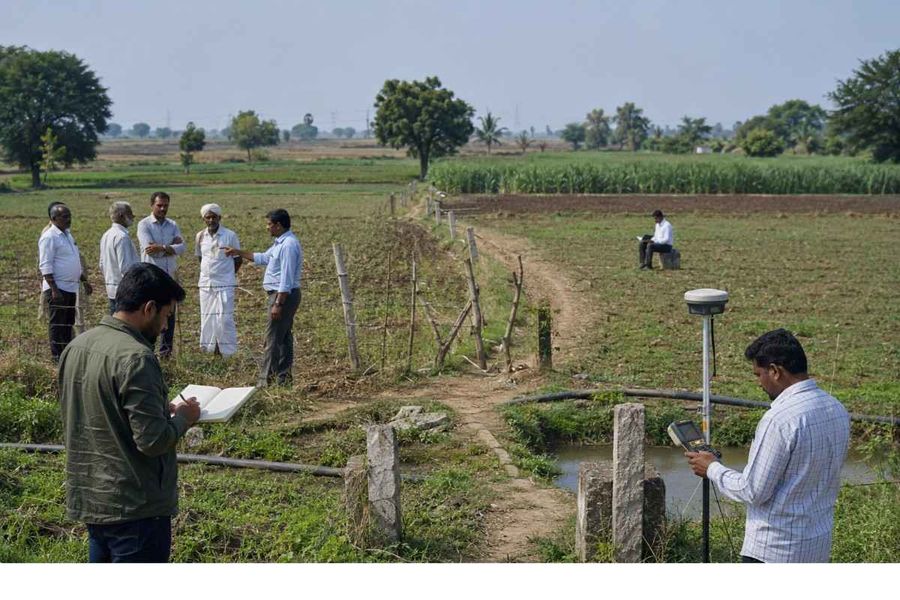
Understand Lis Pendens Before You Sign Anything
Lis pendens is a doctrine nobody thinks about until it's too late: once a case is pending over land, any new buyer inherits its outcome, whether or not they knew about it.
Section 52 of the Transfer of Property Act, 1882, does not require a notice of the case to be registered, though Maharashtra and Gujarat allow one to be registered with the sub-registrar, so ask whether one is on file there. Not knowing about a case doesn't shield a buyer from it.
Regulatory Red Flags to Watch For
Red Flag
What It Usually Means
What to Do
Gaps in the EC where entries suddenly stop
A name search returns nothing on eCourts.
Seller reluctant to share the full-period EC
Neighbours mention a dispute the seller didn't
Title changed hands frequently, fast
A dispute may have been left off the record
A case may be filed under a name variant.
May be avoiding an older entry
Local knowledge runs ahead of filings
May obscure a defect via resale
Ask the Sub-Registrar's office for a written explanation
Re-search with initials and past owners' names
Insist on the full 15–30-year window
Visit the Tahsildar and investigate directly
Trace and check each prior owner
Physical Verification Documents Can't Replace
Treating an online search as the final word is where buyers get tripped up. Revenue court records, held at the Tahsildar or Sub-Divisional Magistrate's office, mostly aren't digitized, so someone has to go and look. Talking to neighbors helps more than expected; residents often know about disputes before any filing exists. For anything beyond a small purchase, a lawyer running the full search is worth the cost.

How 1acre.in Supports Buyers on This
Chasing encumbrance history, court records, and local knowledge across offices isn't easy for most buyers, especially remotely.
Verified Listings. Land on the platform is checked against available encumbrance and title records before it's shown to buyers.
Document & Compliance Guidance. Straightforward guides and direct links to eCourts, the NJDG, and state land record portals mean buyers aren't starting from zero.
Expert & Advisory Support. Where a record looks ambiguous, 1acre.in connects buyers with legal support before an advance is paid, not after.
Pre-Purchase Checklist
Request an EC covering 15, ideally 30, years.
Search eCourts and the NJDG under every reasonable name variation.
Cross-check ownership and survey details against the state land portal.
Visit the sub-registrar's and local revenue office for records not online.
Ask neighbours about disputes or boundary issues.
Bring in a lawyer for a full search before paying an advance.
Conclusion
Land disputes rarely announce themselves; they sit in outdated entries and filings a seller has no reason to mention. A few hours on the EC, eCourts, and a local visit cost far less than untangling one later.
-900x600.jpg)
-900x600.jpg)
-900x600.jpg)
-900x600.jpg)
-900x600.jpg)
-900x600.jpg)