
Common Land Scams in India and How to Protect Yourself
Learn the most common land scams in India, spot red flags early, and verify property titles before buying land safely.
Why India's Land Market Attracts So Much Fraud
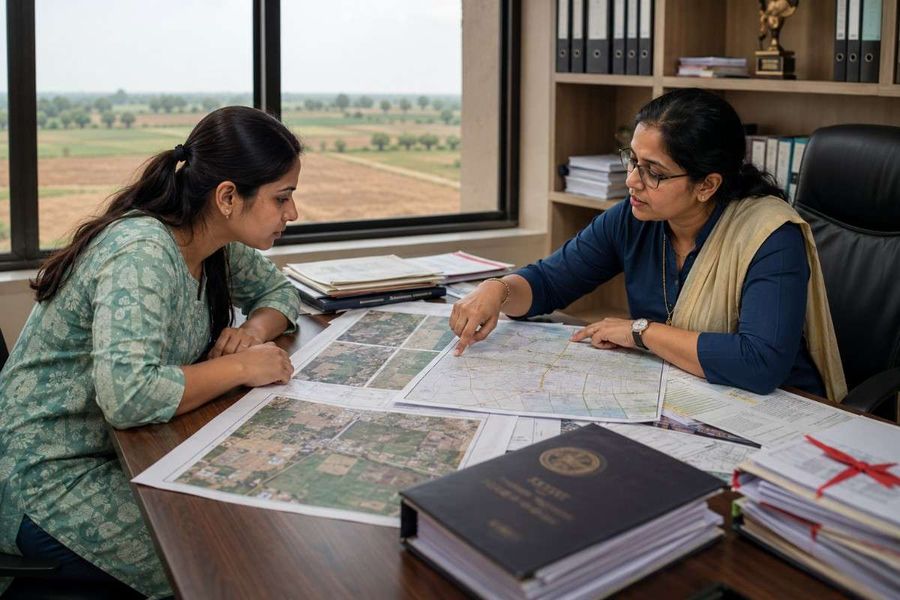
Fraud thrives where information is scarce, and verification is hard. India's records are digitising unevenly: the Department of Land Resources reports Records of Rights computerized in about 97% of villages, but only about 85% of villages have linked them to digitised cadastral maps, and some districts still run on aging paper. Different states maintain different land administration systems, making independent verification essential before purchasing land.
Fraud tends to target buyers unfamiliar with local revenue records, people purchasing remotely, and plots whose owners are absent or unaware that something is being sold in their name. The pattern repeats often enough to have left plenty of families with no savings.
Illegal Sale of Restricted Land
The illegal sale of assigned land is the hardest to catch and the most devastating when it surfaces.
Certain categories of land cannot be freely bought or sold because they are subject to legal restrictions. These include government-allotted land, tribal land, ceiling-surplus land, endowment land, forest land, and other restricted categories depending on state laws.
A seller shows a legitimate-looking registered document, the buyer pays, and registration goes through. Years later, sometimes decades later, the government reclaims the land because it was assigned the whole time. The buyer loses the land, the money, and anything built on it.
A registered sale deed on assigned land is worthless. Section 5 only blocks registration of parcels on the Collector's list, so unlisted ones get registered, but Section 3 voids the transfer regardless of what any registrar accepted.
Check whether the property appears in any government-maintained prohibited property register or restricted land record applicable in your state.
Seven Common Land Scams to Know
1. Title fraud and forged documents. The most widespread scam. A fraudster forges ownership papers, poses as the owner or a POA holder, and sells land that is not theirs. By the time the real owner appears, the money is gone. Forged paper carries zero legal weight, which is why the title chain matters more than the current deed.
2. Selling restricted land (government land, forest land, assigned land, tribal land, ceiling-surplus land, or endowment land) using forged or incomplete documents.
3. Duplicate sales. The same plot is sold to two or more buyers, exploiting slow registration. It is not a pure first-to-register race, since under Section 47 of the Registration Act a deed relates to its execution date, but the genuinely prior sale usually prevails, and everyone else is left in litigation.
4. Power of attorney abuse. Forged or expired POAs get used to sell property without the owner's knowledge. POA sales are not inherently illegitimate, but they demand independent verification. An unregistered POA, or one that does not clearly authorize a sale, is a warning.
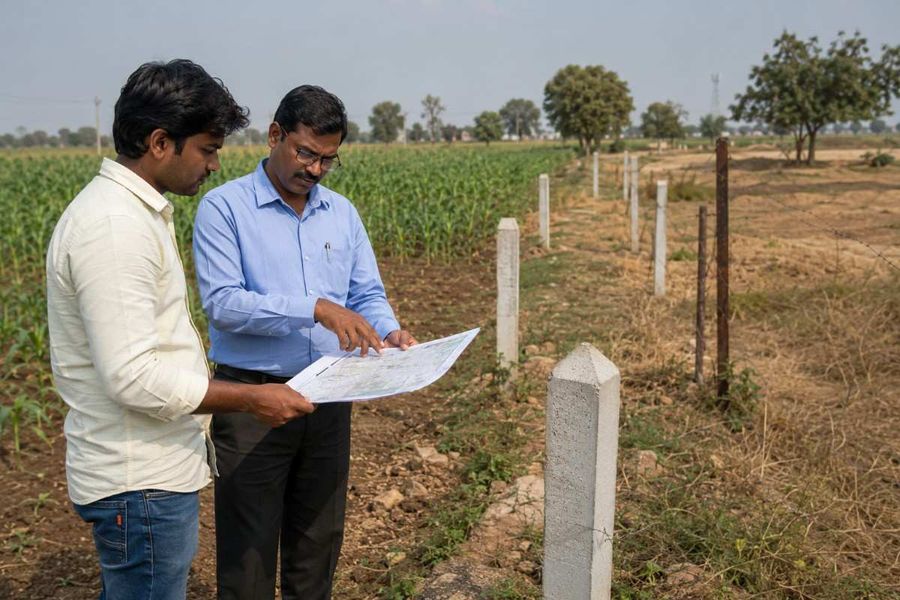
5. Land encroachment. Sellers quietly fold adjoining government or neighbouring land into the boundary being sold. The buyer gets good title to part of it and finds later the rest was never theirs, which a boundary survey would have caught.
6. Benami transactions. Property bought in someone else's name to hide the real buyer, usually to dodge tax or launder funds. Illegal under the Benami Transactions (Prohibition) Amendment Act, 2016, which added confiscation and up to seven years' rigorous imprisonment.
7. Fake pre-launch and assured-return schemes. Developers sell units in unapproved projects, promising double-digit returns backed by post-dated checks that bounce. RERA bars selling before registration, so a pre-launch pitch without a RERA number is a red flag.
Red Flags Every Buyer Should Watch For
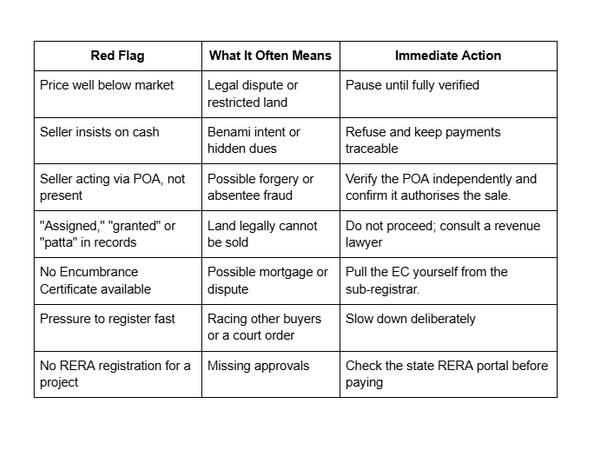
The table pairs each warning sign with what it usually means and what to do.
Documents to Check Before Any Purchase
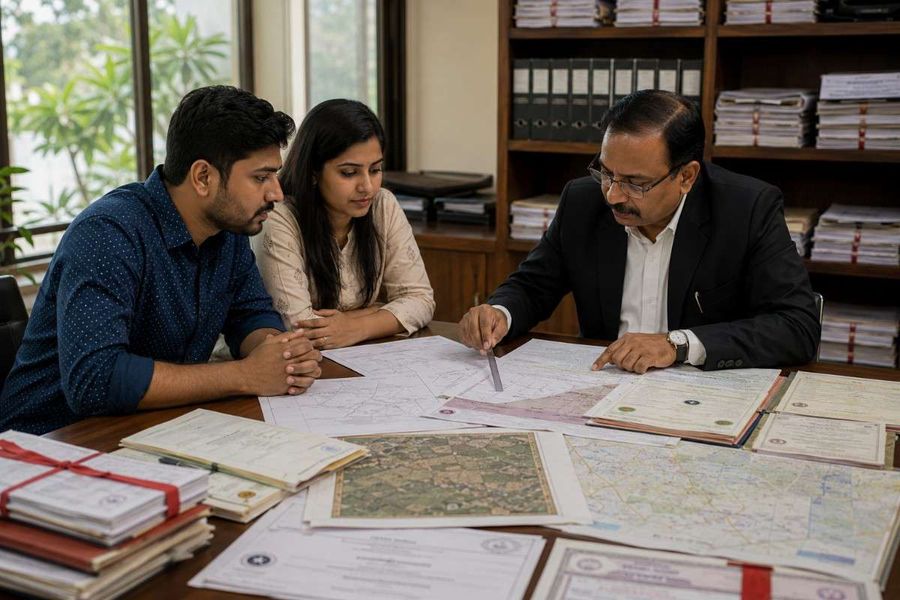
Work through this list before signing or paying anything.
Title and sale deed. Confirm the seller's name matches the record, and trace the title chain back 30 years.
Record of Rights (RoR). Verify the current owner, land classification, mutation history, and any transfer restrictions recorded against the property.
Encumbrance Certificate. Pull it yourself from the sub-registrar. Never accept the seller's copy.
Land use and conversion. Confirm the classification and whether conversion was completed once agricultural.
Mutation record. Check that the entry is updated and carries no restriction remarks.
Property tax receipts. Unpaid dues attach to the land, not the owner.
RERA registration. For any plotted or builder project, verify it on the state portal.
Power of Attorney, if involved. Confirm it authorizes the sale and, where required, was registered and is traceable to the actual owner.
How 1acre.in Helps
Most of these scams turn on a gap between what a document claims and what the land or record actually is. 1acre.in lists verified survey numbers with maps, master plan overlays, and satellite imagery, letting you check that a parcel's boundary and location match the deed, and whether it sits in a restricted zone before a site visit.
A map overlay catches a boundary or zoning mismatch. It does not read a title chain; it cannot tell a forged deed from a genuine one, and it does not check the Section 22-A list. That work stays with the sub-registrar's record and a revenue law advocate.
Conclusion
Land fraud in India succeeds where records are scattered and buyers skip the paperwork. Most of it is preventable: pull the Record of Rights yourself. Check whether the property appears in any prohibited property register or restricted land list maintained by the relevant authority, get an independent encumbrance certificate, and have a revenue advocate trace the title before you pay anything. No map, portal, or seller assurance replaces that groundwork.
-900x600.jpg)
-900x600.jpg)
-900x600.jpg)
-900x600.jpg)
-900x600.jpg)
-900x600.jpg)