
FSI & FAR Explained: How Much You Can Build on a Plot
Two plots of the same size in the same city can legally allow very different amounts of construction, and the reason almost always comes down to FSI and FAR. These two terms decide how many square feet of building you can put on a given plot, and they are set separately by every state and city in India. A buyer who skips this check can end up with a plot that looks like a good deal on paper but cannot legally support the house, floors, or commercial space they had planned. This guide explains what is fsi in real estate, how the floor area ratio calculation actually works, and what else, besides the plot’s size, decides the buildable area on your land.
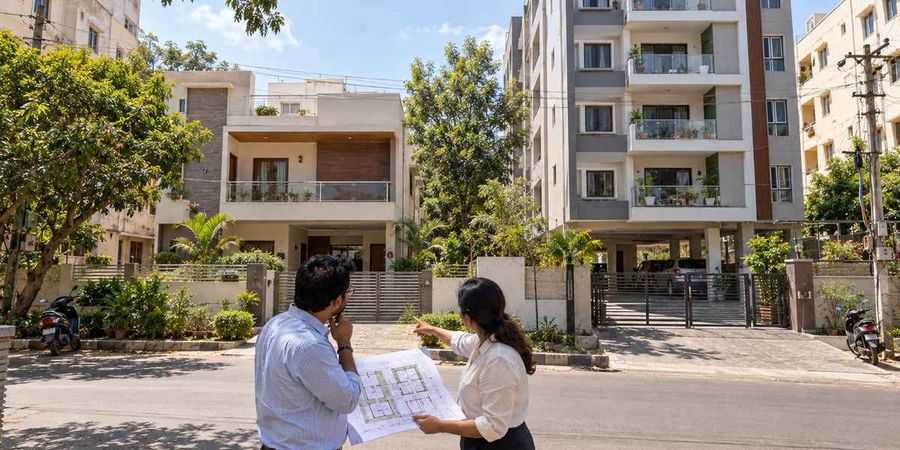
- FSI and FAR measure the same thing, the ratio of built-up area to plot area, just written differently.
- The formula is simple, but the permissible ratio itself depends on your city, zone, road width, and building type.
- Many cities let you add floor area beyond the base limit through premium FSI or Transferable Development Rights (TDR).
- Telangana’s rules link buildable height to the width of the abutting road rather than to one fixed FSI number for every plot.
- A plot’s FSI figure should always be confirmed with the local planning authority, not assumed from what a neighbouring building looks like.
What FSI and FAR actually mean
Floor Space Index (FSI) and Floor Area Ratio (FAR) both describe how much construction is allowed on a plot, relative to the plot’s own size. The two terms are not competing systems; they measure identical information in two different formats. FAR is expressed as a plain ratio, while FSI expresses the same number as a percentage. An FAR of 2 and an FSI of 200 percent mean exactly the same thing: you are allowed to build twice as much floor area as the size of your plot.
This single number has an outsized effect on what a plot is actually worth. A 1,000 square foot plot with an FSI of 1.0 permits a maximum built-up area of 1,000 square feet across all floors combined, while an identical plot with an FSI of 2.0 permits 2,000 square feet. Two plots can carry the same price per square foot and still differ sharply in value, once you account for how much each one legally allows you to construct.
Why the “same” number gets quoted differently
Brochures and agents sometimes quote FAR and sometimes FSI, which can confuse a first-time buyer into thinking two different limits apply. If a seller mentions an FAR of 1.5, that is the same restriction as an FSI of 150 percent. Always ask which format a figure is quoted in, and convert it before comparing plots from different sellers or different cities.
How to calculate FSI and FAR for a plot
The calculation itself is straightforward once you have two numbers: the plot area and the total floor area permitted across all levels of the building.
FAR is calculated as the total floor area of all floors divided by the plot area. FSI is the same figure multiplied by 100, to express it as a percentage.
For example, a plot measuring 1,000 square feet with an FSI of 200 percent allows a total built-up area of 2,000 square feet across every floor combined, not 2,000 square feet per floor. On a ground-plus-one structure, this could mean 1,000 square feet on the ground floor and 1,000 square feet on the first floor, or a different split, as long as the total across all floors stays within the 2,000 square foot cap.
This total figure covers every enclosed floor in the building, so a ground-plus-two structure with equal floor plates would need each floor to be smaller than a ground-plus-one structure built on the same permitted area. Buyers planning a specific number of floors should work the calculation backward from their intended floor plan to confirm it fits inside the permitted FSI, rather than assuming extra floors are automatically allowed once the ground floor is built within limits.
Certain areas, such as basements used only for parking, lift shafts, and stairwells, are commonly excluded from the FSI calculation under most state building rules, though the exact exclusions vary by state and should be confirmed with the local building bye-laws before finalising a construction plan.
What decides the FSI limit for your plot
The permissible FSI for a given plot is not a single national number; it is set by the local development authority or municipal corporation, and it depends on several factors working together.
The width of the road the plot abuts is one of the biggest factors in most Indian cities. A plot facing a wider road is generally permitted a higher FSI, or a taller building, than an identical plot on a narrow lane, because municipal planning assumes wider roads can handle the additional traffic, parking, and emergency access that taller or denser construction brings.
The zone a plot falls under in the city’s master plan also matters. Residential, commercial, and mixed-use zones typically carry different base FSI figures, and some cities apply a higher FSI to plots along designated commercial corridors even within a largely residential area. Plot size itself can be a factor too; some cities apply higher FSI or extra floor allowances only once a plot crosses a minimum size threshold.
Building type and height class add another layer. Many cities classify buildings above a certain height, commonly around 15 to 21 metres, as high-rise structures, which trigger additional requirements such as a wider minimum road width, bigger setbacks, and mandatory fire and structural clearances, on top of whatever FSI otherwise applies.
Why this cannot be estimated from a nearby building
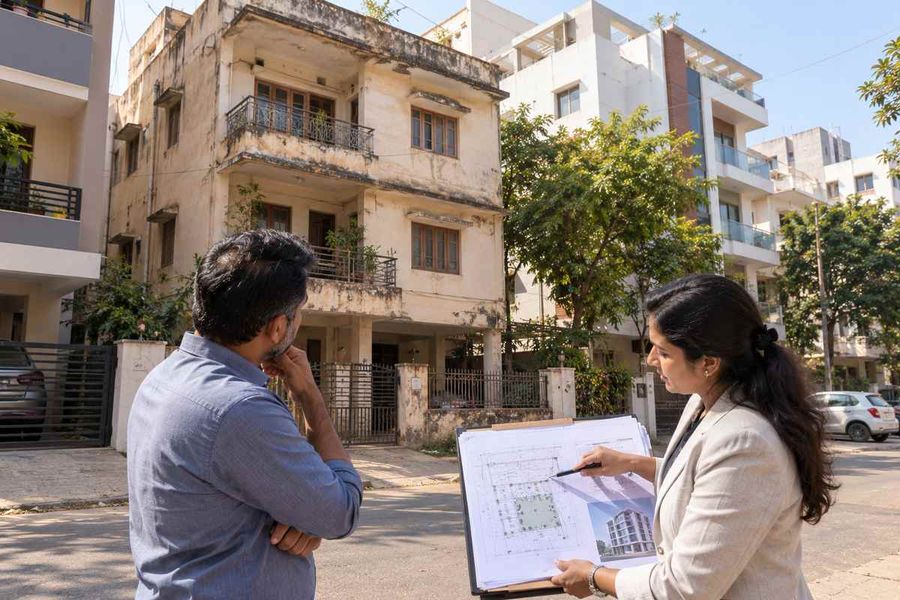
A completed building standing taller or larger than the current FSI rules would allow is not proof that the same ratio is available for a new plot. Rules are revised over time, buildings can predate a tighter amendment, or that particular structure may be carrying additional floor area purchased separately through premium FSI or TDR, covered next. The only reliable figure is the one confirmed in writing by the planning authority for your specific plot.
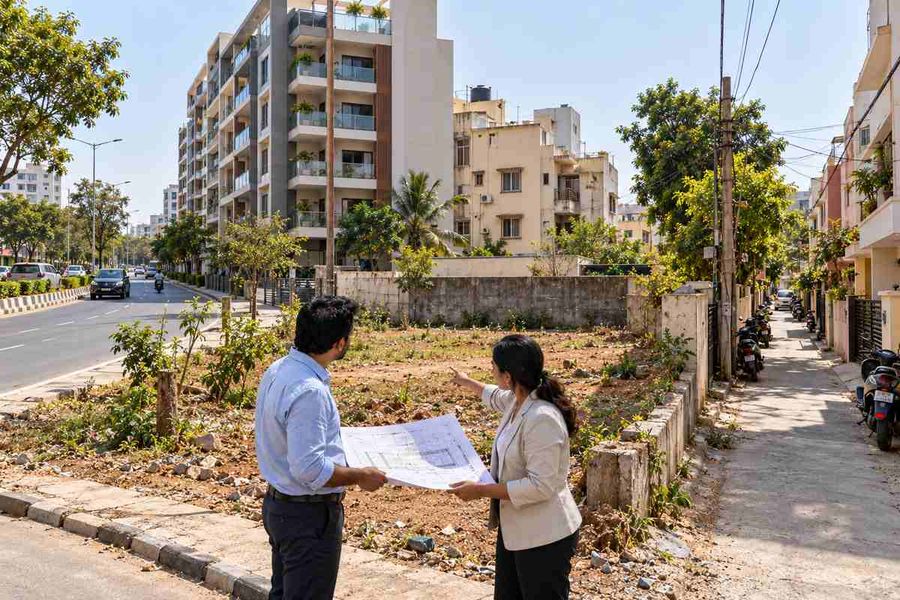
Why FSI rules differ so much between cities
Mumbai and Hyderabad illustrate how differently two major Indian cities can structure the same underlying idea. Mumbai’s system relies heavily on a base FSI figure, topped up through premium FSI payments and an active TDR market, with slum TDR alone accounting for a very large share of additional floor area built across the city’s suburbs over the past two decades.
Telangana takes a different approach for much of Hyderabad. Rather than applying one fixed FSI figure to every plot, the Telangana Building Rules link the maximum permissible height directly to the width of the road the plot faces, with taller construction allowed as the road widens. A 2026 amendment under G.O. Ms No. 95 went further, allowing extra floors, additional height, and setback relaxations through TDR on larger plots, with the number of extra floors tied to the abutting road’s width, for example, three additional floors on a 40-foot road and more on wider roads.
The practical lesson for a buyer is that an FSI or buildable-height figure from one city cannot be assumed to apply in another, and in some cities it is not even expressed as a single FSI number at all. The only dependable step is to check the current rule for the specific state, city, and zone your plot falls in, rather than relying on a general figure quoted for a different market.
How FSI affects what you can actually build and what it’s worth
FSI has a direct effect on a plot’s investment value, independent of its sale price per square foot. Two plots priced identically can carry very different buildable potential if their FSI, zoning, or road width differ, which means the lower-FSI plot is effectively more expensive per usable square foot of eventual construction.
This matters most for buyers planning to build immediately, since the FSI determines whether their intended floor plan is even legally possible, and for anyone comparing a resale plot against a fresh purchase, since an older structure may be sitting on a plot whose current FSI would no longer permit rebuilding to the same size if demolished and reconstructed today.
Due diligence checklist before relying on an FSI figure
Get the current FSI or FAR figure for your exact plot in writing from the local municipal corporation or development authority, not from a broker’s verbal estimate.
Confirm the width of the road your plot abuts, since this alone can change the permissible height or floor area in many cities.
Check which zone your plot falls under in the city’s master plan, and whether that zone carries a different FSI from the general city-wide figure.
Ask whether any additional floor area on a project you are evaluating comes from base FSI, premium FSI, or TDR, and factor the added cost and approval risk accordingly.
If your plot is in a high-rise height band, confirm the additional road width, setback, and fire clearance requirements that come with it.
Do not use a neighbouring building’s height or size as evidence of what is currently permitted on your own plot.
How 1Acre helps
1acre.in is built to help you check this before you rely on a number quoted by a seller or agent.
FSI calculator. 1acre.in’s FSI calculator lets you work out the permissible built-up area for a plot based on its size and the applicable ratio.
Filter and compare listings. The platform’s land search also lets you filter and compare plots by location.
Guides for verification. The documentation guides cover what to verify with the local planning authority before you finalise a purchase or a construction plan.
Disclaimer
The information provided in this article is for general informational and educational purposes only. It does not constitute investment advice, legal advice, or a recommendation to buy, sell, or hold any property or financial instrument.
Property prices, stamp duty rates, registration charges, government portal procedures, and land laws vary by state and are subject to change without notice. Readers are advised to verify all information independently with the relevant state government authorities, RERA portal, or a qualified legal professional before making any property-related decisions.
1acre.in makes no warranty, express or implied, regarding the completeness, accuracy, or timeliness of the information presented. Past trends or appreciation data mentioned in this article do not guarantee future returns.




-900x600.jpg)