
How to Buy Agricultural Land in India: Rules and Checks
Learn who can buy agricultural land in India, how to verify ownership, and the real costs beyond the purchase price.
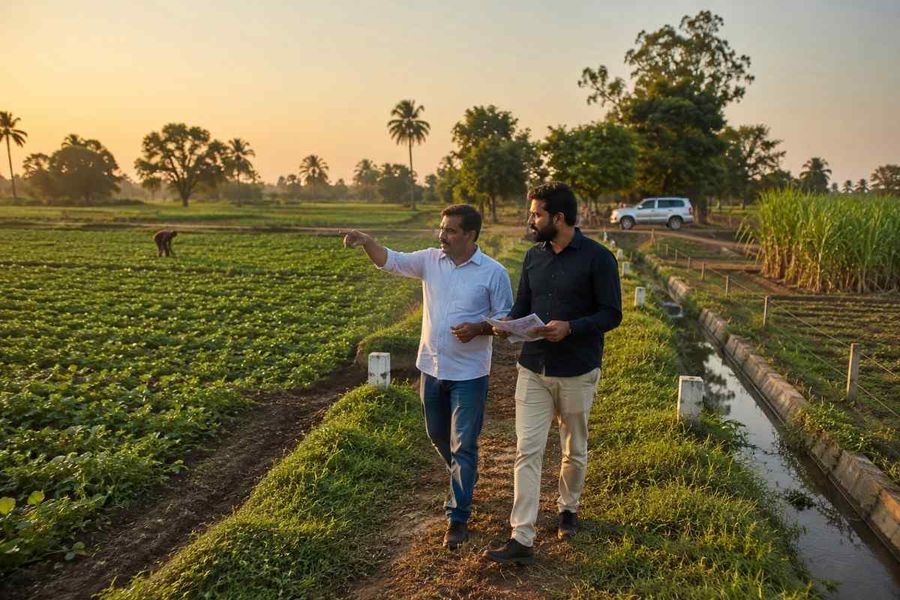
- Eligibility to buy agricultural land depends on the state, not any single national law, some states restrict purchase to farmers, others let anyone buy.
- Land ceiling laws cap how much land a person can own, and the limit shifts by location.
- Verifying ownership means pulling the title deed, Encumbrance Certificate, and revenue records yourself, since missing paperwork or an unclear ownership chain is where most disputes start.
- The purchase price is rarely the full cost; stamp duty, registration, and legal fees add up fast, and NRIs generally can't buy agricultural land outright, though they can inherit it.
Who Can Legally Buy Agricultural Land
It comes down to which state the land sits in, and the rules deciding who qualifies come from state-level land reform laws rather than anything set centrally.
Some states restrict agricultural land purchases to existing agriculturists or buyers who meet specific eligibility criteria, while others allow non-agriculturists to purchase agricultural land without prior farming status. Always verify the applicable state law before proceeding.
Buyers without an agricultural background may still qualify through exemptions or family eligibility in states where restrictions exist.
Even in states that let non-farmers buy, there's usually a ceiling on how much land one person can hold, to keep agricultural land from concentrating in too few hands. The limit differs by state and land type, worth checking before getting attached to a plot, since going over the cap can void the transaction.
What Verification Actually Covers
This is the step that decides whether a purchase turns into a secure asset or a years-long headache. Before money changes hands, you need confirmation that the seller holds clear, undisputed title and that nothing hangs over the land, no pending loan, and no unresolved claim.
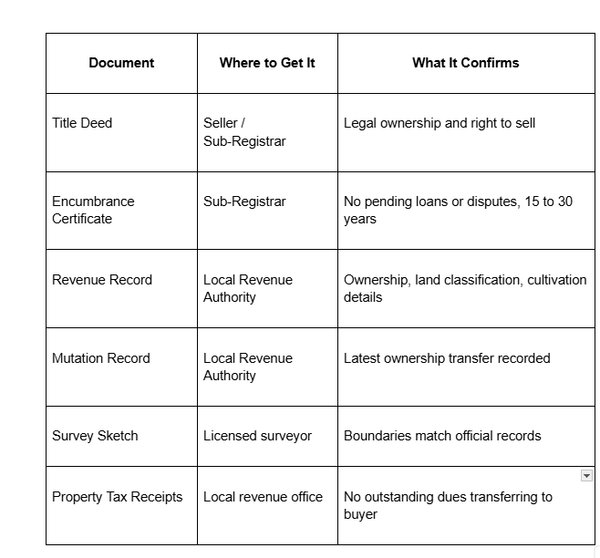
Why This Verification Is Needed
Start with the title deed, checking the name matches the seller. Get an encumbrance certificate covering the last 15 to 30 years to see if the land carries disputes.
Cross-reference against the latest revenue records to confirm ownership and land classification. Line up and check the mutation entry has actually been updated, since an unmutated transfer can be contested later.
Bring in a licensed surveyor to confirm boundaries physically; encroachment is more common than first-time buyers expect.
The sale agreement should spell out price and timelines, identity proof from the seller, and confirmation the land is still classified as agricultural. Confirming plot size on the ground matches what's recorded, with no overlap onto a neighbour's land, is a step buyers often skip, and it costs them later.
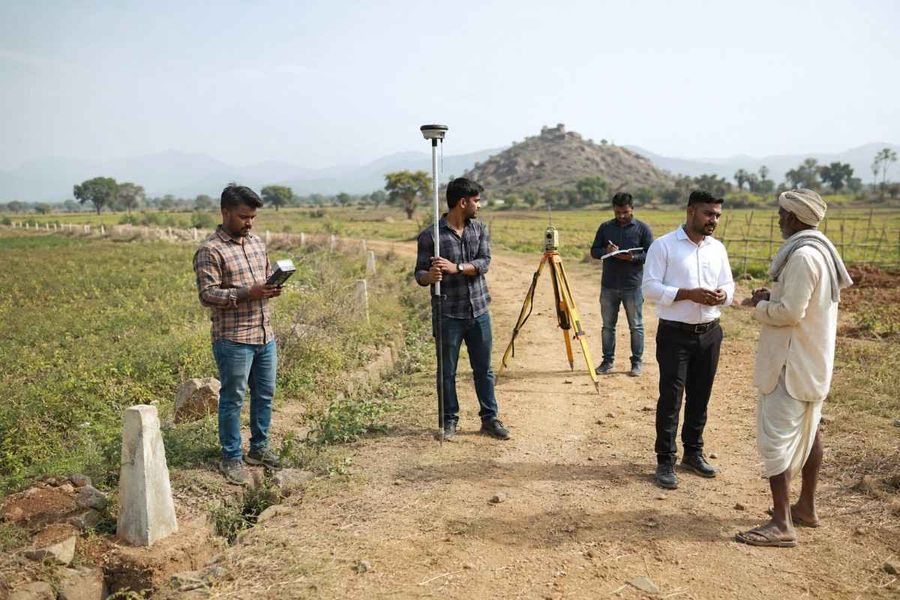
Confirm eligibility under the state's rules first, since this determines whether you can proceed at all. Pull the verification documents above before any money changes hands, negotiate and draft a sale agreement spelling out price, advance, and timelines, then register the sale deed at the Sub-Registrar's office, paying stamp duty and registration fees. Update the mutation entry afterward so the land record reflects the new owner.
Whatever price you negotiate is just where spending starts. Stamp duty and registration fees vary by state, and once surveyor fees, legal consultation, and the Encumbrance Certificate cost get added, the total runs several percentage points above the negotiated price.
Converting the land later for residential or commercial use is a separate cost, involving a change-of-land-use application, a site inspection, and a state-specific fee.
Regulatory Red Flags
Ownership disputes and outright fraud remain the most common problems, often tied to a murky title history or land that was government-allotted and can't legally be resold. Land once granted to a Scheduled Caste or Scheduled Tribe family under protective legislation can carry restrictions that surface only after payment.
Skipping the mutation check leaves a buyer exposed to a transfer that can be contested later, and skipping an independent survey risks paying for land that overlaps a neighbour's boundary.
Agriculturist-Restricted States vs Open-Purchase States
Purpose: restricted states limit ownership to people with farming ties; open states allow any buyer.
Issuing authority: both fall under state-level land reform laws.
Validity: restricted states need proof of agricultural background; open states have no such requirement.
Typical use: restricted states suit active farmers; open states suit investors and non-farming buyers.
Cost: Restricted states can add legal costs through exemption applications.
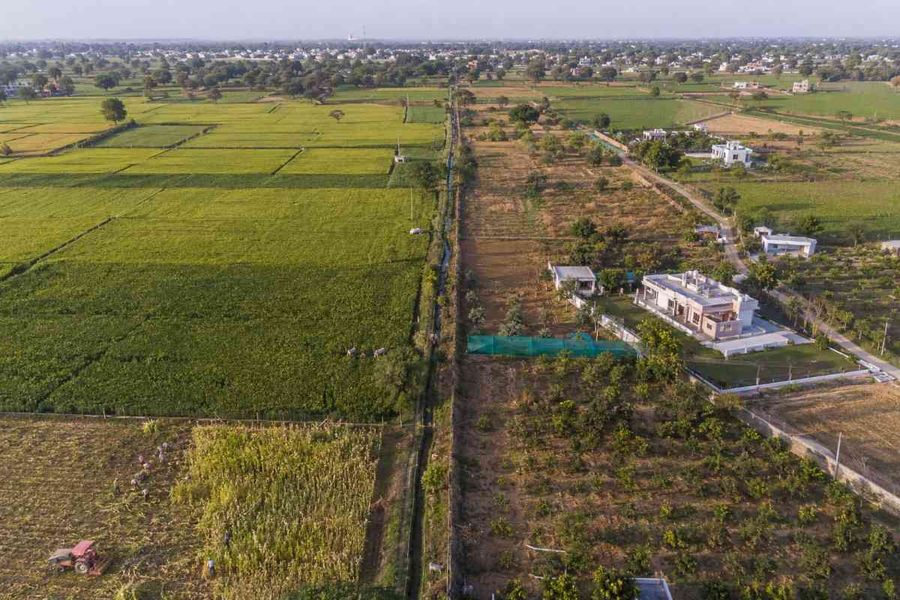
NRI and Non-Resident Restrictions
This is a hard line for non-resident buyers. Under RBI guidelines, NRIs and Overseas Citizens of India (OCIs) can't purchase agricultural land directly, though they can inherit it, so the restriction applies to buying, not inheritance.
A path exists too, special RBI approval, though these are uncommon and tend to go only to genuine agricultural use cases.
Is the Process Reliable
Financing is its own headache, banks are far more cautious lending against agricultural land than residential property, so buyers typically need more cash upfront.
Most disputes trace back to a step someone skipped, an unchecked mutation entry, an unsurveyed boundary, or a title history nobody dug into.
How 1acre.in Supports Land Buyers?
Most disputes trace back to information a buyer could have checked before paying an advance. 1acre.in's verified listings cross-check title deeds, survey numbers, and encumbrance status before a parcel goes live, so buyers start with land already cleared of a first layer of scrutiny.
Its guides on title verification, mutation, encumbrance certificates, and ownership records explain what buyers should verify before completing a purchase.
Pre-Purchase Checklist
Confirm eligibility under the target state's rules. Pull the encumbrance certificate and title deed yourself. Compare the latest revenue records with the sale deed for ownership or classification mismatches.
Conclusion
Buying agricultural land in India rewards patience over speed. Eligibility, land ceiling limits, and a clean title chain all need checking before money changes hands, since the cost of skipping any of it shows up later as a dispute that a single document pull could have caught.
-900x600.jpg)
-900x600.jpg)
-900x600.jpg)
-900x600.jpg)
-900x600.jpg)
-900x600.jpg)