
RERA for Plotted Developments: What Plot Buyers Must Verify
RERA applies to plotted layouts once they cross the size or plot-count threshold, so check the registration number on the state RERA portal before you pay.
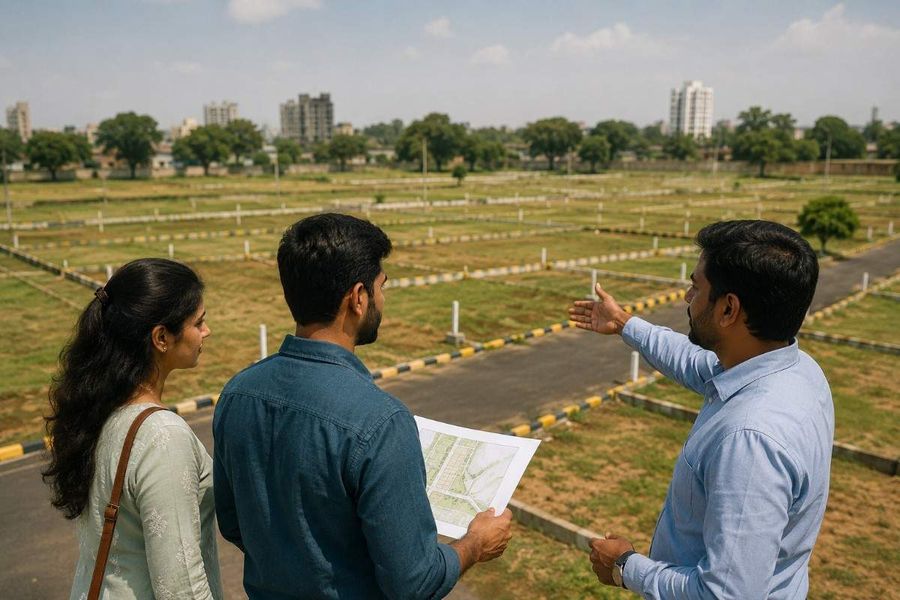
- RERA isn't limited to flats; it applies to plotted layouts too, once a project crosses a defined size or amenity threshold.
- The commonly cited trigger is land exceeding 500 square meters or more than 8 plots, though states vary slightly.
- Simple land transfers between individuals, with no promised infrastructure, generally fall outside RERA's scope.
- "RERA approved" is marketing language, not a legal status; what matters is whether the project is registered on the official state RERA portal.
- Verifying registration takes a few minutes online and can save years of dispute later.
What RERA for Plotted Development Is
The Real Estate (Regulation and Development) Act, 2016, defines a "real estate project" broadly enough to cover developing land into plots for sale, not just apartment construction. Many plotted layouts, gated-plot communities, and farm-plot schemes fall under the same disclosure and registration regime as apartments, even though buyers often assume RERA is only an "apartment law."
Buyers often mix up related terms:
RERA registration, a formal, verifiable status tied to a unique registration number.
"RERA approved", an informal marketing phrase with no defined legal meaning.
NA (non-agricultural) permission, a separate land-use conversion approval, not the same as RERA registration.
Occupancy Certificate (OC), local confirmation of basic safety/infrastructure standards; not a substitute for RERA's disclosure and escrow obligations.
Getting these terms straight is the first step in property verification, since developers and brokers often use them interchangeably.
What RERA Registration Covers?
Once registered, the state RERA portal discloses details buyers can check directly:
Layout plans, the sanctioned subdivision of plots, roads, and common areas.
Land title and ownership, confirming who legally holds the land.
Registration number, should match brochures and sale agreements exactly.
Promised amenities, roads, drainage, parks, security the developer must deliver.
Timelines, the disclosed schedule for infrastructure and handover.
Escrow details, confirmation buyer payments are ring-fenced for development, as RERA mandates.
When Registration Becomes Mandatory?
RERA exists because plotted layouts, like apartment projects, can leave buyers exposed if a developer collects money against promised infrastructure and fails to deliver.
Marketing/sale stage, if a layout crosses the size or unit threshold, registration should be in place before the first sale agreement.
Promised infrastructure, a commitment to roads, a park, a clubhouse, or security pulls the project into RERA's scope regardless of size.
Payment stage, the escrow requirement protects installments paid before delivery.
Post-purchase disputes, registration gives buyers access to the authority's grievance-redressal mechanism.
When a Plotted Sale Is Legitimately Exempt?
Not every plotted sale needs registration. A simple, one-off land transfer between individuals with no promised infrastructure generally stays outside RERA. Beyond the thresholds in the Act, any further exemption depends on the state's RERA rules and circulars, so ask for it in writing. Agricultural land itself stays exempt as long as there's no active plan to convert and market it as a housing project.

How to Verify a Plotted Project's RERA Status
Check the triggers land over 500 sq m, more than 8 plots, or any promised shared infrastructure.
Confirm genuine exemption; if claimed ask what specifically justifies it.
Search the state RERA portal using the project name, promoter name, or registration number. A genuine listing shows layout plans, approvals, land title, and timelines.
Cross-check the registration number character for character against the brochure and draft agreement. A mismatch, or no listing at all, is reason to pause.
Request documentation for any claimed exemption rather than accepting it verbally.
Verification typically takes only a few minutes once the right state portal is identified, and portal searches are free.
Regulatory Red Flags to Watch For
Red Flag
What It Usually Means
What to Check
Registration number doesn't match on the portal
No mention of an escrow account
Exemption claimed without documentation
"RERA approved" with no registration number
Amenities not in the registered disclosure
Project may be unregistered, or the number belongs elsewhere
Payments may not be ring-fenced, raising default risk
May be an informal, not legal, justification
Phrase used loosely, may not reflect compliance
Brochure promises may not be binding
Search the exact number on the official state portal
Ask for escrow disclosure in project details or agreement
Request the NA permission or exempting clause
Ask for the number and verify independently
Compare brochure claims against the portal disclosure
RERA Registered vs Occupancy Certificate vs Marketing Claims
Term
What It Actually Confirms
Where to Verify
RERA Registered
RERA Approved (marketing term)
Occupancy Certificate (OC)
Formally registered, unique number, legally accountable
No defined legal status
Local safety/infrastructure compliance
State RERA portal
No official register, verify against the actual number
Municipal or local planning authority
An OC confirms the land meets basic local standards but doesn't carry RERA's disclosure or grievance-redressal protections. RERA registration matters before you sign and pay; an OC matters closer to handover; "RERA approved" should always be treated as a claim to verify, not evidence.
Is a "RERA Approved" Claim Reliable?
Treat the phrase as a starting point, not proof. Watch for outdated or reused registration numbers, state-specific validity (a number is verifiable only on its issuing state's portal), verbal exemption claims made without documentation, and amenities shown in renders that never entered the registered disclosure. Cross-verify against the official portal and underlying documents rather than the brochure.
How 1acre.in Supports Verification for Plot Buyers
Most buyers lack the time or legal background to chase land records, layout approvals, and RERA disclosures alone. 1acre.in is built to close that gap.
Verified Listings. Land records, sanctioned layouts, and approvals are cross-checked for listed developments before they reach buyers, so due diligence starts from a checked record, not a brochure claim.
Document & Compliance Guidance. Plain-language guides and direct links to state RERA portals make verifying a registration number or NA permission straightforward.
Expert & Advisory Support. Where an exemption claim or document looks unclear, 1acre.in connects buyers with verification and legal support before money changes hands.

Pre-Purchase Checklist
Search the project on the state RERA portal using its name or registration number.
Confirm the registration number matches exactly what's printed in the brochure and agreement.
Ask for NA permission or exemption documentation if RERA is claimed not to apply.
Check that promised amenities appear in the registered disclosure.
Don't treat an Occupancy Certificate as equivalent to RERA registration.
Consult a property lawyer if the registration status looks unclear.
Conclusion
RERA registration isn't a formality developers can skip just because they're selling land instead of flats. Once a plotted layout crosses the size threshold or comes with promised amenities, registration, not a marketing phrase, is what protects a buyer. Verifying it directly on the official portal, before signing or paying, remains the single most useful step.
-900x600.jpg)
-900x600.jpg)
-900x600.jpg)
-900x600.jpg)
-900x600.jpg)
-900x600.jpg)