
Tirupati Air Funnel Zones: Building Height Restrictions
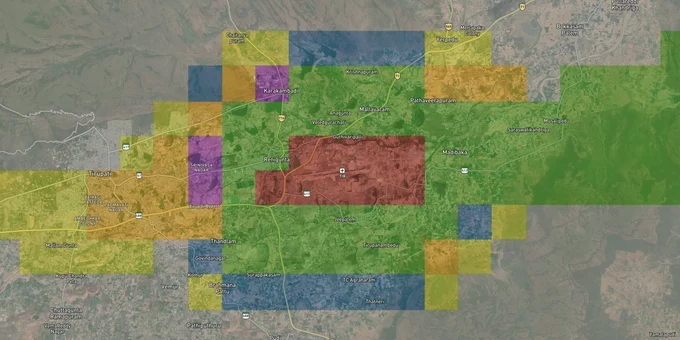

Tirupati Air Funnel Zones Preview
Try the Tirupati Air Funnel Zones on the map
Sign in once and explore the layer for a full day.
- No card details needed
- Find nearby verified lands for sale
Overview
Tirupati Airport (IATA: TIR, ICAO: VOTP), located at Renigunta on NH-71, about 14 km from Tirupati city, is an international instrument-runway airport. Under G.S.R. 751(E), the Ministry of Civil Aviation's Height Restrictions for Safeguarding of Aircraft Operations Rules 2015, every structure within 20 km of the Aerodrome Reference Point (ARP) requires a No Objection Certificate (NOC) for height clearance from the Airports Authority of India (AAI). This 1-acre layer maps the AAI Color-Coded Zoning Map (CCZM) data for Tirupati, showing where funnel zones, approach surfaces, and height caps directly constrain what you can build.
Growth Corridors Near Tirupati Airport: Which Zones Reward Buyers and Which Trap Them
The airport-adjacent belt running from Renigunta through Korramenigunta toward Anjimedu holds the strongest short-term growth signal in Tirupati, driven by the Electronics Manufacturing Cluster, the IIT and IISER campuses at Yerpedu, and the expanded runway now handling wide-body aircraft. But this exact belt sits closest to the funnel zone, and speculative plots here are being marketed without disclosing the height ceiling.
The table below maps the key corridors by their approximate OLS position and real development risk:
Corridor / Locality
Approx. Distance from ARP
OLS Zone Likely
Growth Driver
Key Risk
Renigunta town / Anjimedu
1–3 km
Approach funnel, Inner Horizontal
Airport proximity premium
Severe height cap: possibly G+1 only
Korramenigunta
2–4 km
Inner Horizontal Surface
Electronics Cluster proximity
45 m cap triggers AAI review
Govindavaram / D-Mallavaram
4–6 km
Conical/Transitional
Airport road corridor
Height increases but NOC still mandatory
Yerpedu / IIT-IISER belt
6–10 km
Outer Horizontal
Education, tech employment
NOC needed, manageable height
Chandragiri / Mangalam
12–15 km
Peripheral zone
City connectivity, highway access
NOC required, no height cap
Corridor / Locality
Approx. Distance from ARP
OLS Zone Likely
Growth Driver
Key Risk
Renigunta town / Anjimedu
1–3 km
Approach funnel, Inner Horizontal
Airport proximity premium
Severe height cap: possibly G+1 only
Korramenigunta
2–4 km
Inner Horizontal Surface
Electronics Cluster proximity
45 m cap triggers AAI review
Govindavaram / D-Mallavaram
4–6 km
Conical/Transitional
Airport road corridor
Height increases but NOC still mandatory
Yerpedu / IIT-IISER belt
6–10 km
Outer Horizontal
Education, tech employment
NOC needed, manageable height
Chandragiri / Mangalam
12–15 km
Peripheral zone
City connectivity, highway access
NOC required, no height cap
The most misunderstood corridor is the Anjimedu-Renigunta stretch. Builders are marketing plots here as "5 minutes from airport" investment opportunities. What they omit: plots in the approach funnel may legally support only low-rise construction. Banks have begun refusing loans on projects without AAI height clearance, so buyers who purchase without an NOCAS check can find themselves holding land that cannot be financed for development. Before you sign a sale agreement for any plot within 10 km of Renigunta, request the seller's NOCAS application reference or commission your own licensed surveyor's site elevation certificate.
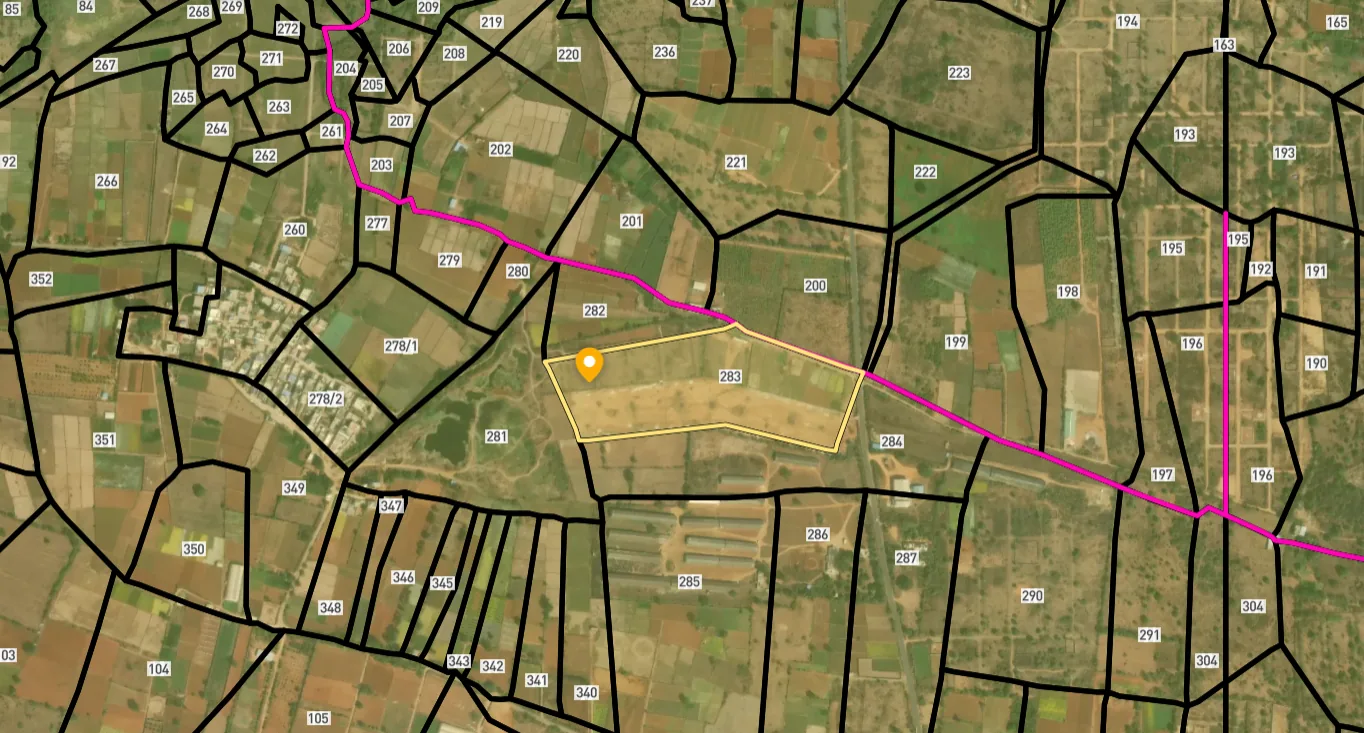
Access Survey NumbersAccess Andhra Pradesh
Survey Numbers
Boundaries and numbers come from published state cadastral records. See all map layers.
Looking to sell your land in Andhra Pradesh?

Browse all verified lands & plots in Andhra Pradesh
More Layers in Andhra Pradesh
See all 18 layers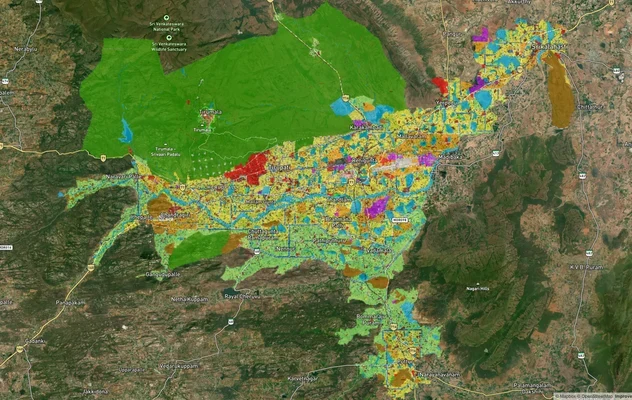
TUDA Master Plan 2040 Tirupati: Zone Map and Land Use
TUDA Master Plan 2040 for Tirupati: see the zone map, master plan roads, LP number and LRS checks, then verify your plot...
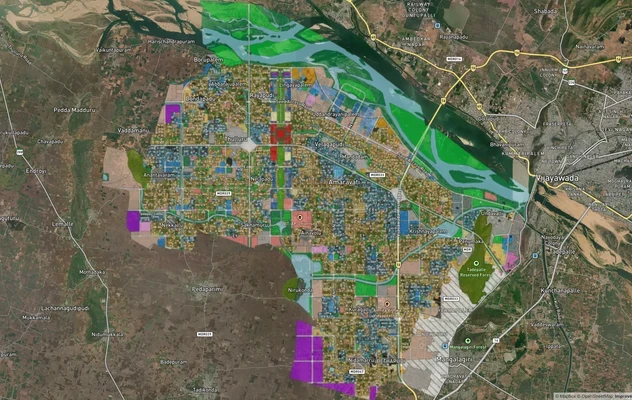
Amaravati APCRDA Masterplan 2050 Map: LPS and Villages
See the Amaravati LPS map, APCRDA villages list, capital area and Phase 2 land pooling status, then check any plot's mas...
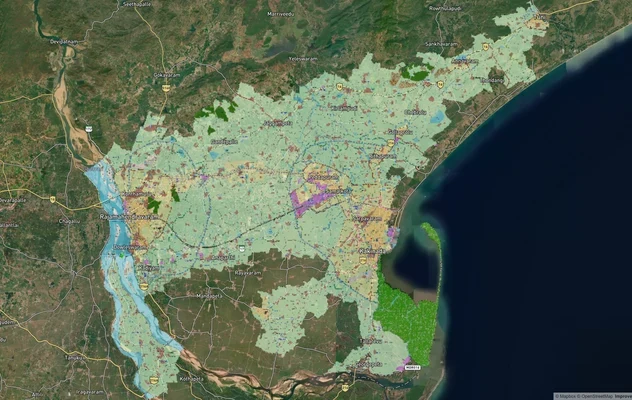
Kakinada Masterplan: Zone Check and Land Use Guide
View Kakinada Masterplan as a live map overlay – check any plot's land use zone for free on 1acre.in. Kakinada masterpla...
More Layers in Andhra Pradesh
TUDA Master Plan 2040 Tirupati: Zone Map and Land Use
TUDA Master Plan 2040 for Tirupati: see the zone map, master plan roads, LP number and LRS checks, then verify your plot...
Amaravati APCRDA Masterplan 2050 Map: LPS and Villages
See the Amaravati LPS map, APCRDA villages list, capital area and Phase 2 land pooling status, then check any plot's mas...
Kakinada Masterplan: Zone Check and Land Use Guide
View Kakinada Masterplan as a live map overlay – check any plot's land use zone for free on 1acre.in. Kakinada masterpla...
Frequently Asked Questions
Yes. TUDA approval covers land use zoning under Master Plan 2040. AAI NOC under G.S.R. 751(E) governs building height. Both are mandatory; neither substitutes for the other.
Height equals 2% of horizontal distance from the runway edge. A plot 1,000 m away is capped at 20 m. Closer plots may be restricted to one story.
AAI's color-coded zoning map showing pre-calculated permissible heights. Tirupati's CCZM is downloadable from nocas2.aai.aero. Below the CCZM limit, local bodies can approve; above it, full AAI NOC is required.
Tirupati is an IFR airport with an ILS. The mandatory NOC radius for IFR airports is 56 km from the Aerodrome Reference Point, not the commonly cited 20 km.
Demolition orders can be issued under the 1994 Aircraft Rules. Occupancy certificates can be refused, bank loans withdrawn, and no regularisation route exists. Aviation safety violations carry zero exemption.
Apply on NOCAS at aai.aero. Submit WGS84 coordinates, licensed surveyor-certified site elevation, site photographs, and Google Earth plot identification. Processing takes up to three weeks after document verification.
No broker has that authority. Only an AAI NOCAS clearance or CCZM-verified permitted top elevation confirms compliance. Without a NOCAS reference number for the survey number, treat any claim as unverified.
Yes. The runway extended from 2,286 m to 3,810 m in February 2025. The funnel zone shifted. Any pre-2025 height clearance for plots near runway ends must be re-verified on NOCAS.
Source
Official Airports Authority of India (AAI) / Directorate General of Civil Aviation (DGCA) documents
Official Website
aai.aero
Coordinate Reference System
EPSG:4326 (WGS 84)
Geometry Type
Polygon / MultiPolygon
Data Format
Vector (GeoJSON) + Raster Tiles
Last Verified
2026
Status
Active
Was this layer helpful?
Anything wrong, outdated, or missing we want to hear it.